A room at 24°C feels comfortable. Water a little colder than that is where DAN expects significant thermal stress for divers. Two properties explain the gap. Water conducts heat away from your body 20 to 27 times faster than air, and each litre of it can soak up thousands of times more heat than a litre of air. Air next to your skin warms up and starts to insulate you. Water barely warms at all, so it keeps drawing heat out for as long as you're in it.
That's why a comfortable boat ride and a comfortable dive need different clothing, even when the thermometer shows the same number. DAN notes that divers may not notice the slow drain of heat for some time. By the time shivering starts, the thermal margin has already shrunk.
Why does water take heat so much faster than air?
Conduction does much of the work, and water is far better at it. NIST's reference data give water at 20°C a thermal conductivity of 0.598 W/m·K. Nitrogen, which makes up most of the air, comes in at 0.0255 W/m·K under the same conditions, roughly 23 times lower. DAN's figure for the body in water is 20 to 27 times faster heat loss than in air, which matches the physics.
Heat capacity explains why the loss doesn't slow down. Kilogram for kilogram, water stores about four times as much heat as nitrogen per degree, according to the same NIST data. By volume the gap is enormous, because water is so much denser. A 2014 review in Extreme Physiology & Medicine puts water's volume-specific heat capacity at 3,431 times that of air at body temperature. Water warmed by your skin gets replaced by cooler water whenever you or the water moves. Current and hard finning both speed up that exchange.
How cold does water have to be to cause problems?
Colder than most divers expect. DAN's guidance is that most divers benefit from thermal protection in water below 27°C, with significant thermal stress expected below 24°C. DAN also notes that immersion hypothermia can develop in tropical water, because the body keeps cooling slowly over a long exposure. Hypothermia starts when core temperature drops below 35°C.
That threshold catches plenty of warm-water diving too. A subtropical coast in its cooler months can sit well inside it. Neal Pollock's DAN stages show where that stress leads if it's ignored. Mild hypothermia runs from 35°C down to 32°C, with shivering, poor coordination and trouble concentrating. Moderate hypothermia, from 32°C to 28°C, brings confusion and slurred speech, and shivering slows or stops.
What happens in the first minutes in cold water?
The first danger isn't hypothermia at all. DAN warns that sudden immersion below 15°C without thermal protection triggers an involuntary gasp, a racing heart and rapid breathing. The 2014 review found this cold shock response peaks in the first 30 seconds and adapts over about two minutes. It also notes that cold shock is strongest in water between 10°C and 15°C for lightly clothed people.
Muscles fail next. The same review reports that maximum power output falls by about 3% for every degree the muscle cools. DAN describes the result, swimming failure, as arriving faster in cold water than people expect. For a diver, that shows up as clumsy hands on an inflator or a weight release, and weaker finning toward the exit. Hypothermia itself tends to arrive later than people expect, which is why it gets blamed for problems that started earlier.
Why does a wetsuit get colder as you go deeper?
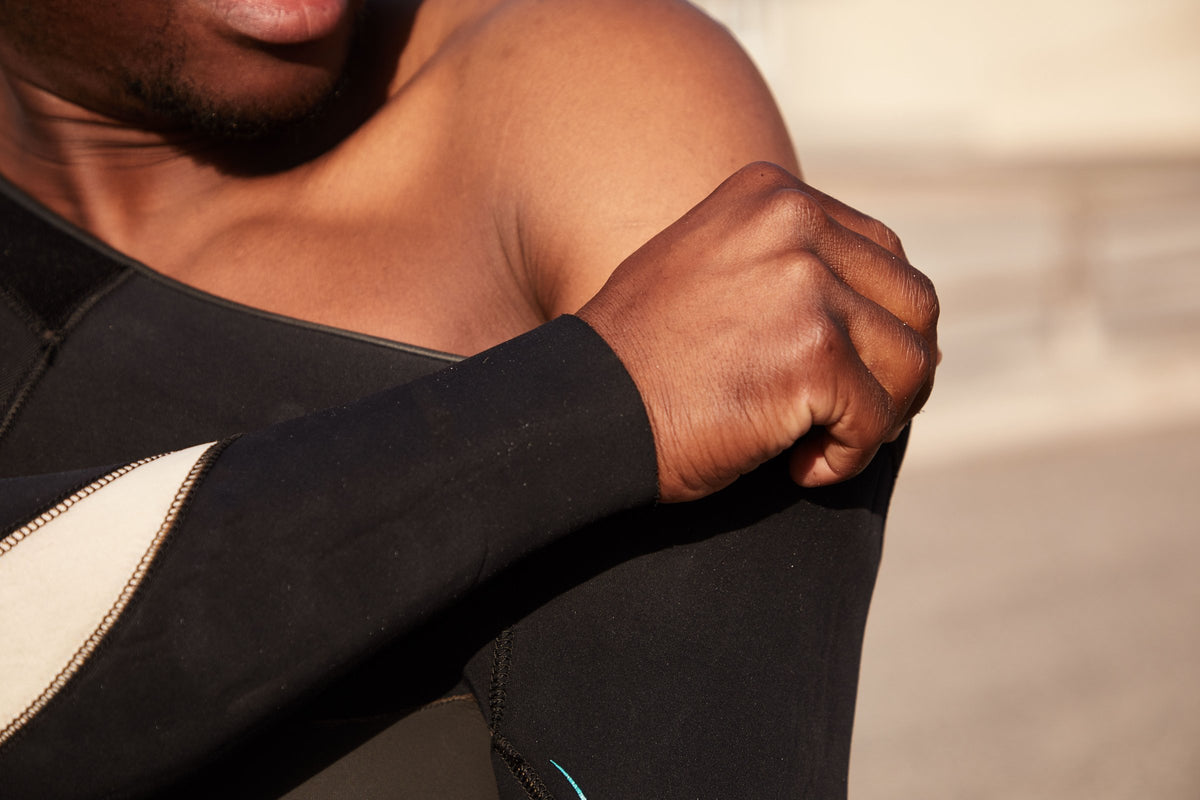
Neoprene is a closed-cell foam, and its insulation comes from gas, typically nitrogen, sealed inside those cells. Pressure squeezes that gas. A 2025 study in Polymers tested 33 commercial neoprene sheets under loads equivalent to about 20 metres of depth. On average the material compressed by 64% and lost 40.9% of its thermal resistance. Even at a load equivalent to 5 metres, thermal resistance fell by 21.5%, because most of the collapse happens in the first few metres.
A 7 mm suit in the shop is a thinner suit at depth. The same study flags fit as critical, since a loose suit lets fresh water flush through. A drysuit avoids most of the squeeze by keeping you dry and letting you add gas as you descend, so the undergarments keep their loft. Some divers fill their drysuits with argon, whose thermal conductivity is about 32% lower than air's. In a blinded 2013 trial, Royal Netherlands Navy divers spent an hour in 13°C water on argon or air, and core temperature and comfort didn't differ.
Does being cold change decompression risk?
Yes, and the timing of the cold counts. DAN describes a US Navy Experimental Diving Unit study published in 2007. Divers without thermal protection sat in a chamber's wet pool at 36°C or 27°C during different phases of the dive. Some profiles produced no decompression sickness when divers were cold on the bottom and warm during decompression. The same profiles with the temperatures reversed produced a significant number of cases.
Warmth speeds blood flow, which moves gas both into and out of tissue faster. Being warm at depth loads more nitrogen, and being cold on the way up releases it more slowly. DAN's advice on heated vests follows from this: be mindful of what the heating does to gas uptake and release, as well as what it does for comfort. How that nitrogen turns into bubbles is covered in our guide to how nitrogen supersaturation causes the bends.
When does a drysuit make sense?
A drysuit makes sense once a wetsuit can't keep you warm for the length of dive you plan. The shift brings a new skill, because the suit is a sealed gas space that changes volume with depth. The PADI Dry Suit Diver course covers adding and venting that gas as depth changes and staying balanced in the water. Its first dive can often count as an Adventure Dive toward Advanced Open Water. A diver who's cold at the end of every dive has a thermal plan problem, and it belongs in the debrief as much as gas use does.
Sources
- DAN Travelers Medical Guide: Exposure-Related Injuries
- Alert Diver (DAN Europe): Hypothermia
- NIST Chemistry WebBook: Thermophysical Properties of Fluid Systems
- Extreme Physiology & Medicine: Moving in extreme environments: open water swimming in cold and warm water
- DAN Southern Africa: Scuba Diving in South Africa
- Polymers: Dependence of Thermal Comfort of Diving Suit on Neoprene Properties and Diving Depth
- Extreme Physiology & Medicine: Argon used as dry suit insulation gas for cold-water diving
- DAN Alert Diver: Heated Garments
Frequently Asked Questions
Why does 24°C water feel colder than 24°C air?
Water pulls heat away 20 to 27 times faster than air, so your skin cools much faster at the same temperature. The chill you feel is a fair reading of what's happening. Your body is losing heat faster, even though the thermometer shows the same number.
Do wetsuits work by warming a layer of water?
Not mainly. The insulation comes from gas sealed inside the neoprene foam. The Polymers study notes that the water film against your skin can help or hinder, depending on how much it circulates. That's why fit does so much of the work: a close suit stops fresh water flushing through.
What are the signs of hypothermia in a diver?
DAN lists shivering, impaired coordination, trouble concentrating, fatigue and withdrawn behaviour as signs of mild hypothermia. As it deepens, divers can become confused, slur their speech and stop shivering. A buddy who stops responding to signals and fumbles simple tasks late in a dive deserves a closer look.
Why do some divers get cold faster than others?
DAN points to body composition: a higher lean-to-fat ratio and a lower body mass relative to surface area both speed up cooling. Thermal protection is the factor a diver controls most directly, and DAN notes that tolerance to cold varies from person to person and from day to day. Two buddies in identical suits can finish the same dive in noticeably different states.
Does swimming harder keep you warm in cold water?
Usually not. At rest, poorly perfused muscle provides around 70% of the body's insulation, according to a 2014 review, and exercise sends blood into it and strips that insulation away. DAN adds that unprotected swimming only maintains core temperature in water warmer than 24°C. For a diver who's already cold, ending the dive beats finning harder.
How should you warm up a chilled diver after a dive?
For mild hypothermia, DAN's guidance is to remove wet clothing and replace it with dry insulating layers and a windproof outer layer, including covering the head. Shivering is effective rewarming at this stage, and warm drinks help a fully alert person. A diver who is confused or has stopped shivering needs gentle handling and medical help.
This is general information, not a substitute for a dive medical or advice from a doctor trained in dive medicine. In an emergency, contact DAN Southern Africa on +27 82 810 6010.
Reviewed September 2026. Devon Ford runs Scuba Evolution, a PADI 5 Star Dive Centre in Glenvista, Johannesburg.
Header photo: Kindel Media on Pexels, used under the Pexels License. View the original photo