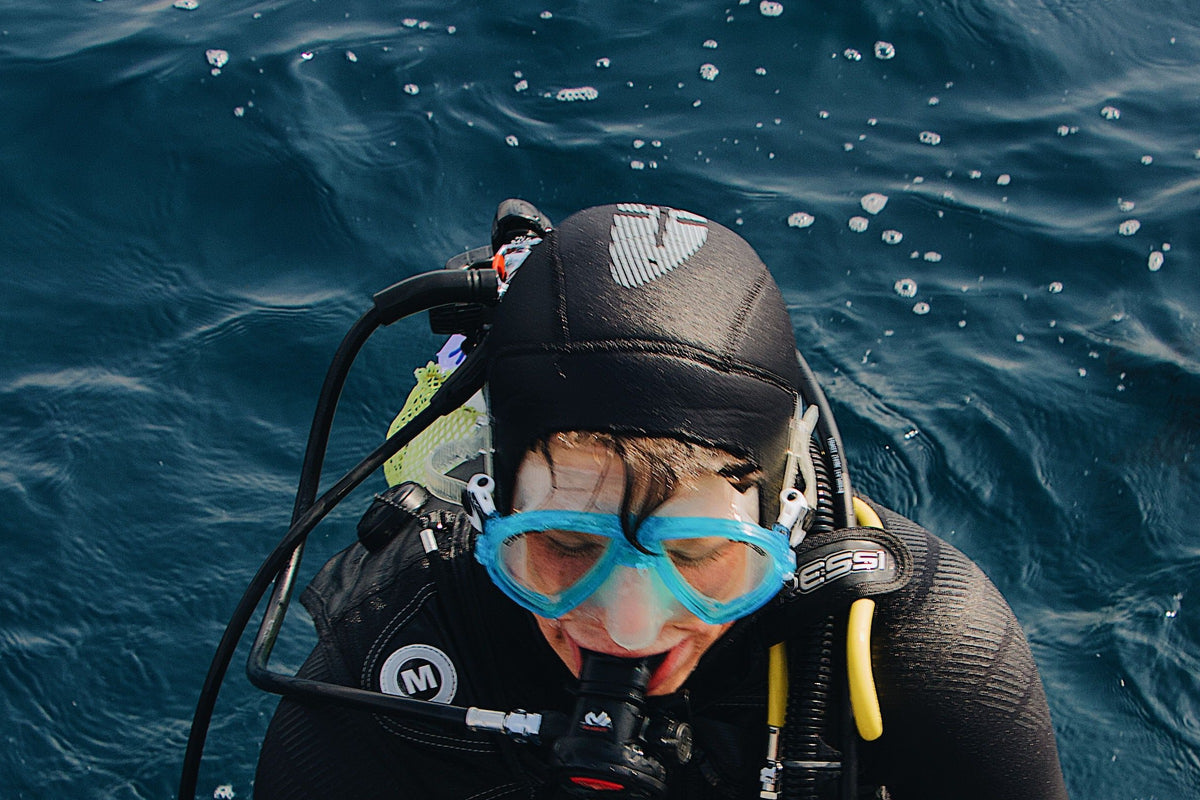
Two dives, neither of them hard, nothing carried further than the car park. By three in the afternoon you are asleep in a chair with your hair still wet, and the drive home has not started.
Tiredness after diving is ordinary, and it is the sum of several loads rather than one. DAN Europe lists seven contributors to it: individual fitness, thermal stress, gear constriction, diving skill, the work done in the water, psychological stress and distraction. Nitrogen gets most of the blame on dive forums and deserves a share of it. For an inland diver the biggest single item tends to be thermal, because water takes heat out of you 20 to 27 times faster than air does, and the body settles that bill afterwards.
Is it normal to be this tired after diving?
In most cases, yes. A dive is low-intensity work done cold, in a suit that grips, breathing through a hose, while your attention is fully occupied. None of those alone would flatten you. Stacked across two dives and a morning of kit handling, they add up to a genuine day's output. DAN Europe's own framing is the useful one: expect tiredness in proportion to the dive, and treat tiredness out of proportion as something else.
The loads that stack are worth naming, because the ones people miss happen before and after the dive rather than during it.
- Heat. Your body defends core temperature for the whole dive and keeps working at it on the surface interval, which is why the second dive usually feels colder than the first.
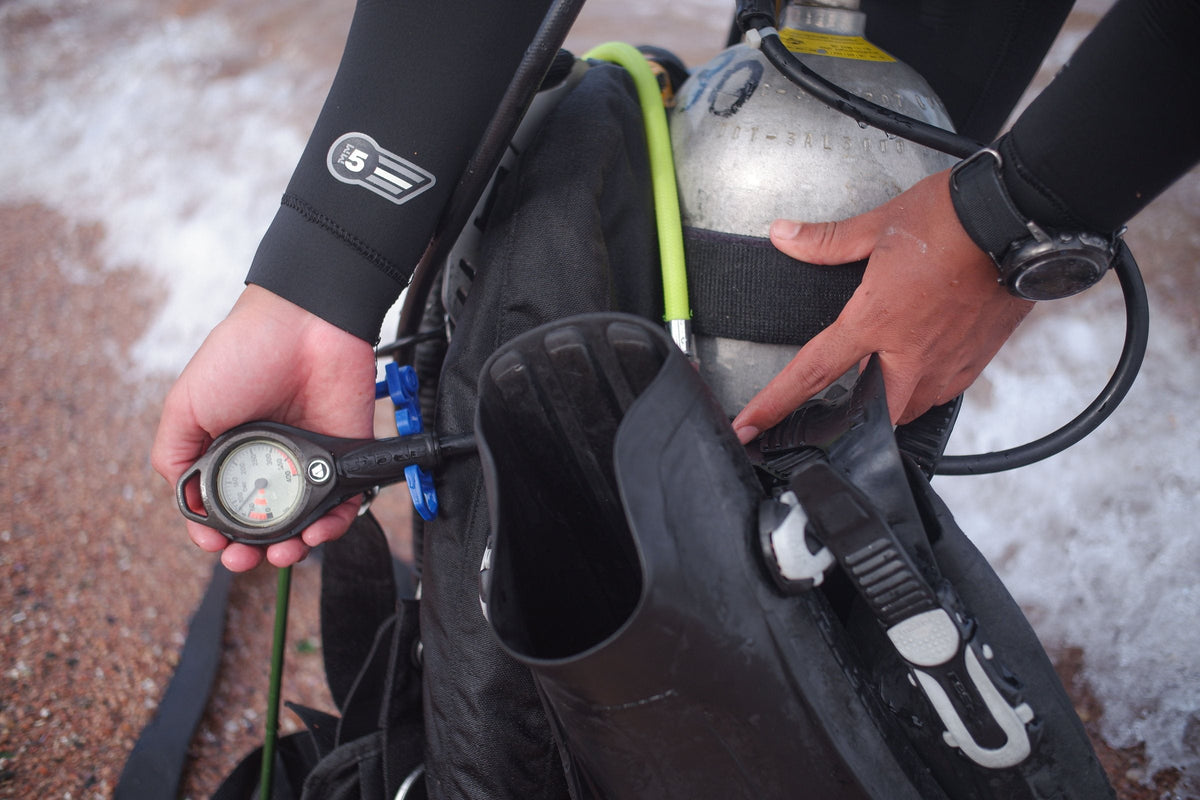
- Gear constriction. A tight suit, a loaded harness and a regulator to breathe through all add work that DAN counts as its own factor.
- Exertion. Finning against anything, walking kit down a bank and climbing a ladder in full gear at the end of it.
- Concentration. DAN lists psychological stress as a contributor whether the dive went badly or brilliantly. A great dive still costs attention.
- Heat stress before the water. DAN Southern Africa warns that a long spell suited up on shore or on deck can bring on heat stress and exhaustion, with dizziness and nausea as the common signs. The dive then starts from a deficit.
- The drive. The Gauteng weekend runs drive down, dive, drive back on Sunday night. That last part is not physiology, and it is still half the reason Monday hurts.
Does being cold make you more tired after a dive?
Cold does more than make you tired, and the timing of it changes your decompression stress. DAN's dive medical reference is specific. Being warm during descent and on the bottom increases inert gas uptake, which the reference describes as the equivalent of a deeper or longer dive. Being warm during the ascent and stops promotes gas elimination instead.
The pattern that works, then, is cool going down and warm coming up. The pattern that does not is the common one: roasting in a wetsuit on a hot bank, getting in to cool off, then finishing the dive properly chilled and shivering on the surface. Shivering is expensive work, and it carries on long after the kit is off. Getting out of the top half of the suit, drying properly and warming up between dives is the cheapest recovery available.
Does dehydration cause post-dive tiredness?
Less than the internet says. DAN's reference on the contributing factors to decompression sickness puts it bluntly. Dehydration gets a substantial amount of attention in the lay diving community, probably more than is warranted. Dive profile, thermal stress and exertion are far more important. That correction is worth keeping, because divers reach for a bottle of water and then ignore the two things doing the damage.
Fluid loss is still real. You sweat inside a suit before you get in, you pass more urine during the dive than you expect, and neither gets replaced while you are breathing dry gas. Drink water between dives and eat something. Treat it as housekeeping rather than as the cure for feeling wrecked.
Does nitrox make you less tired?
The shop sells the Enriched Air course and the honest answer is still no. DAN Southern Africa's position is that objective studies have not found a reliable difference in fatigue or cognitive performance after dives on air compared with nitrox. Three peer-reviewed papers have looked at it. DAN's own reviewers rate none of them large enough or powerful enough to settle the question, and describe the supporting data as not compelling.
Divers do report feeling fresher after a nitrox weekend, and that report is sincere. Blinded comparisons, where the diver does not know which gas is in the cylinder, stop producing the effect. Part of what is left may be the profile rather than the gas, since a diver paying for nitrox tends to dive it more conservatively.
What the gas buys is measurable and different: more no-stop time at a given depth, with a shallower maximum depth as the trade. That is the reason to do the Enriched Air Diver course. Feeling better on Sunday evening is not a claim we make for it.
Is post-dive fatigue a sign of decompression sickness?
It can be, and this is the part of the answer the dive-forum threads skip. Unusual fatigue is a recognised symptom of decompression sickness. DAN Europe is candid that the mechanism behind it stays unclear, likely a response to events happening across several tissues at once.
Two things separate ordinary tiredness from the kind that needs a phone call. The first is proportion: tiredness that fits a cold, long or busy dive, and that lifts after food, water, warmth and a night's sleep. The second is company. Fatigue arriving alongside anything else changes the picture completely: tingling or numbness, weakness in a limb, joint or muscle pain, dizziness, difficulty walking, a mottled rash, or trouble passing urine.
Unusual fatigue plus any second symptom is a reason to contact DAN Southern Africa, not a reason to lie down. Sleeping it off deletes the only observation window anyone has. The mechanism itself is covered in the article on how decompression sickness happens, and the assessment belongs to a doctor rather than to a buddy on the bank.
How long should post-dive fatigue last?
There is no published normal duration, and anyone who gives you one is guessing. DAN draws its line on the character of the fatigue rather than on hours. Most divers are back to themselves after a meal, fluids, warmth and a full night.
Day-after tiredness following a weekend of repetitive dives has an obvious set of non-nitrogen explanations, and the drive home is high on the list. Fatigue that runs into a second day with nothing else attached is still worth mentioning to a doctor, particularly before you dive again. Diving on top of unexplained fatigue removes your ability to tell what caused what.
Sources
- DAN Europe, Alert Diver: tiredness after diving. The seven-factor list and the distinction between expected tiredness and undue fatigue as a symptom.
- DAN Southern Africa: air, nitrox and fatigue. The position that controlled studies show no reliable difference, and the assessment of the three peer-reviewed papers.
- DAN: contributing factors to decompression sickness. Thermal state during descent and ascent, exertion, and the weight properly given to dehydration.
- DAN Southern Africa: wetsuits and heat stress. Suiting up early, heat stress on shore, and the symptoms it produces before the dive starts.
Frequently Asked Questions
Is it normal to be exhausted after two easy dives?
In most cases, yes. DAN Europe lists seven contributors, including thermal stress, gear constriction, exertion and psychological stress, and tiredness in proportion to the dive is expected. Tiredness out of proportion to it is treated differently.
Does nitrox reduce post-dive tiredness?
DAN Southern Africa's position is that objective studies have not found a reliable difference in fatigue between air and nitrox. Enriched air buys no-stop time at depth, with a shallower depth limit as the trade.
Can post-dive fatigue be decompression sickness?
Unusual fatigue is a recognised symptom. Fatigue out of proportion to the dive, or arriving with tingling, weakness, joint pain, dizziness or a rash, is a reason to contact DAN Southern Africa and a doctor rather than to sleep.
Does being cold make the tiredness worse?
Yes, and it also changes your decompression stress. DAN's reference notes that being warm on the bottom increases gas uptake, while being warm on the ascent helps elimination. Shivering afterwards costs energy for hours.
Why are you starving after a dive?
Defending core temperature in water is metabolic work, and shivering costs more again. Add the kit handling and the finning, and a short, undemanding dive still produces a real appetite.
Should you dive again while you are still flat?
That is a question for a doctor if the fatigue is unexplained. Diving on top of it removes any ability to work out what caused what, which complicates assessment if symptoms do appear.
This is general information, not a substitute for a dive medical or advice from a doctor trained in dive medicine. In an emergency, contact your local emergency services and DAN Southern Africa on +27 82 810 6010.
Reviewed September 2026. Devon Ford runs Scuba Evolution, a PADI 5 Star Dive Centre in Glenvista, Johannesburg.