




How to choose a scuba regulator
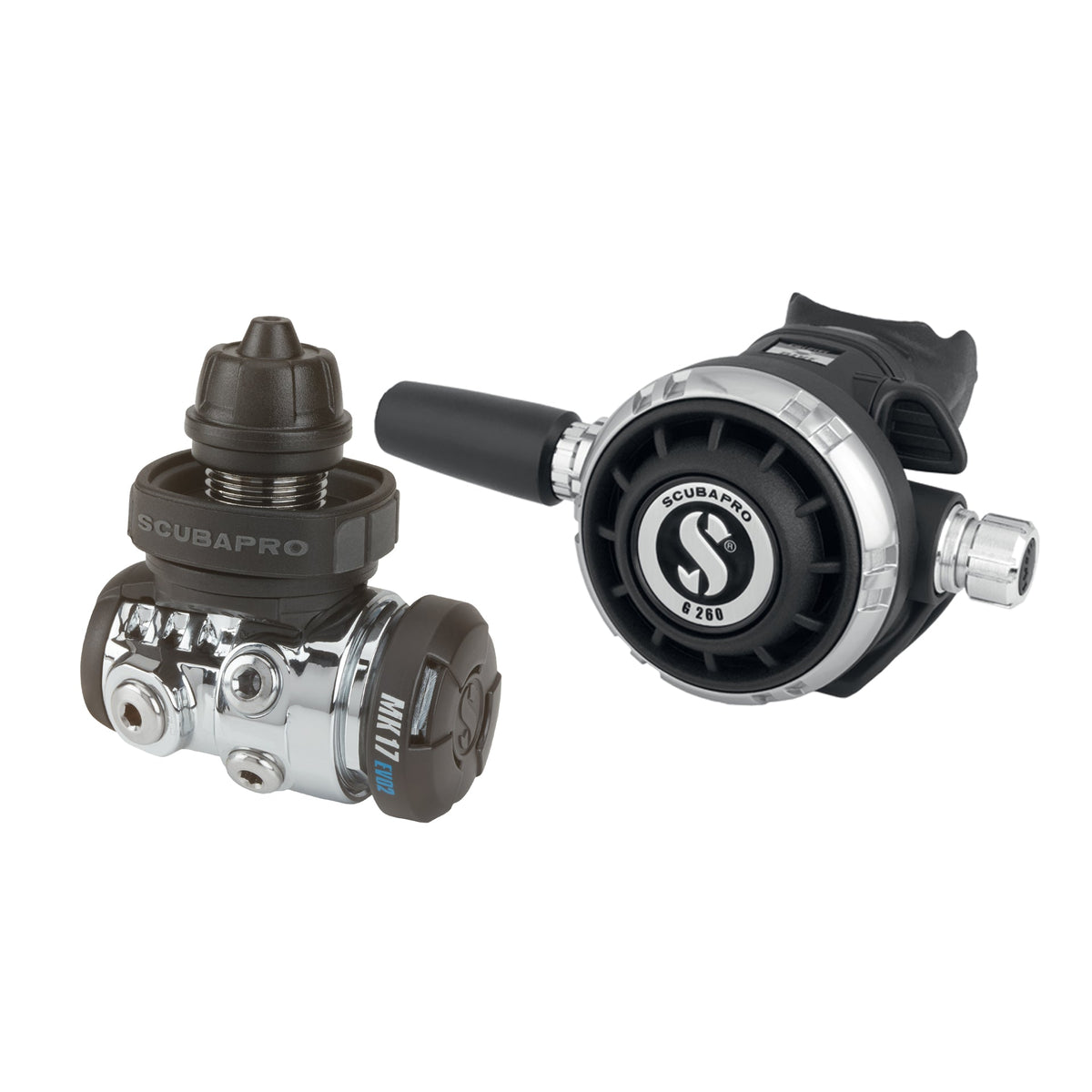
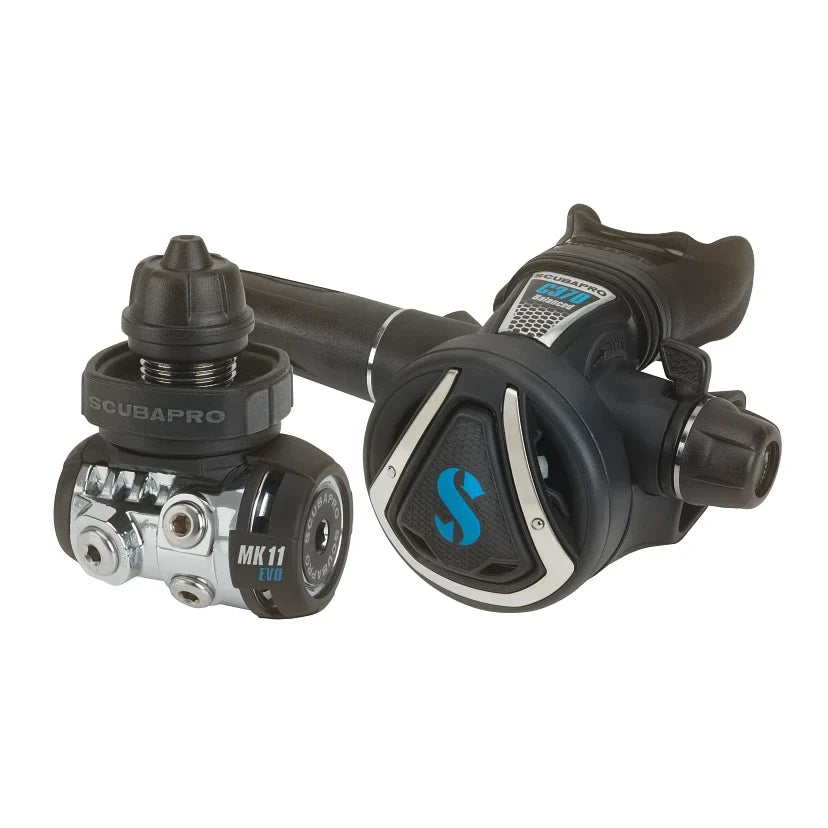
Choose DIN unless you have a reason not to. Most of our customers dive DIN, so our regulators default to it, and a DIN first stage takes a yoke adaptor for the odd cylinder that needs one. After the connection, the questions are how easily it breathes as the cylinder empties, how it copes with cold water and who services it. A first and second stage starts from about R6,000, and a full set with an octopus from about R8,600.
What separates one regulator from another
- Balanced or unbalanced. A balanced first stage keeps breathing effort steady as cylinder pressure falls, so the end of the dive breathes like the start.
- Environmental sealing. A sealed first stage keeps water and silt out of the mechanism and resists icing, which suits cold water and divers who dive often.
- Ports. Count the high-pressure ports if you want a transmitter for an air-integrated computer as well as a pressure gauge.
- Connection. DIN screws into the valve and takes 300 bar cylinders; yoke, also called INT, clamps over the valve and stops at 232 bar. Adaptors bridge the two.
Sets and servicing
Most of the range is sold as a first and second stage or as a full set with an octopus, from Apeks, Mares, Tecline, Scubapro, Aqualung and Cressi. Most full sets cost about R15,000 to R33,000. A regulator is the piece of kit you breathe from, and one serviced two years ago isn't serviced. We book the Annual Regulator Service in store and route it to the maker's appointed agent. The Equipment Specialist course covers how your kit works and how to look after it between services.
Questions we get asked
Should I buy a DIN or a yoke regulator?
DIN, for most divers. It screws into the valve with the O-ring seated in the regulator, takes 300 bar cylinders and fits a yoke valve with an adaptor. Our regulators default to DIN, and INT stays available if you want it.
Can I use a DIN regulator on a yoke cylinder?
Yes, with a DIN-to-yoke adaptor fitted to the regulator. Going the other way, a yoke regulator only fits a DIN valve that has a removable insert.
How often does a regulator need a service?
We recommend a yearly service, because a regulator serviced two years ago isn't serviced, and sooner if it free-flows, breathes harder than it did or has taken in water. We book the Annual Regulator Service in store and send it to the maker's appointed agent.
What does a balanced regulator do?
A balanced first stage keeps its intermediate pressure steady as the cylinder empties, so breathing effort stays the same from the start of the dive to the end. Unbalanced designs are simpler and cheaper but breathe harder at low cylinder pressure.
Do I need an octopus?
Yes. The octopus is the spare second stage a buddy breathes from if they run low or out of gas, and it's standard kit on recreational dives.