

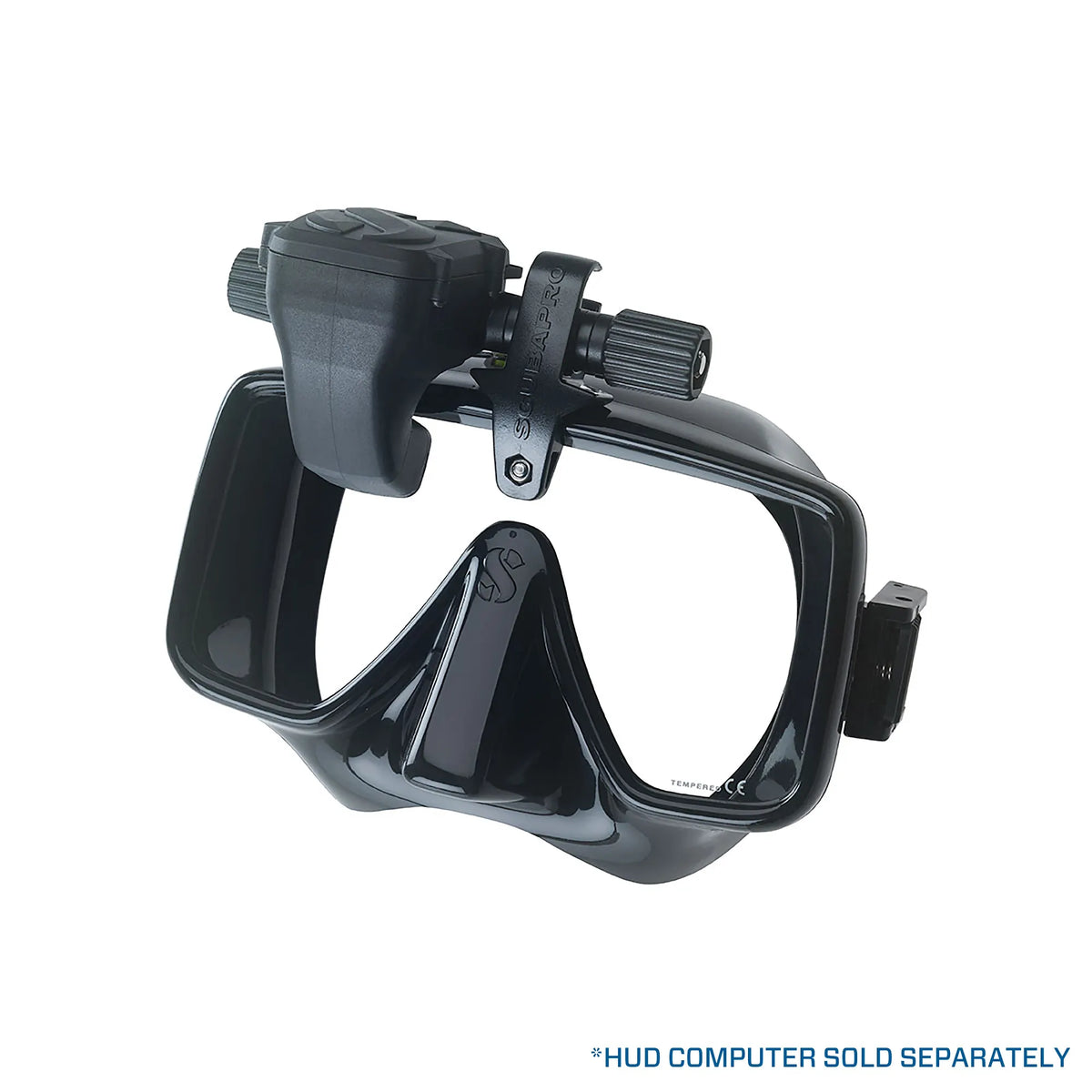
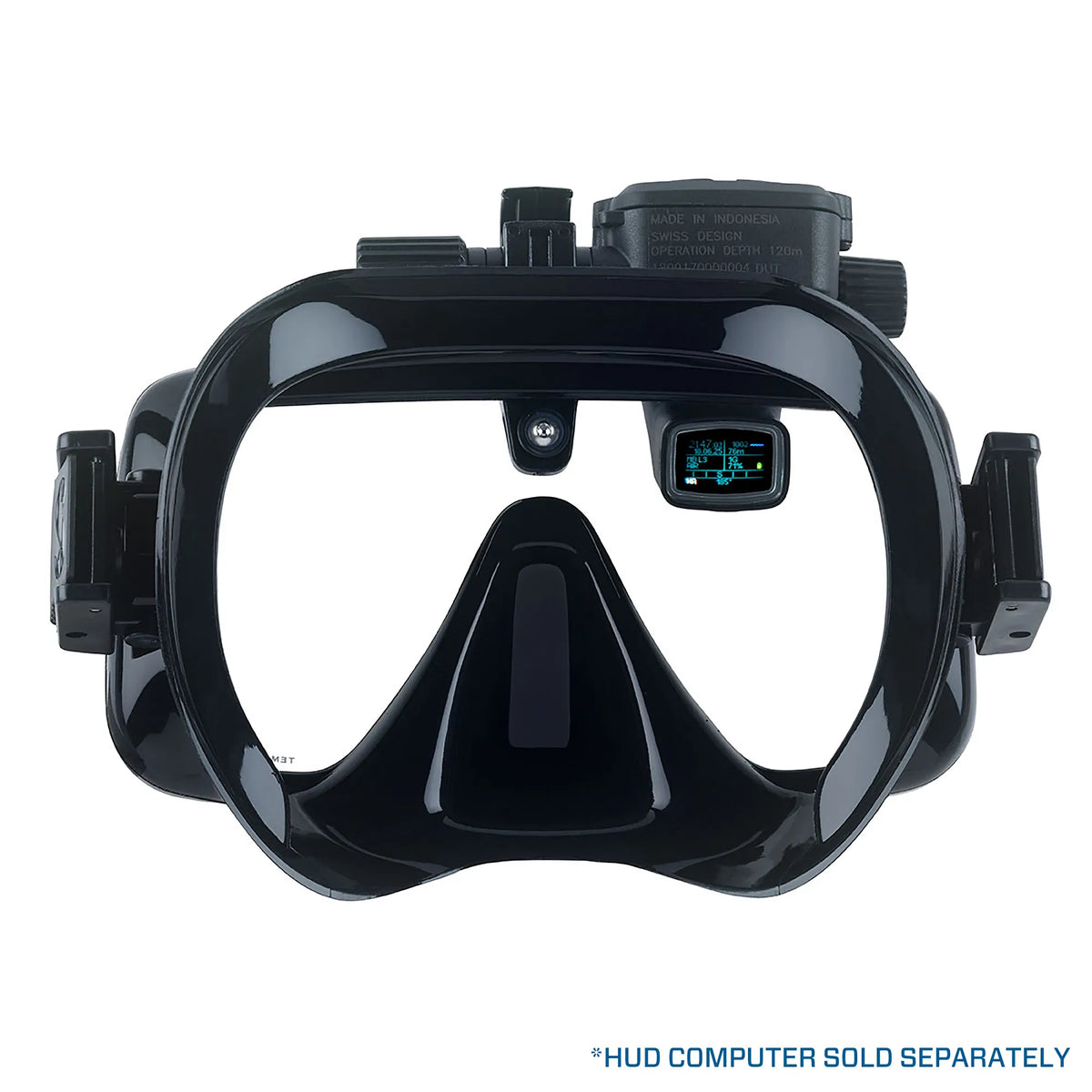
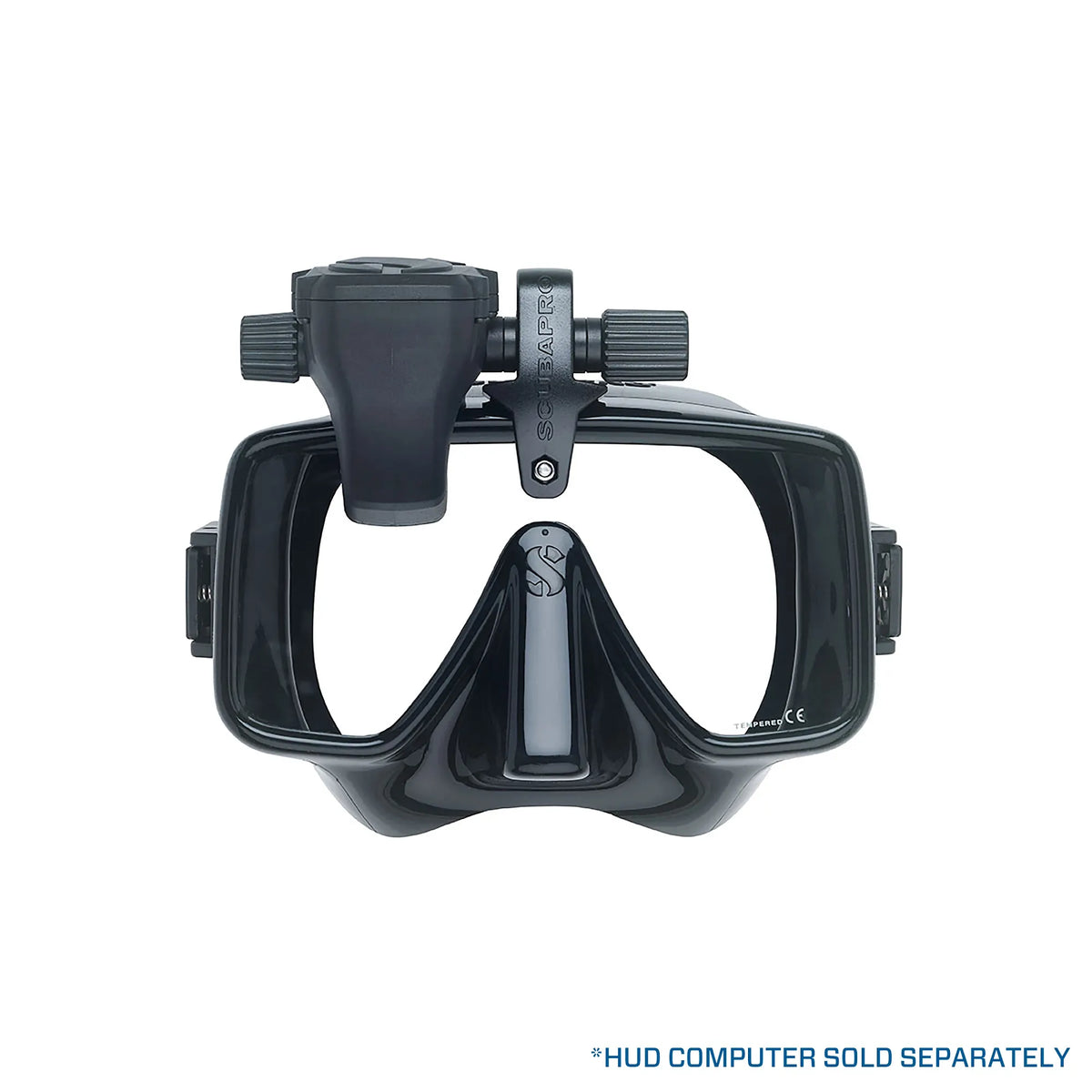
Frameless Mask Black with HUD Support

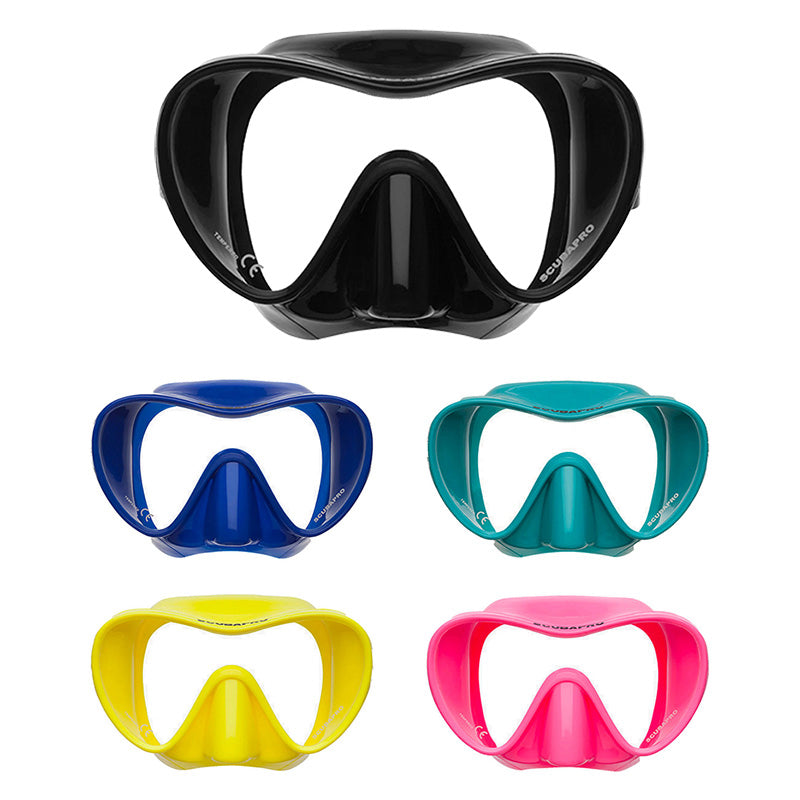
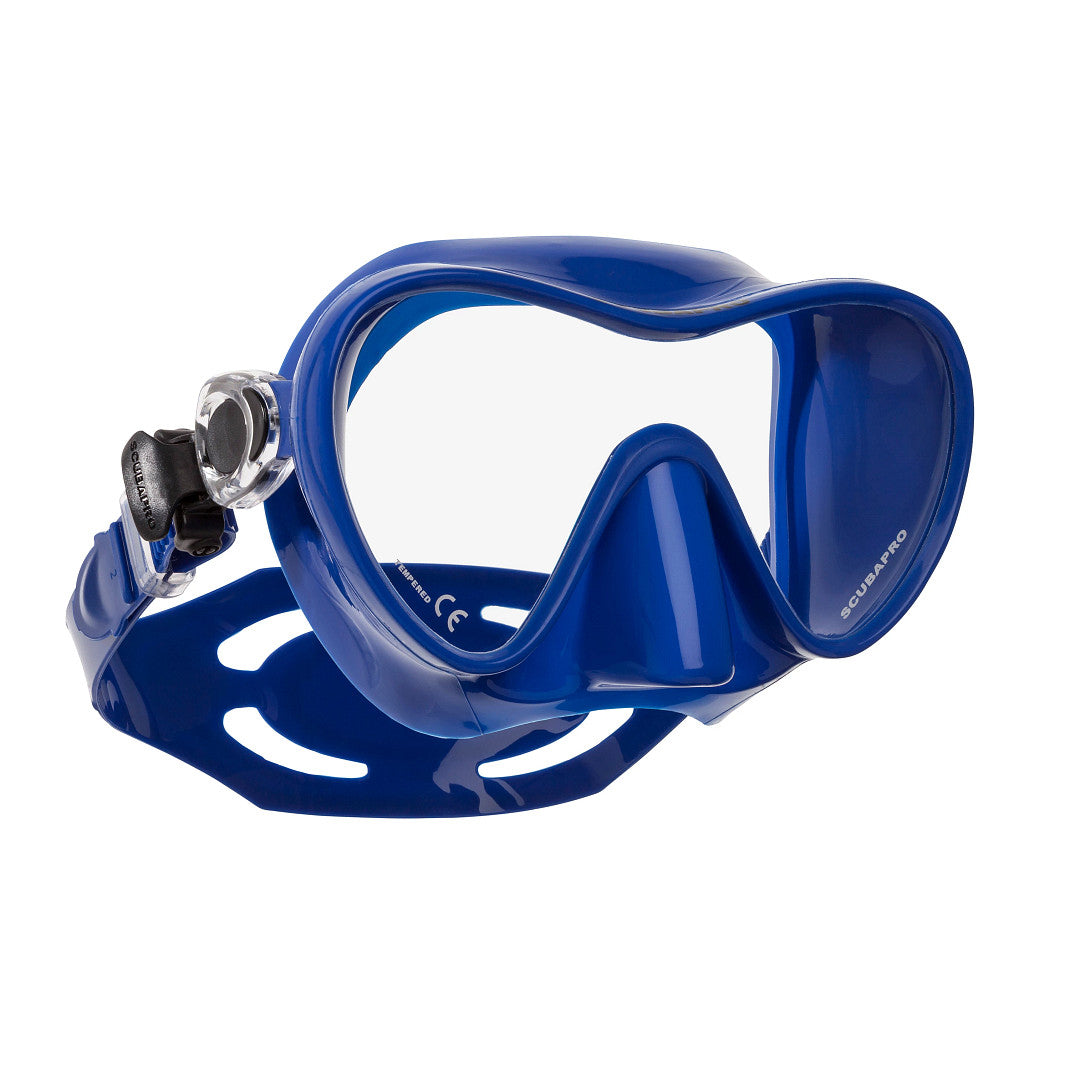
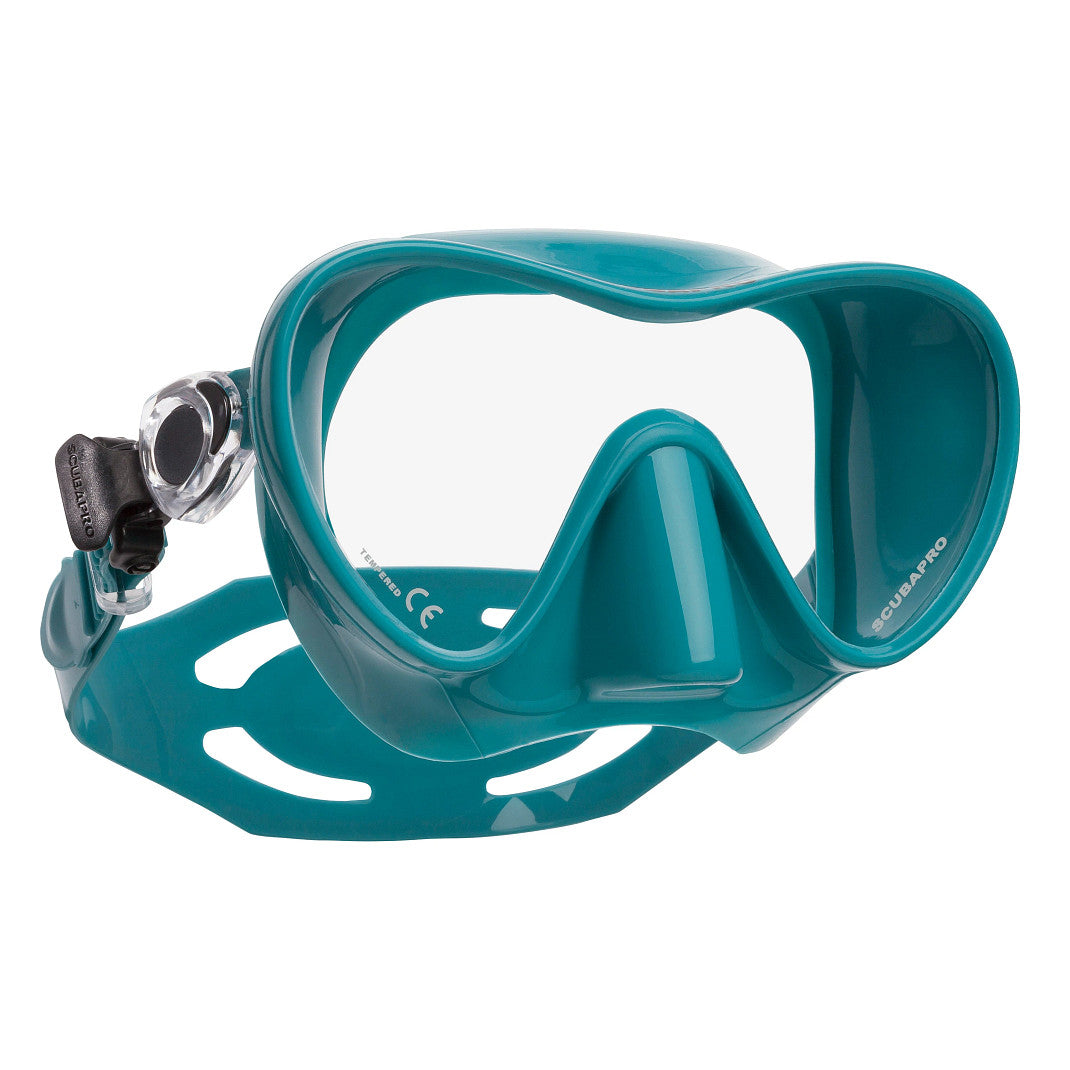


About Scuba Single Lens Masks
Single-lens masks from Tusa, Scubapro, Tecline and XDEEP, including the Scubapro Crystal Vu, Tusa Freedom HD, Tecline Frameless and XDEEP Radical. To test the fit, rest the mask on your face without the strap and breathe in gently through your nose; a mask that seals stays put. For corrective lenses, look at twin-lens masks.
How to choose a single-lens mask
A single-lens mask gives one unbroken window across both eyes, a wide field of view and no frame divider in the middle. Most single-lens masks here cost about R1,300 to R2,000, and simpler models start from about R510. Choose the one that seals on your face, then think about extras.
Fit and volume
- The fit test. Hold the mask on your face without the strap, breathe in through your nose and let go. A mask that seals stays put.
- Low volume. A mask that sits close to your eyes needs less air to clear and equalise, and many divers prefer it.
- Skirt colour. A black skirt cuts glare, which photographers tend to prefer. A clear skirt lets in more light.
Corrective lenses and care
Single-lens masks give a wide view, but most drop-in corrective lenses need a twin-lens mask. Short-sighted divers can use stick-on lenses on a single lens, or choose a prescription mask. Clean the factory silicone film off the lens once, use a defog before each dive, and keep the mask in a hard case. Brands here include Cressi, Scubapro, Tecline, Tusa and Aqualung. For the full range, see scuba masks.
Questions we get asked
Is a single-lens or twin-lens mask better?
Neither is better. A single lens gives an unbroken view, while a twin lens suits corrective lenses. Choose by fit.
Can I put prescription lenses in a single-lens mask?
Usually not drop-in lenses. You can fit stick-on lenses, or choose a mask built for corrective lenses or have lenses bonded.
What is a low-volume mask?
A mask that sits close to your face, with less air inside. It clears faster and equalises with less effort, and it tends to give a slightly smaller field of view.