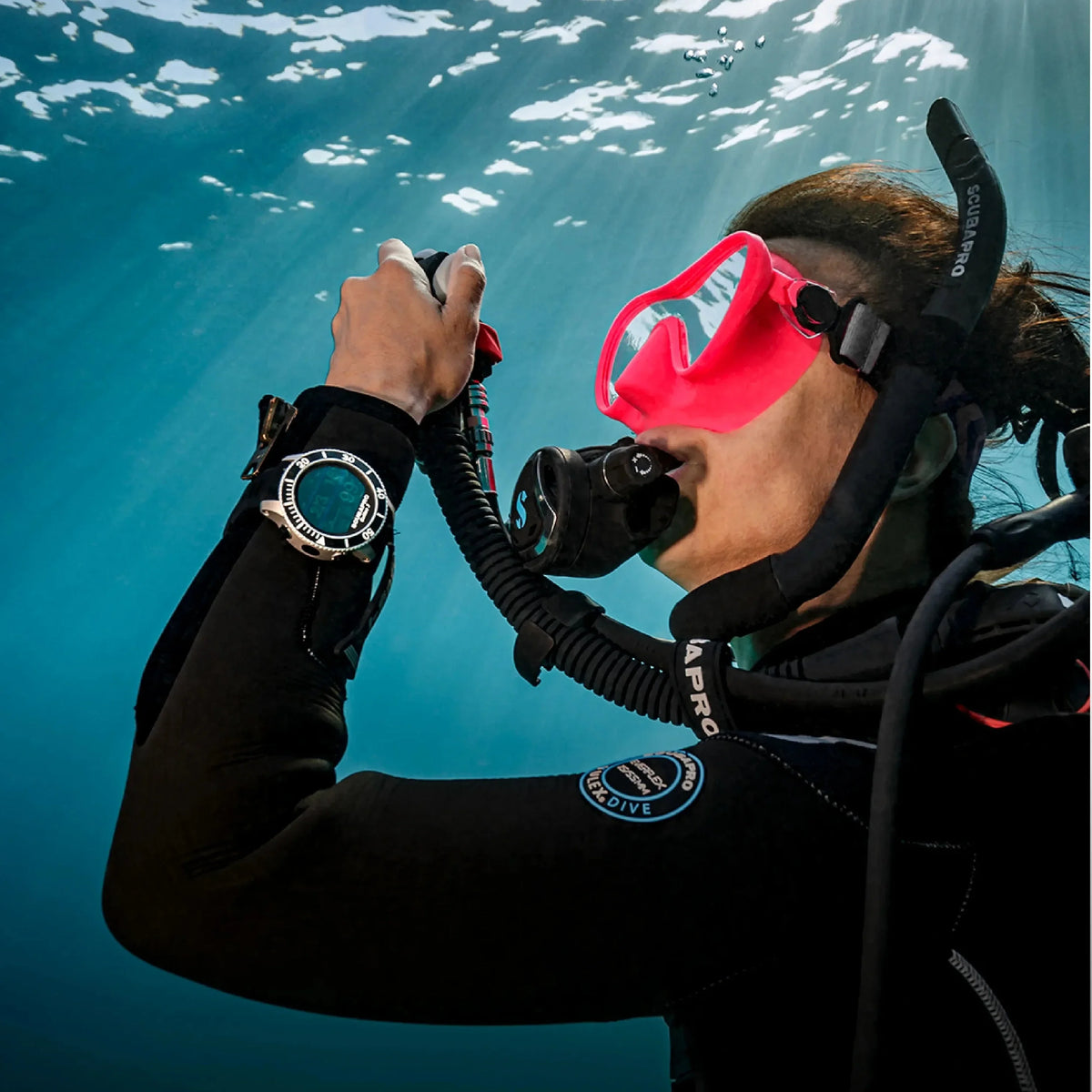
A yoke regulator clamps over the outside of the cylinder valve and works up to 232 bar. A DIN regulator screws into the valve and comes in 232 bar and 300 bar versions. If you only dive 232 bar cylinders, yoke is simple and does the job. If you want the widest choice, buy a 300 bar DIN regulator. It screws straight into 232 and 300 bar valves, and a yoke adaptor lets it clamp onto 232 bar yoke valves.
The connection doesn't change how the regulator breathes. That comes from the first and second stage. The connection decides which cylinders you can use, and what happens when a fill station hands you a 300 bar cylinder.
What is the difference between DIN and yoke regulators?
A yoke, also called an A-clamp or international connection, is a clamp that goes around the valve and tightens onto it with a screw. ISO 12209:2013, the outlet standard for breathing-air cylinder valves, lists a yoke-type outlet for scuba up to 232 bar. A DIN connection is threaded. The same standard covers threaded outlets for 232 bar and 300 bar, and a German dealer ties the G5/8 thread to DIN EN 144-2.
| Yoke (A-clamp) | DIN | |
|---|---|---|
| How it connects | Clamps over the valve | Screws into the valve |
| Highest working pressure | 232 bar | 232 bar or 300 bar, depending on the fitting |
| Fits a 232 bar valve | Yes | Yes, with a 232 or 300 bar DIN fitting |
| Fits a 300 bar valve | No | Only with a 300 bar DIN fitting |
Which is better for scuba diving in South Africa?
Neither breathes better. The choice comes down to the cylinders you'll dive. Our fills page notes that we fill to the pressure stamped on the cylinder, 232 or 300 bar. Ask your dive operator which valve and pressure their cylinders carry before you pack.
A 300 bar DIN regulator is the widest choice. Mike's Dive Store, a US retailer, notes that a 300 bar DIN fits both 232 and 300 bar valves, while a 232 bar DIN fits only 232 bar valves. A DIN fitting for 300 bar is longer than the 232 bar one, so the two don't swap.
Can you use a DIN regulator on a yoke cylinder?
Yes, with an adaptor, or with a convertible valve. A DIN-to-yoke adaptor turns a DIN first stage into a yoke connection, so the same regulator works on both types of valve. With an adaptor fitted you're on a 232 bar yoke connection, so use that setup only on cylinders within that rating. Two cautions from the dive trade. An adaptor makes the first stage stand a little further from the valve. Dive Rite also warns that a DIN fitting can lock into a yoke adaptor left on permanently. Fit it for the trip and take it off afterwards.
Undercurrent, the dive-travel newsletter, adds a storage note: don't leave a lightweight aluminium adaptor on a DIN regulator for long periods. We stock adaptors and convertors if you need one.
Can you use a yoke regulator on a DIN valve?
On a 232 bar DIN valve, often yes. Most standard-pressure DIN valves worldwide are convertible, according to Undercurrent: a screw-in insert lets a yoke regulator clamp on. A 300 bar valve is a different case. Undercurrent says not to use a yoke regulator on one of these high-pressure cylinders. That applies even if an adaptor fits, because the pressure is too high to be considered safe.
How do you tell which valve a cylinder has?
Look at the outlet. A DIN valve has a round threaded opening that the regulator screws into, and a yoke valve is the type a regulator's clamp fits around. If it's DIN, check the pressure marking and the thread length, because the 300 bar fitting is longer. Don't force a regulator onto a valve, and ask the fill station or your instructor if the marking is unclear.
Which regulator should you buy?
- You dive local 232 bar cylinders only: a yoke regulator is the simplest.
- You dive away from home or with unfamiliar operators: a DIN regulator with a yoke adaptor works on both valve types.
- You want to use 300 bar cylinders, now or later: a 300 bar DIN regulator.
- You're unsure: a 300 bar DIN with an adaptor covers the most ground.
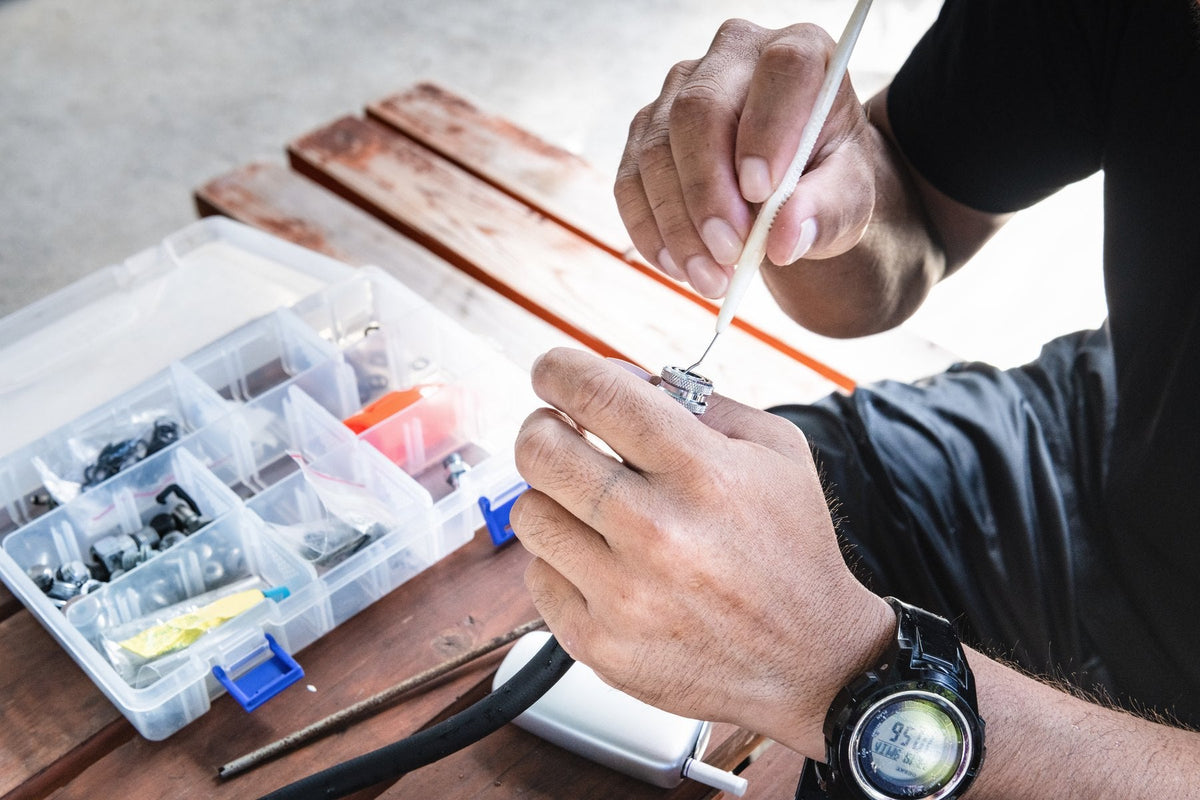
Our guide to what scuba gear to buy first explains why a regulator comes late in the order. When you're ready, browse the scuba regulators or ask the shop which connection suits your cylinders. A regulator also needs regular servicing, and our gear servicing page covers how that works.
Sources
- ISO 12209:2013: Gas cylinders, outlet connections for gas cylinder valves for compressed breathable air (CSA Group catalogue entry)
- DIN EN 144-2 and DIN EN ISO 12209, G5/8 thread (tek-diver-shop.de)
- Undercurrent (November 2019): DIN and yoke regulators
- Mike's Dive Store: DIN versus Yoke (A-Clamp) regulators
- Dive Rite DIN-to-Yoke Spin-On Adapter (Dive Gear Express)
Frequently Asked Questions
Is DIN better than yoke?
Not for breathing. The regulator's stages decide that, not the connection. DIN reaches 300 bar and a yoke stops at 232 bar, so DIN suits more cylinders. For 232 bar cylinders only, yoke is simple and does the job.
Can you use a DIN regulator on a yoke tank?
Yes, with a DIN-to-yoke adaptor, or by using a convertible valve. With the adaptor fitted, use it only within a 232 bar rating, and take it off after the trip, as Dive Rite warns a DIN fitting can lock into it if it's left on.
Can you put a yoke regulator on a 300 bar cylinder?
No. Undercurrent advises against it even if an adaptor fits, because the pressure is too high to be considered safe. Use a regulator rated for 300 bar, fitted by its DIN connection.
Does a 300 bar DIN regulator fit a 232 bar cylinder?
Yes. Mike's Dive Store notes that a 300 bar DIN fits both 232 and 300 bar valves. A 232 bar DIN fits only the 232 bar valves.
How do you know if a cylinder is DIN or yoke?
A DIN valve has a round threaded opening the regulator screws into, and a yoke valve is the type a clamp fits around. Check the pressure marking too. If you're unsure, ask the fill station before connecting anything.
Which should a new diver buy?
When you buy one, a 300 bar DIN regulator with a yoke adaptor works on both valve types and is the most flexible choice. Use the adaptor only on 232 bar cylinders.
This is general information, not a substitute for dive training or manufacturer instructions. Check your regulator's manual for its rated pressure before connecting it to any cylinder.
Reviewed November 2026. Devon Ford runs Scuba Evolution, a PADI 5 Star Dive Centre in Glenvista, Johannesburg.