 Pay Later


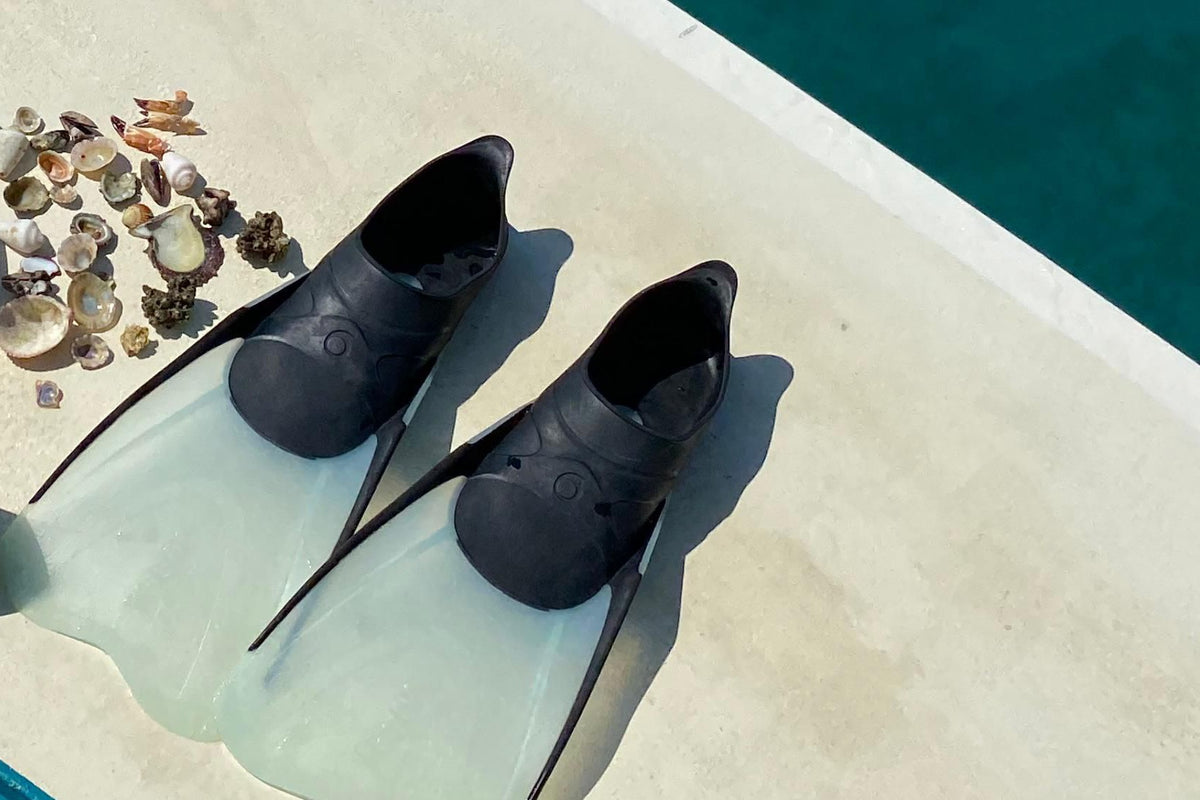
Where you need boots for warmth or foot protection, and anywhere other than a tropical boat dive, buy open-heel fins and wear them with boots. Full-foot fins suit warm-water boat diving and travel, and PADI says so plainly on its fins page. Everything else in this guide is a refinement of that one choice.
The refinement is where the money goes wrong. A diver buys fins for a warm-water trip, then stands on a Highveld dam wall in winter boots and finds the foot pocket won't close. Here's how to choose by foot style, blade, fit and water, with prices read from our store on 9 November 2026.
Open heel or full foot: which fin style do you need?
PADI separates the two by what you wear on your feet. Full-foot fins slip on like a shoe and go on bare or in a thin sock. Open-heel fins secure the foot with an adjustable strap and take a neoprene or drysuit boot.
- Full foot. Light, cheaper and travel-friendly, and PADI calls them suited to warmer water. They can't be adjusted, so the pocket has to fit your foot from the start.
- Open heel. PADI describes them as more powerful with heavier gear, and the choice for colder water. The boot protects your feet on land as well as in the water, useful at shore entries.
- Spring straps. PADI notes these let you slip an open-heel fin on and have the spring keep it snug. They fit most open-heel fins, and PADI advises carrying a spare strap because a broken one makes the fin unusable.
If you'll dive both a Highveld dam and a warm sea, open heel covers both. A full-foot fin only covers the warm one. Browse open-heel scuba fins or full-foot (closed-heel) scuba fins, or see the whole scuba fins range. SCUBAPRO's models are grouped together in SCUBAPRO fins.
Paddle, split or vented: which fin blade suits you?
There's no single best blade, because the blade has to suit your legs and your kick. PADI's guide describes the main types, and its fins page lists vents, ribs, rails, channels and splits as blade features.
| Blade type | What PADI says | Where it fits |
|---|---|---|
| Paddle | Simple, usually the cheapest, and generally rigid. Harder work but good control. | A first pair, or a diver who wants precise turns and a frog kick. |
| Channel (flexing) | Soft material that flexes into a U shape while kicking to channel water flow. | Divers who want a softer feel than a flat paddle. |
| Split | Jet propulsion from small, quick flutter kicks. Kinder on weaker legs, but less precise for turning, reversing or frog kicks. | Flutter kickers with tired or weaker legs. |
| Vented | Listed by PADI as a blade feature, not a separate fin type. | Check the maker's own description for what the vents are meant to do. |
Rigid or flexible: how stiff should scuba fins be?
Stiff enough for your kick, and no stiffer. TDI SDI's leg-cramp guide says to match stiffness to your kicking style without going too stiff. It adds that flutter kickers generally want a more flexible fin than frog kickers.
Stiffness and fit work together on cramps. The same guide links calf cramps to improper fin or boot fit, tight straps and a foot pocket that squeezes the foot. PADI adds that fins that feel too long or heavy can cause cramps and poor stability. A cramp at 15 metres on a first ocean dive is a bad way to learn that your fins were a size too small.
Short travel fin or long blade: what suits you?
Fins that feel too long or heavy are the ones PADI warns about, and a travel fin is built to be compact and light. PADI calls open-heel fins more powerful, especially with heavier gear, so a compact fin trades some of that for luggage space.
On 9 November 2026 the open-heel travel fins in our store were the SCUBAPRO Go Travel at R1,795.50 and the TUSA Travel Right at R1,749. Full-foot fins start lower: the Mares Wave Full Foot was R499 and the Avanti Pure R999 that day. Weight limits differ by airline, so check yours before you pack. Our guide to which scuba gear to buy first covers where fins sit in the order of purchases.
What size scuba fins do you need with boots?
Start from your shoe size, then try the fin on with the boot you'll dive in. PADI says the extra thickness of a boot may mean a bigger fin size, and that your heel should stick out a couple of inches or so behind the pocket.
- Open heel. Sit down in the fin with your boot on and wiggle your foot up and down. The fin should move with your foot without slipping, and your toes shouldn't be crushed.
- Full foot. There's no strap to adjust, so check there's no pressure on the toes or arch, and that the heel doesn't lift when you push off.
- Two sets of boots. If you own a thin boot and a thick one, try the fin over the thicker boot first, then check it with the thin one.
Boot thickness follows your exposure suit, not your fins. Our guide on how a wetsuit should fit covers the suit side, and the fin pocket then has to take whichever boot you choose.
Which fins suit Highveld dams, the Cape and a Sodwana boat trip?
Match the fin to the foot covering, and match the foot covering to the water. We haven't found a reliable published water temperature for the Gauteng dams and quarries, so none is quoted here. Ask the operator for the day's reading before you pack.
| Where you dive | Foot covering | Fin style to look at |
|---|---|---|
| Inland dams and the Cape coast, where your suit needs boots | Neoprene boots, with a hood and gloves as your suit needs | Open heel, sized over the boot. |
| Winter in a drysuit | Drysuit boots, which are bulkier than neoprene boots | Open heel with a pocket and strap range that take the drysuit boot. Try them on in the suit. |
| Boat dives in warm-water destinations, such as Sodwana or the Mozambique side | Bare feet, a thin sock or a thin boot | Full foot, or a light open-heel travel fin. |
| Flying with the kit | Depends on the water you're flying to | Compare fin weight and blade length as well as price. |
Our guide to drysuit or wetsuit for Joburg winter diving covers the exposure side. If you do move to a drysuit, the Dry Suit Diver course is R5,000 and covers the suit skills. If you're new to diving and still choosing kit, start with the Open Water Diver course at R5,650, and buy fins with your instructor's advice.
Sources
- PADI Blog, Fins Up: Choosing Your Scuba Footwear. Full foot versus open heel, boots, sizing, blade types and spring straps.
- PADI, Fins. Fin styles, spring straps, and blade features such as vents and splits.
- TDI SDI, Don't Be a Pain: Leg Cramp Remedies. Fin stiffness, foot pocket fit and cramps.
- Prices: scubaevolution.co.za, read 9 November 2026.
Frequently Asked Questions
Are open-heel or full-foot fins better for diving in South Africa?
Open-heel fins suit most South African diving, because they work with boots wherever you need warmth or foot protection, including shore entries. PADI recommends full-foot fins mainly for warm-water boat diving.
Do divers need boots with open-heel fins?
Yes. PADI says open-heel fins need neoprene or drysuit boots, which protect your feet on land and add comfort in colder water.
Should you size up for scuba fins if you wear boots?
Try the fin on with the boot you'll dive in. PADI says the extra thickness may mean you need a bigger fin size, and your heel should stick out a couple of inches or so.
Are split fins better than paddle fins?
Neither is better for everyone. PADI says split fins are kinder on weaker legs but less precise for turning, reversing and frog kicks. Paddle fins are generally rigid, harder work and give good control.
Which fins suit travel to warm water?
Full-foot fins are the light, travel-friendly option PADI describes for warmer water. If you want one pair for cold and warm water, a lighter open-heel travel fin is the alternative. The two in our store were R1,749 and R1,795.50 on 9 November 2026.
How much do scuba fins cost in South Africa?
On 9 November 2026 our full-foot fins started at R499 and most open-heel scuba fins sat between about R1,000 and R5,500, with a few above that. See the scuba fins collection for today's prices.
Reviewed November 2026 by Devon Ford, PADI IDC Staff Instructor. Scuba Evolution is a PADI 5 Star Dive Centre in Glenvista, Johannesburg.