 Pay Later


Rinse every piece of scuba gear in fresh water after the dive, or at the least at the end of each diving day. Then dry it in the shade and store it clean and dry. That is the sequence DAN gives in Alert Diver, and each item in the bag has its own exceptions. Regulators have the most important one: keep the dust cap on and the purge button alone while the regulator is off the cylinder. This guide covers each item and ends with a post-dive checklist.
How do you rinse scuba gear after a dive?
Use clean fresh water, and use it on the whole kit, including the items that stayed in the bag. Salt crystals left in zips, hinges and moving parts do the damage. Chlorine does too: Scubapro's regulator manual says to rinse after every dive and especially after chlorinated pool water. DAN's Alert Diver adds that dive equipment dislikes alcohol, oil, petrol and chemical solvents, which can degrade materials, and that machine washing is not recommended.
DAN recommends soaking regulators for several minutes so the fresh water can dissolve salt in the small spaces. It recommends soaking the BCD while operating its buttons, so trapped salt and debris flush out.
How do you rinse a regulator without damaging it?
Water in the first stage is the expensive mistake. Two rules from the sources prevent most of it:
- Dust cap on, firmly. DAN says that if the regulator cannot be soaked while connected to a cylinder, the dust cap must be firmly in place so water cannot enter the first stage. Scubapro's manual says the same: close the high pressure inlet with its protective cap before rinsing.
- Purge button left alone. DAN Europe says not to press the purge button when the regulator is immersed and not pressurised. The risk is water reaching the first stage.
If water does get into the low pressure hose, Scubapro's manual gives the fix. Connect the regulator to a cylinder, open the valve and press the purge until the water has been expelled. If water may have reached the first stage, have it checked at a service.
The manual also covers the end of the dive. Close the cylinder valve, drain the system by pressing the purge of each second stage, take the first stage off the valve and close every inlet with the protective cap. Disinfect the mouthpiece now and then: Scubapro says to immerse it in a disinfecting solution and rinse it fully with fresh water afterwards.
How do you rinse and flush a BCD?
The outside is easy to remember. The inside is where gear goes wrong. DAN says to rinse the inside of the bladder too, because salt crystals inside can damage it and trapped water can grow fungus. Get fresh water in through the inflator hose, rotate the BCD so it reaches every corner, then drain it through the hose or the dump valves.
Press both the inflate and deflate buttons while soaking, so the inflator is flushed as well. For storage, DAN says to keep the BCD partly inflated on a hanger.
How do you care for a wetsuit, mask and dive computer?
Wetsuit. Rinse in fresh water, and when it smells, add wetsuit shampoo to the tub: DAN says it removes dirt, kills bacteria and deodorises neoprene properly. Hang it inside out on a wetsuit hanger and let it dry fully, then turn it the right way round for the other side. Do not use a tumble dryer, which DAN says reduces its life.
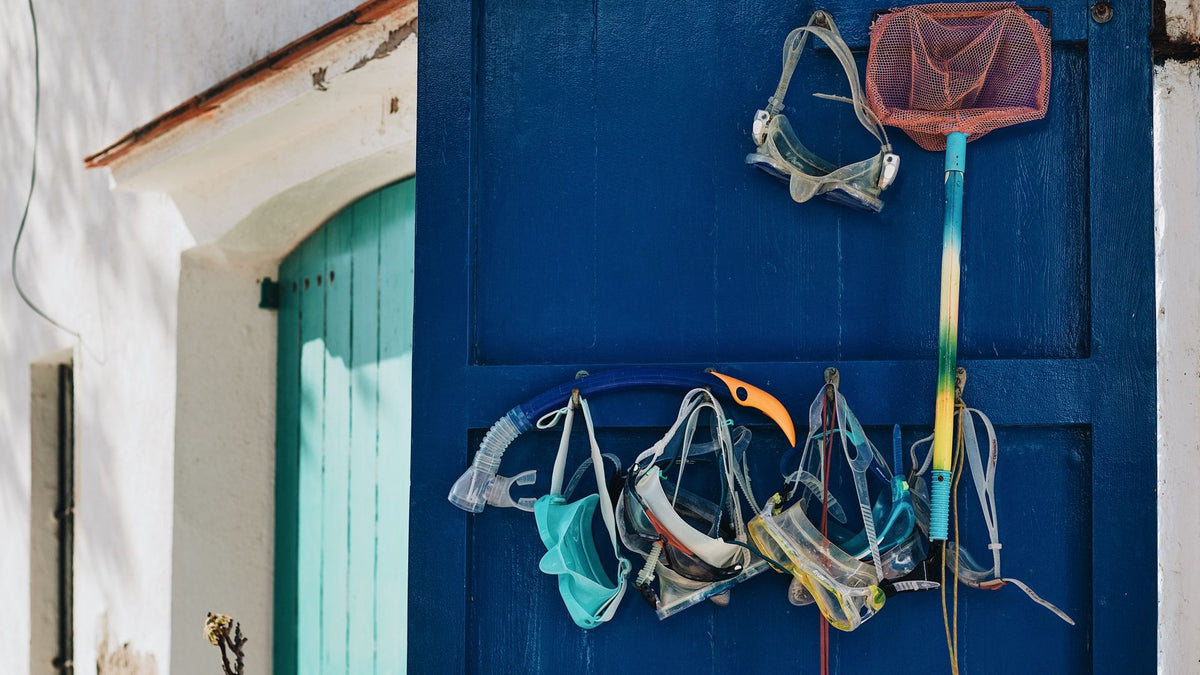
Mask and snorkel. DAN says to disinfect anything that touches your face and mouth. It also says defogging with saliva raises the bacteria count on the glass. Dry the nose pocket with a cloth, because that area collects calcium deposits. If the mask fogs, our guide to mask fog covers the causes.
Dive computer. Garmin's manual for the Descent Mk2 says to immerse the device in fresh water after each dive and press the buttons a few times to pump out trapped salt water. It says to avoid chemical cleaners, solvents and insect repellents, and not to wash it under high-pressure water or air, which can harm the depth sensor and barometer. DAN adds that metal contacts must be kept clean to avoid corrosion. Check your own model's manual, because other makes differ.
How do you dry scuba gear?
Dry it in a cool, shaded and well-ventilated spot. DAN says prolonged sun fades colour and degrades neoprene suits, hoses, latex or rubber seals and all plastic parts. Heat is the other limit: keep gear away from heaters, and away from the heat that bends fins out of shape. Scubapro's manual says to dry the regulator completely in a dry, ventilated place away from heat and direct sunlight.
Dry a suit inside out first, then outside. A dry suit hangs upside down so water drains out, and DAN says it must show no trace of moisture inside or out before it goes into storage.
How do you store scuba gear?
Gear goes away clean, dry and cool. DAN gives 49°C as the temperature to stay below, in a place out of sunlight. Keep it away from sources of ozone, chlorine and exhaust gas, and away from oil, solvents and petrol.
- Regulator. Back the adjustment knobs fully out, as DAN and Scubapro both say. Keep the dust cap on and store it in a regulator bag, with the hoses not bent tightly. Check your maker's manual for the temperature limits of your regulator.
- BCD. Partly inflated, on a hanger.
- Mask and snorkel. Separately, each in its own box, to protect the silicone.
- Cylinder. Upright and secured. DAN says to avoid draining a cylinder completely, and to avoid leaving it full for a long period. It also says to rinse around the valve, remove the boot regularly to clear trapped salt, and fit a cap to keep dust out of the valve.
What is a good post-dive checklist?
| Item | Rinse | Dry and store |
|---|---|---|
| Regulator | Dust cap on, soak, purge alone | Shade, knobs out, in a bag |
| BCD | Inside and out, work the buttons | Drain, hang part-inflated |
| Wetsuit | Fresh water, shampoo if it smells | Inside out on a hanger, no tumble dryer |
| Mask and snorkel | Fresh water, disinfect | Dry the nose pocket, separate boxes |
| Dive computer | Soak, press the buttons | Away from heat, contacts clean |
| Cylinder | Valve area and boot | Upright, some pressure left, valve capped |
Is gear care the same as servicing?
No. Care is what you do after every dive. Servicing is the technician's work on the parts you cannot reach. Scubapro's manual limits the owner to the simple operations in its care chapter and says the regulator must be overhauled by an authorised technician. Check your maker's manual for the interval. Our guide to servicing intervals covers the schedule, regulator lifespan shows how care affects age, and cylinder testing in South Africa covers the inspection and test dates. We offer servicing and cylinder testing, and the gear servicing page lists what we handle.
Sources
- DAN Europe, Alert Diver: Scuba equipment care, rinsing and cleaning diving equipment. Regulator caps and purge, BCD bladder, wetsuit, mask and computer care.
- DAN Europe, Alert Diver: Scuba equipment care, drying and storing your gear. Sun, temperature, BCD, suits, masks and cylinders.
- DAN, Alert Diver: Maintain Your Gear. Dust cap, soaking, BCD flushing and cylinder care.
- Scubapro: Regulators Manual (SP 17642 Rev M). Rinse, post-dive, storage and servicing steps.
- Garmin: Descent Mk2 owner's manual, Device Care. Rinse and cleaning rules for a dive computer.
Frequently Asked Questions
How do you rinse scuba gear?
Rinse it in clean fresh water after every dive, or at least at the end of each diving day, according to DAN. Soak the regulator with its dust cap on, flush the inside of the BCD, and rinse the wetsuit, mask and computer.
How do you store scuba gear?
Store it clean, dry and cool, out of sunlight, and below 49°C according to DAN. Keep the BCD partly inflated on a hanger, the regulator in a bag with the dust cap on, and masks and snorkels in their own boxes.
Should you press the purge button when rinsing a regulator?
No. DAN Europe says not to press the purge button when the regulator is immersed and not pressurised. Keep the dust cap on the first stage during rinsing.
Do you need to rinse a wetsuit after every dive?
Yes. DAN advises rinsing in fresh water, using wetsuit shampoo when it smells, and hanging it inside out on a wetsuit hanger. Avoid a tumble dryer.
How do you clean a dive computer?
Garmin's Descent Mk2 manual says to immerse it in fresh water after each dive and press the buttons a few times to clear salt water. Avoid chemical cleaners and high-pressure water.
Can you leave a scuba cylinder empty for storage?
DAN says to avoid draining a cylinder completely, so some pressure stays in it. Store it upright and secured, and not full for a long period.
Reviewed November 2026 by Devon Ford, PADI IDC Staff Instructor. Devon runs Scuba Evolution, a PADI 5-Star Dive Centre in Glenvista, Johannesburg.