 Pay Later
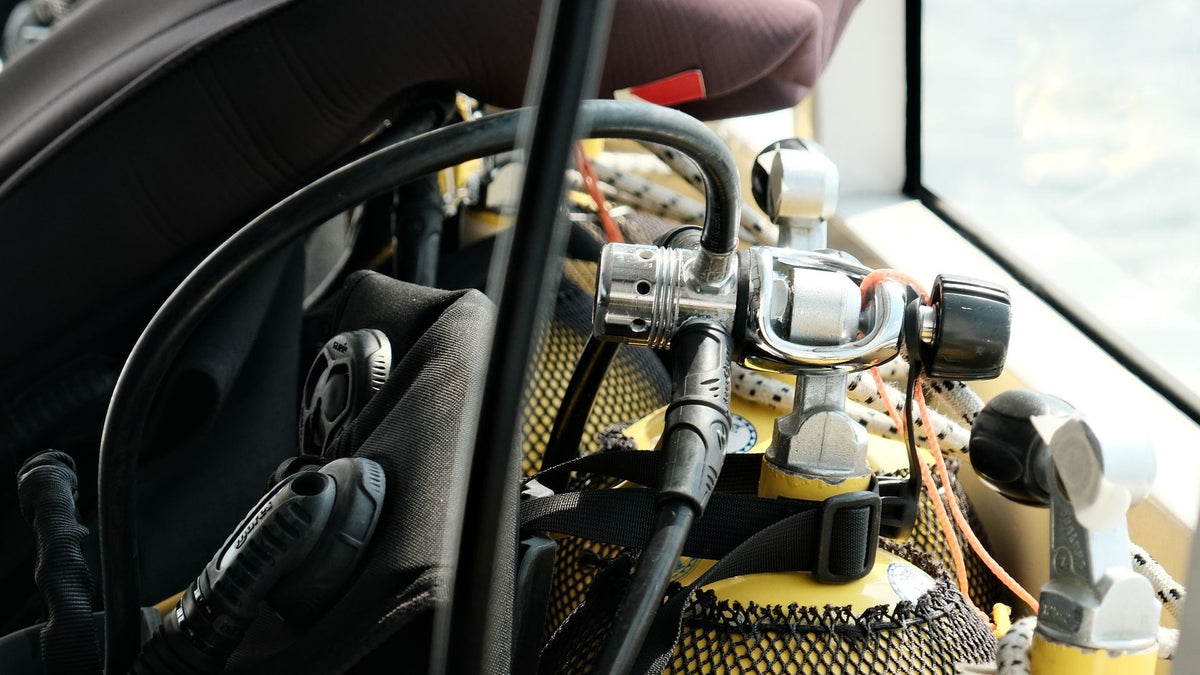
A regulator that last saw a workshop in 2023 will still breathe on the surface. The seats, o-rings and filters inside it keep ageing whether or not it dives. For most recreational kit that means once a year for regulators and BCDs. Dive computers run on a battery and seal schedule. The maker's own paperwork sets the exact figure.
Here's the house view: serviced two years ago isn't serviced. PADI's general rule is every year or every 100 dives, whichever comes sooner. Several makers write the same thing into the manual and tie the warranty to it. The sections below give the interval for each item, what the makers say in their own words, and what a service involves.
How often should scuba gear be serviced?
The short version is in the table. Treat it as the starting point, then check the manual that came with your kit, because makers differ and the warranty follows the maker's wording, not ours.
| Item | Typical interval | What sets it |
|---|---|---|
| Regulator (first stage, both second stages, SPG) | Yearly, or every 100 dives if that comes first | PADI and DAN guidance; Apeks and Aqua Lung manuals say at least once a year |
| BCD (inflator, dump valves, bladder) | Yearly | PADI, DAN and the Scubapro BC support guide |
| Dive computer | Yearly or every second year, by maker | PADI and DAN; battery and seals checked each time |
| Transmitter | With the computer, on its battery schedule | Battery change, new o-ring, pairing checked |
| Cylinder | Own schedule in South Africa | SANS 10019 (see the cylinder article below) |
How often should a regulator be serviced?
At least once a year is the figure in the Apeks and Aqua Lung owner's manuals, and both say it applies regardless of how much the regulator is used. The Apeks manual adds that little use doesn't prove good working order. Storage can still corrode parts and age the o-rings. Mares splits the job in two: an inspection every year or 100 dives, and a complete overhaul every two years or 200 dives.
Joburg divers tend to hit the calendar before the dive count. Twelve dives a year is a normal inland pattern, and the 100-dive limit is then years away. The calendar limit is the one that catches people out.
Training and heavy use shorten it. The Apeks and Aqua Lung manuals put a regulator used for rental or instruction on a three to six month overhaul cycle. Both name chlorinated pool water as an especially damaging environment. A regulator that spends its life in a pool deserves the shorter end of any range.
If yours has spent a year in the cupboard, book the service first. The DIN vs yoke article covers the connection, and the regulator range is there if the answer turns out to be a replacement.
How often should a BCD be serviced?
Once a year. The Scubapro BC support guide says the BC should be inspected and maintained at an authorised service centre at least once a year. It adds more often if you dive frequently, and says damage from poor maintenance isn't covered by the warranty. PADI and DAN both say annually or as the maker recommends.
Book the BCD with the regulator it dives with. The low-pressure inflator hangs off the same hose system, and DAN points out that divers commonly forget the BCD when the regulator goes in. Our service strips and rebuilds the inflator and checks the dump valves. The bladder then gets a pressure test and stands overnight, because a slow leak shows up over hours, not minutes. Browse the BCD range if the bladder or valves come back beyond repair.
How often does a dive computer need servicing, and when do you change the battery?
Before the low-battery warning, not after it. DAN says many divers treat that warning as the signal to service the computer and calls this a mistake. PADI says most computers should be serviced annually and some every second year, and to check the manual. A battery change should come with a new o-ring, because the seal decides whether the computer survives its next dive. A technician also looks for salt build-up, and transmitters often need pairing again afterwards.
Makers differ on who does the work. Suunto's D5 guide says the rechargeable battery should be replaced only by authorised Suunto service centres, and that only an authorised centre should carry out service work on the unit. Garmin's Descent Mk2 and Mk2s owner's manual sets out care steps. They include rinsing after salt water and keeping high-pressure jets away from the depth sensor. It gives no fixed service interval in its care section. A missing interval doesn't mean the seals last forever, so ask when the battery or o-ring was last changed. If you're choosing between models, the dive computer buying guide lines them up, and the computer range shows what we stock.
What about cylinders?
Cylinders run on their own clock, set by SANS 10019 here. Our servicing page gives the visual inspection every two years and the hydrostatic test every four, and a cylinder outside either date is refused rather than filled. The full detail is in Cylinder Testing in SA: Visual, Hydro and SANS.
What do the makers say, and where do they differ?
- Apeks: factory-prescribed service at least once annually by a factory-trained technician employed by an authorised dealer. Servicing it yourself can cause malfunction and voids the warranty.
- Aqua Lung: at least once a year from an authorised dealer, regardless of use, and the warranty conditions in the manual require it. That manual's warranty text covers products bought in the United States and refers other markets to the local representative, so check the card in your box.
- Mares: inspection every year or 100 dives, overhaul every two years or 200 dives, both at an authorised dealer. The flexible hose comes out of service at the latest after five years. The warranty is void if the product is repaired by anyone other than Mares or a Mares dealership.
- Scubapro: BCs inspected at an authorised service centre at least once a year. The same guide says regulators are covered by a limited lifetime warranty that needs yearly service by an authorised dealer, and that repairs use original parts.
- Suunto: battery replacement and service by authorised service centres only.
- Garmin: care steps in the manual, no scheduled interval in the section we read.
The pattern is consistent where it counts. Warranties tend to follow service by an authorised agent with a record, and the intervals vary by brand, model and country. When two sources disagree, the maker's paperwork for your serial number beats a general rule of thumb.
What does a service involve?
On a regulator, the technician strips it, replaces the wear parts from the maker's kit, cleans and reassembles it, then tests it against the maker's specification. Mares describes its overhaul as replacing all parts in the service kit. On a BCD the inflator is rebuilt, the dump valves checked and the bladder pressure tested. On a computer it's a new battery and o-ring, a seal test and a look for salt. Anything beyond the standard service, like a worn bladder or hose, is quoted before work starts.
At Scuba Evolution, every service job goes to the manufacturer's appointed agent, which is what most manufacturer warranties expect, and most take about two weeks. Bring the kit to the shop in Glenvista, no appointment needed. The details, trading hours and what we take in are on the scuba gear servicing page. We don't sell service kits over the counter, and that's deliberate: the work belongs to the agent who stands behind it.
What are the signs your kit needs a service sooner?
- A hard knock. Mares says a strong hit to a first or second stage means inspection and, if needed, an overhaul before the next dive.
- Breathing that has changed. Harder inhalation, a second stage that free-flows, or bubbles from a hose or the first stage all mean the regulator goes in before the next dive.
- A BCD that sags or inflates by itself. A slow leak or a creeping inflator is a bench job.
- A computer with a flickering display, fogging or a low-battery message. Don't wait for the trip.
- Pool-heavy or training use. Heavy use shortens every interval above.
- No record. A second-hand set with no service history is treated as unserviced.
Dusting kit off after a long gap? A service first, then a refresher: the ReActivate course is built for exactly that return. Buying your first gear? Buying Scuba Gear: Mask First, Regulator Last shows where the budget goes first.
Sources
- PADI, How Often Should BCD, Scuba Tank and Regulators Be Serviced? Every year or 100 dives for regulators; computers annually or every second year; BCDs annually.
- DAN, Gear Maintenance: Protect Your Investment and Prevent Dive Accidents Regulators overhauled annually or per maker; low battery warning is not the service signal; BCD annually.
- Apeks Regulator Owner's Manual, UK edition, issue 15 At least annual service by an authorised dealer, regardless of use; warranty effect of other servicing.
- Aqua Lung Regulator Owner's Manual, rev. 08/17 At least once a year from an authorised dealer; warranty conditions.
- Mares user's manual for regulators Inspection yearly or 100 dives, overhaul every two years or 200 dives.
- Mares warranty terms Warranty void if repaired by anyone other than Mares or a Mares dealership.
- Scubapro HydroS Pro support guide BC inspection at least once a year; regulator lifetime warranty and authorised servicing.
- Suunto D5 user guide, care and support and reference Service and battery replacement by authorised service centres.
- Garmin Descent Mk2/Mk2s owner's manual Device care steps.
- Scuba Evolution, Scuba Gear Servicing How our servicing is routed and what each item involves.
Frequently Asked Questions
How often should scuba gear be serviced?
Regulators and BCDs once a year, computers on a yearly or two-yearly cycle by maker, and cylinders on the SANS 10019 schedule. PADI's general rule is every year or every 100 dives, whichever comes sooner. The maker's manual for your kit sets the exact figure.
Does a regulator need servicing if it hasn't been used?
Yes. The Apeks and Aqua Lung manuals both say service is required at least once a year regardless of use. Seals and o-rings age in storage, and the Apeks manual warns that little use since the last service doesn't mean good working order.
Do I have to use an authorised agent to keep my warranty?
In most maker paperwork, yes. Apeks, Aqua Lung, Mares and Scubapro tie warranty cover to servicing by an authorised dealer or agent, and Mares voids it if anyone else repairs the product. Our servicing goes through the manufacturers' appointed agents for that reason.
When should I change my dive computer battery?
Before the low-battery warning, ideally as part of a yearly or two-yearly service. A new o-ring goes in with the battery, and the case gets a seal check. Suunto says its rechargeable battery should be replaced only by an authorised service centre.
How long does a gear service take?
Most services through our agents take about two weeks. We log the kit at the shop in Glenvista and call or WhatsApp you when it's ready. Book it well before a trip, not the week of it.
Can I service my own regulator?
No. The Apeks manual says attempting disassembly or service may cause the regulator to malfunction and voids the warranty. Rinsing it in fresh water with the dust cap on, and storing the hoses in gentle curves, is the owner's share of the work.
Reviewed November 2026 by Devon Ford, PADI IDC Staff Instructor. Devon Ford, PADI IDC Staff Instructor, runs Scuba Evolution, a PADI 5 Star Dive Centre in Glenvista, Johannesburg.