 Pay Later
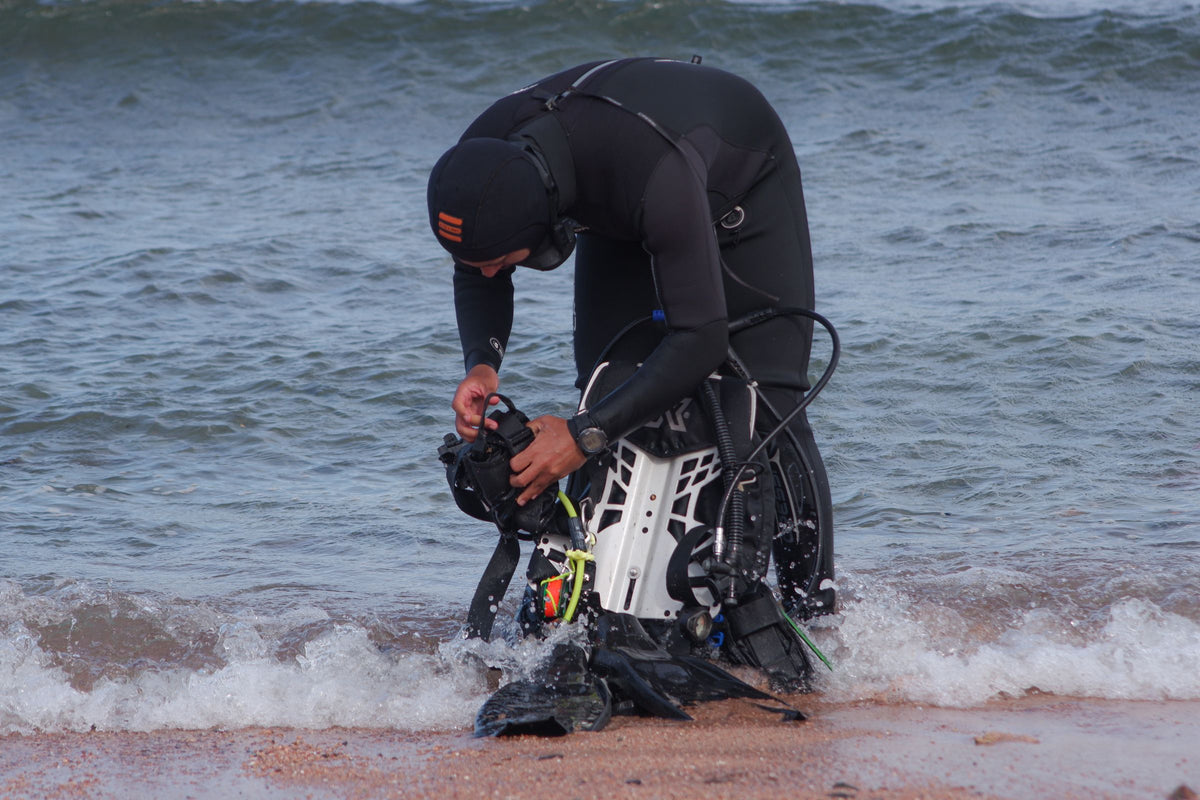
Dive weights come in three common systems: a weight belt, integrated pockets in your BCD, and small trim weights. Hard weights are solid lead, soft weights are bags of lead shot, and whichever you choose should release quickly so you can drop weight to float.
This guide helps you choose a weight system. It does not tell you how many kilograms to carry. For that, read our article on how much weight you need, and see the weight limit question for the health side.
What weights do
DAN notes that the weight you use should allow you to descend, not cause you to descend. If you are working on the skill itself, our guide to improving your buoyancy covers technique.
Weight belt, integrated or trim: who each suits
Weight belts
DAN describes a weight belt as the most common method of wearing weights. PADI lists the usual style as a nylon belt with lead weights threaded on, with fabric belts that have pockets offered for comfort and neoprene belts with Velcro pockets also available. DAN adds that a belt is easy to ditch in an emergency as long as you keep other gear clear of it.
When you try one on, PADI suggests wearing it with the weight you plan to dive with, positioning the weights for comfort, and asking about weight keepers that hold weights in place on nylon belts. Browse our weight belts to compare styles.
Integrated weights
If your BCD has weight-integrated pockets, PADI says you already have your weight system. Two pockets, one each side, let you divide your weight. DAN says integrated pockets and harness systems can be more comfortable and make trim easier to manage. The trade-off DAN gives is that adding or removing weight can be harder, and some systems have more than one release point, which you and your buddy should discuss before diving.
Our weights and weight systems range brings the options together.
Trim weights
PADI describes trim weights as small lead shot filled tubes that clip around your ankle or wrap around your valve, used to fine-tune trim. It also says many BCDs have trim pockets for small, fine-tuning weights. (Our explanation) They suit divers who want a small change in body position rather than a whole new weight system. Take care with placement: DAN warns that pockets on the back of a BCD help trim but become a hazard in an emergency because a buddy must help remove them, and that ankle weights can be a challenge to ditch because you must reach down to release them. See our weight and trim pockets for what is on offer.
Combining systems
Systems can work together. PADI suggests drysuit divers may use both an integrated system and a belt to spread weight more evenly. DAN adds that you should distribute weight as equally as possible from side to side.
Hard weights or soft weights
PADI lists lead weights moulded to fit a belt, either plain or vinyl coated, and lead shot in pouches. DAN uses the terms solid and soft: pocket belts can accommodate either solid weights or soft weights, which are bags filled with lead shot. You can see individual weights and pouches in our weights collection.
Quick release and being able to ditch weight
PADI lists quick release as the feature that lets you quickly drop enough weight to float, and advises checking that you can comfortably fasten and release the buckle. DAN says each buddy must know how to jettison the other's weights, and that there may not be time to search for releases in an emergency.
Security counts as well as speed. Undercurrent reports that divers worry about accidental weight loss, which can cause an uncontrolled ascent, and that heavier weights have opened Velcro and fallen out. A DAN case summary describes a diver whose buckle was hidden by his BCD and who could not rethread his belt underwater. DAN also notes that a wetsuit compresses on descent, so a belt can loosen. Its lesson is to learn new gear and practise with it in a pool or shallow, protected water first.
Care and rinsing
DAN advises rinsing the outside of your BCD thoroughly with clean fresh water and removing the weight pockets, where fitted, to rinse them separately.
What to check before you buy
- Your BCD. PADI says many BCDs have integrated or trim pockets. Our advice: check that the pockets suit your BCD before you buy.
- Weight steps. Our weights collection lists 500 g and 1 kg options, which lets you build up your total in small steps.
- The release. Fasten and release it comfortably, as PADI suggests, with the weight you plan to carry.
- Accessories. Weight keepers and similar items are in our weight accessories.
Frequently asked questions
What are scuba weights for?
(Our explanation) Weights offset the buoyancy of your body, wetsuit and gear so you can descend when you choose.
Should I choose a weight belt or integrated weights?
Both are common. DAN describes a weight belt as the most common method of wearing weights, and PADI says that if your BCD has weight-integrated pockets, you already have your weight system.
What are trim weights?
Trim weights are small weights, often lead shot filled tubes, that clip around an ankle or wrap round a cylinder valve, or sit in small trim pockets on a BCD. They fine-tune your position in the water.
What is the difference between hard and soft weights?
PADI lists lead weights moulded to fit a belt, either plain or vinyl coated, and lead shot in pouches. DAN calls these solid and soft weights, and says pocket belts can take either.
Why does a weight belt need a quick release?
A quick-release buckle lets you drop enough weight to float. Check that you can fasten and release your buckle comfortably.
Can I buy weights in 500 g and 1 kg steps?
Our weights collection lists 500 g and 1 kg options, so you can build up your total in small steps.
How do I rinse and care for my weight pockets?
DAN advises removing the weight pockets, where your BCD has them, and rinsing them separately in clean fresh water. Rinse the BCD itself as well.
Do weight pockets fit any BCD?
PADI says many BCDs have integrated or trim pockets. Our advice: check that the pockets suit your BCD before you buy.
Sources
- PADI, Weight System: weight belt styles, integrated pockets, trim weights, quick release, trying a belt on, drysuit use of an integrated system plus a belt, moulded and shot weights.
- DAN, Weight Up!: belts as the most common method, solid and soft weights, integrated systems, rear pockets, ankle weights, release points, buddy knowledge, even distribution.
- DAN, The Importance of Buoyancy Control: weight should allow descent, placement affects position, belt versus integrated BCDs, limited time to find releases.
- DAN case summary on a weight belt that came undone: wetsuit compression, buckle familiarity, practising new gear.
- DAN, How to Clean Your Scuba Equipment: rinsing the BCD and weight pockets, drying.
- Undercurrent dive magazine, April 2007: accidental weight loss and Velcro concerns.
Product ranges and sizes described above come from our own collection pages. The advice to check pocket fit before buying is our own.
Reviewed November 2026. Devon Ford, PADI IDC Staff Instructor, runs Scuba Evolution, a PADI 5 Star Dive Centre in Glenvista, Johannesburg.
This guide is general information, not training or medical advice. Learn your weighting and release procedures with a qualified instructor.