 Pay Later

To choose a scuba regulator, match it to the water you dive in and check that it is rated for that temperature, then compare breathing feel, connection type, extras and servicing support. Balanced designs, environmental sealing and adjustable breathing resistance are options to weigh against your dives, not a ranking.
This guide explains what each part does and what the terms on a box or spec sheet mean, so you can ask informed questions in a dive centre. We do not rank regulators, because the right one depends on where and how you dive.
What the first and second stage do
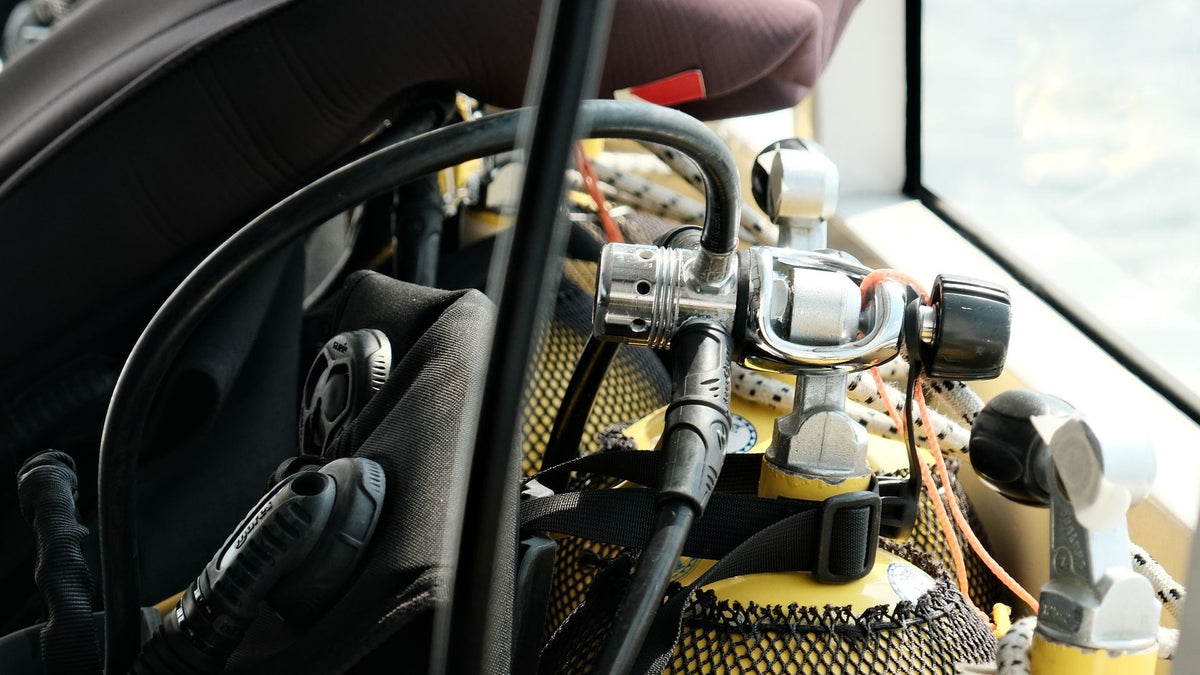
PADI describes the first stage as the part that attaches to the cylinder valve, reduces cylinder pressure to an intermediate pressure and routes it to several hoses. The second stage is the mouthpiece you breathe from, also called a demand valve. The alternate air source, the BCD inflator hose and the submersible pressure gauge (SPG) connect to it too.
DAN's Alert Diver explains that the intermediate pressure is typically 125 to 145 psi above ambient, and that gas flows on demand, only when the diver inhales. For one breath followed through both stages, see how a scuba regulator works.
Balanced vs unbalanced
On an unbalanced first stage, tank pressure and depth affect the intermediate pressure, so breathing effort may rise as the cylinder empties or you go deeper (DAN). A balanced first stage uses a balance chamber that applies tank pressure to both sides of the valve head, which keeps the intermediate pressure more consistent (DAN). Second stages can be balanced too, which reduces the effort needed to start the flow of gas.
One magazine guide (DIVE Magazine) says balanced designs are now the most common, and that on an unbalanced design the rise in effort is barely noticeable until about 30 bar remain. A second magazine guide (DIVER) says unbalanced options still serve budget-minded divers, while balanced first stages suit deeper or more demanding dives.
Piston vs diaphragm
A piston first stage uses a spring-loaded piston to open the flow of gas; a diaphragm first stage uses a flexible disc for the same job (DAN, DIVE Magazine). Sources differ on what that means for you. DAN advises that when buying a new first stage you should not base the decision on piston or diaphragm. DIVE Magazine says there is no real performance difference, though diaphragm regulators have more parts and usually cost more to service. DIVER says diaphragm designs tend to resist freezing, while piston designs offer higher airflow and durability.
Cold water and environmental sealing
DAN explains that expanding gas cools the first stage, which can reach 0 degrees Celsius or lower, so ice can form even when the water is above freezing. Ice can interfere with the first stage, and most modern regulators then free-flow instead of cutting off your gas. DIVE Magazine gives around 5 degrees Celsius and below as the range where internal parts can freeze open.
Environmental sealing keeps salt, sediment and other contaminants out of the first stage, and PADI notes that it also helps stop internal components freezing. DIVE Magazine says diaphragm regulators are sealed by default and that sealed piston models exist. Manufacturers state whether a model is suitable for cold water, so check before you buy. DAN recommends confirming that a regulator is rated for your conditions, and says cold water is more of a concern than warm water.
Ask the operator for the day's water temperature and compare it with the rating on the regulator.
Adjustable breathing resistance and the dive/predive switch
Some second stages have a breathing resistance control. DAN says turning it in makes breathing harder, which can help limit free-flow when swimming into a current, and turning it out eases the flow, which can help when descending. DIVE Magazine calls the adjustment a help mainly in deeper water and not essential, and warns that a badly set knob can be uncomfortable.
The dive/predive switch is a different control. DAN describes it as a surface setting that makes the regulator less prone to free-flow when it is not in your mouth.
Octopus, gauges and matching components
PADI lists an alternate air source (an octopus, or an inflator-mounted mouthpiece on some BCDs) and an SPG as part of the regulator system. DIVE Magazine says an SPG is inexpensive, durable and needs no batteries, and that it serves as a backup if you use an air-integrated computer. Divernet advises checking whether an octopus is included in the price of a set, since some sets bundle one and others do not. DIVE Magazine suggests buying the first stage, second stage and octopus from one manufacturer where possible.
Our guide to what scuba gear to buy first shows where a regulator sits in a kit, and our full scuba kit cost article covers the budget.
DIN vs yoke
PADI says regulators connect to cylinder valves with either a DIN (screw in) or yoke (bracket) system, that adapters let a DIN regulator work with a yoke valve, and that you should check which connection is common where you dive and match it. DIVE Magazine adds that yoke is fine for recreational diving. Our article on DIN vs yoke regulators in South Africa covers which connection to buy here.
Servicing and parts
PADI advises having your regulator professionally serviced according to the manufacturer's specifications, and sooner if you notice damage, harder breathing or air leaks. DAN states that regulator reliability and lifespan depend almost entirely on proper use and maintenance. Our article on how long a scuba regulator lasts explains why service history matters more than age. DIVE Magazine notes that balanced and diaphragm regulators usually cost more to service, and that a local dive shop can help you avoid large bills because shops may not support all brands sold online.
Rinse the regulator in fresh water after diving with the dust cover fitted, and do not press the purge button while rinsing (PADI). Our article on how often scuba gear should be serviced covers timing, and we service regulators at our Glenvista dive centre: see our scuba gear servicing page.
Where to start looking
Browse our scuba regulators and regulator combos. We also stock Scubapro regulators and Apeks regulators. Take your water temperature, your connection type and your budget with you, and ask to compare how each regulator breathes and how the mouthpiece fits. DAN suggests holding the mouthpiece in your mouth for several minutes before buying.
Frequently asked questions
What is the difference between a first stage and a second stage?
The first stage fits to the cylinder valve and reduces cylinder pressure to an intermediate pressure, which it sends along the hoses. The second stage is the mouthpiece you breathe from, and it delivers gas when you inhale (PADI, DAN).
Should I choose a balanced or unbalanced regulator?
A balanced first stage keeps breathing effort steadier as the cylinder empties or you go deeper. One magazine guide says the rise in effort on an unbalanced design is barely noticeable until about 30 bar remain. Balanced designs are now the most common, so the useful question is which one suits the dives you plan.
Should I choose a piston or a diaphragm regulator?
DAN advises against basing a first stage purchase on piston versus diaphragm. DIVE Magazine reports no real performance difference. Check instead that the regulator is rated for your water temperature and that a technician can service it.
What should I look for in a cold-water regulator?
Look for the manufacturer's cold-water rating and for environmental sealing. DAN explains that expanding gas cools the first stage, so ice can form even when the water is above freezing. Ask the dive operator for the day's water temperature reading before you choose.
Do I need adjustable breathing resistance?
No. One magazine guide calls the adjustment a help mainly in deeper water and not essential, and warns that a badly set knob can make breathing uncomfortable. A dive/predive switch is a separate control that makes the second stage less prone to free-flow out of the mouth (DAN).
Do I need an octopus and a pressure gauge?
You need an alternate air source and a way to read your cylinder pressure. PADI lists the alternate air source and the submersible pressure gauge as parts of the regulator system. Check whether an octopus is included in a set price, since some sets bundle one and others do not.
Should I buy a DIN or a yoke regulator?
PADI says to check which connection is common where you dive and match it, and that adapters let a DIN regulator fit a yoke valve. Our separate article on DIN and yoke covers the choice in South African conditions.
How often should a regulator be serviced?
PADI advises servicing to the manufacturer's specifications, and sooner if you see damage, harder breathing or air leaks. DIVER adds that cold-water diving and rental use call for more frequent checks.
Sources
- PADI: Learn About Your Dive Regulator
- PADI: regulator buying article
- DAN Alert Diver: Breathe In, Breathe Out
- DAN Alert Diver: piston and diaphragm designs (Q3 2019)
- DAN: Frigid Waters Cause Regulator To Ice
- DAN Alert Diver: New Gear Orientation
- DIVE Magazine: Buying your first scuba diving regulators
- DIVER (Divernet): regulator guide, 2025
Reviewed November 2026. Devon Ford, PADI IDC Staff Instructor, runs Scuba Evolution, a PADI 5 Star Dive Centre in Glenvista, Johannesburg.
This guide is general information, not a substitute for advice from your instructor or a qualified technician. Confirm ratings and servicing intervals with the manufacturer.