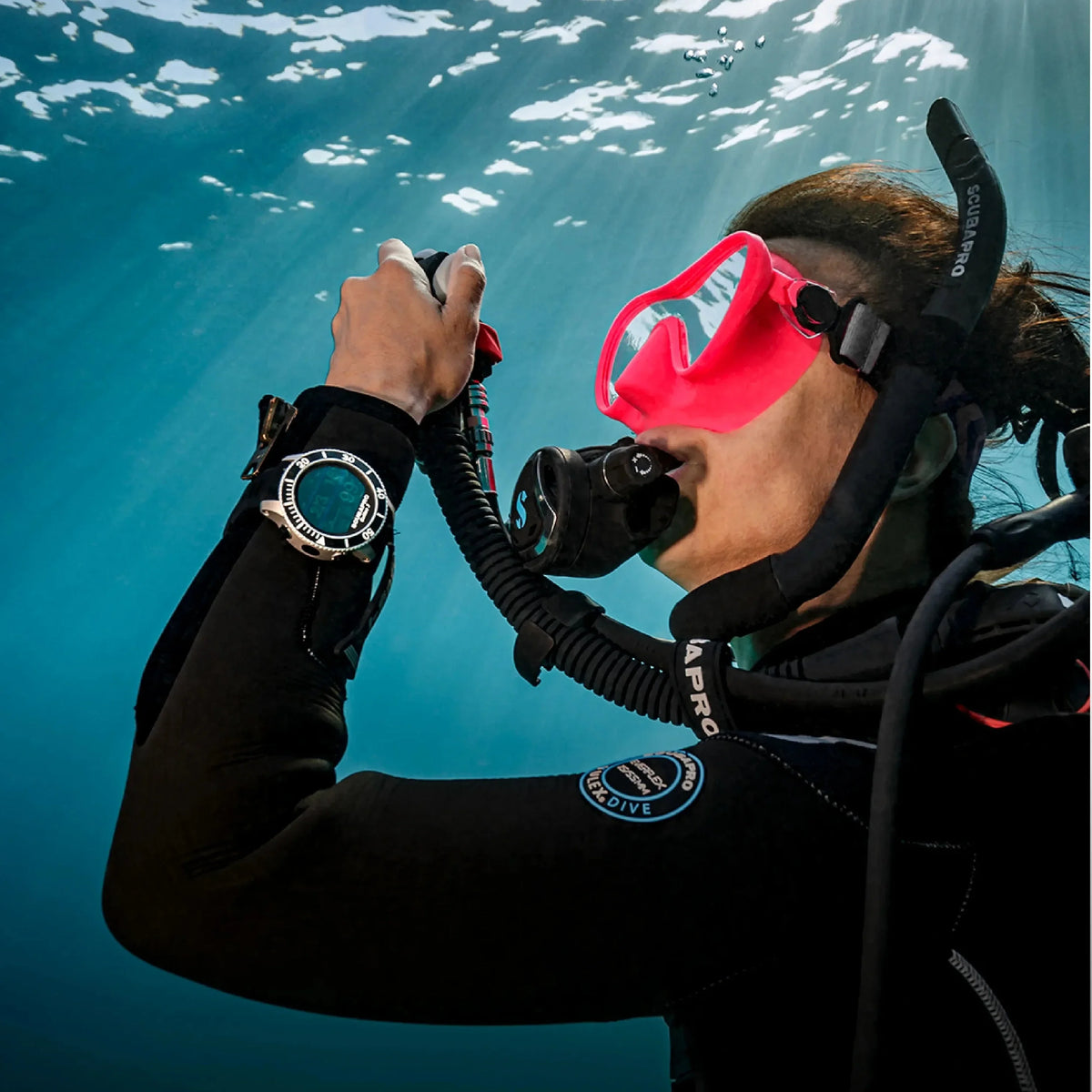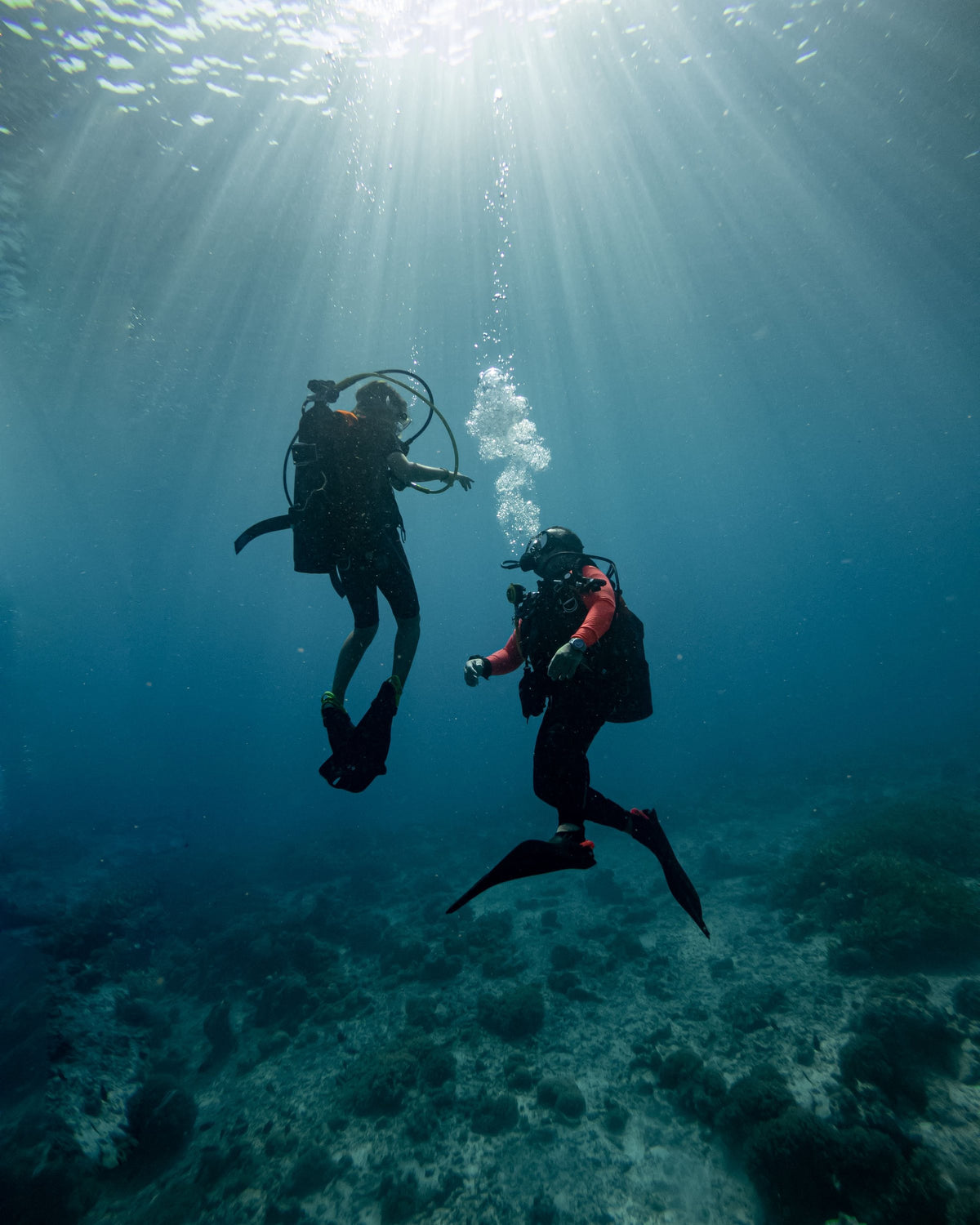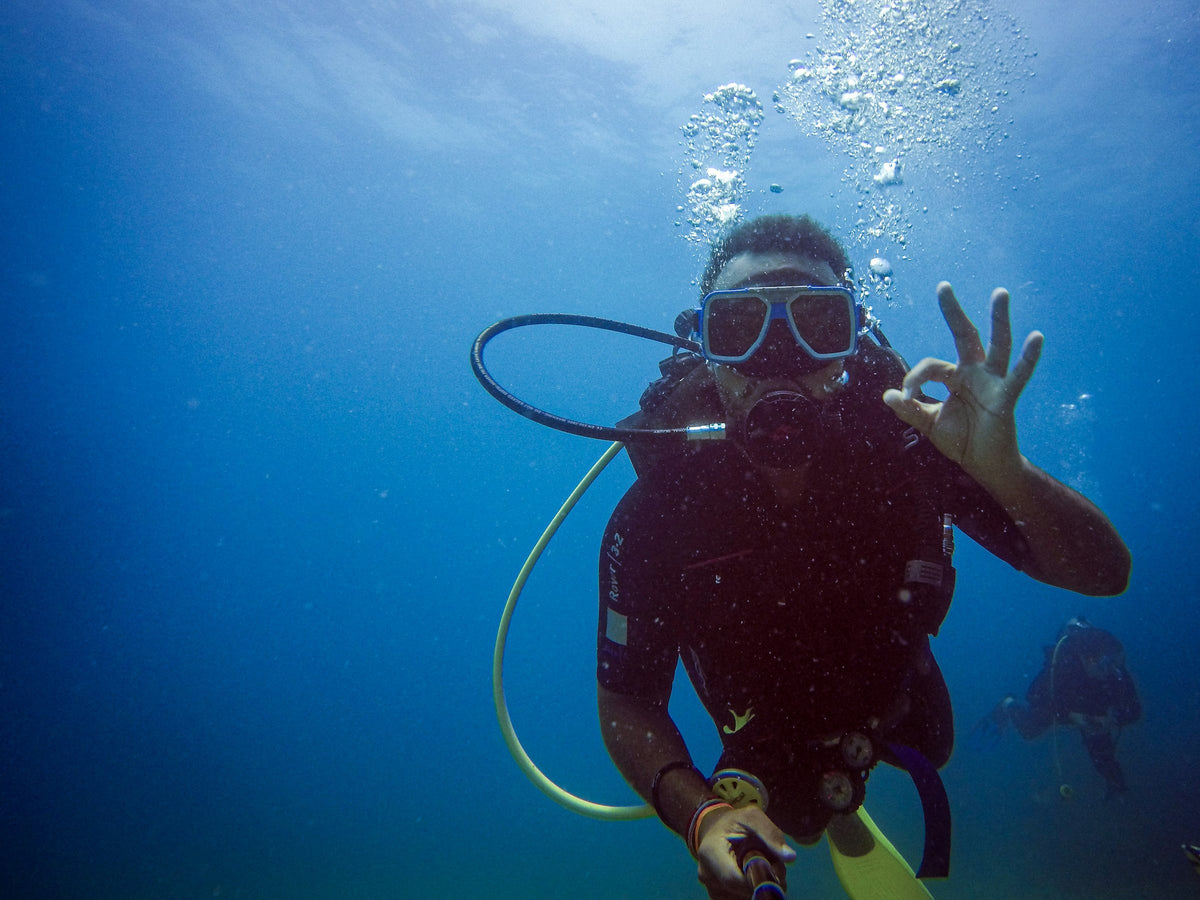

Ten minutes into the second dive, the cold arrives again. Every fin kick sends a fresh trickle of water down the diver's spine. Her borrowed suit is a 7 mm, thicker than her buddy's 5 mm, and she's the one shivering on the safety stop. It slid on easily that morning. That was the problem.
A wetsuit should fit like a second skin. The neck, wrists and ankles seal snugly without choking you. There are no gaps or folds at the lower back, armpits or crotch, and you can still breathe deeply and reach overhead. For thickness, go by the maker's temperature rating for the water you dive, and add a hood as it cools.
How should a wetsuit fit?
Snug everywhere, tight nowhere. PADI's guidance is that a wetsuit should be snug but not overly tight, with no big gaps anywhere. DAN's Alert Diver says it should fit like a second skin. Five checks, standing up in the suit, tell you which you have.
- Neck. The collar lies flat. You can swallow, talk and turn your head without it pressing on your throat.
- Wrists and ankles. The cuffs close on bare skin with no tunnel for water.
- Lower back, armpits and crotch. Pinch the suit at each one. A fold you can grab is a channel that water will find.
- Chest. Take the deepest breath you can. Firm is right. Capped is too small.
- Reach. Lift both arms overhead, then squat. The suit should follow you without dragging at the shoulders or the crotch.
Getting in takes effort, and that's normal. PADI's advice is that a real struggle to pull it on may mean the next size up. Run the checks in whatever you'll wear underneath, because a vest or base layer changes the fit.
Why does a loose wetsuit make you cold?
Because the water inside it keeps changing. DAN calls it a misconception that a wetsuit works by letting your body warm a layer of water, since warming it costs heat you've already lost. What keeps you warm is limiting circulation. The theoretically ideal suit, DAN says, would have no water flushing through at all.
A gap at the lower back or a baggy armpit lets water in and out with every kick, and your body pays to heat each fresh lot. Our guide to why you lose heat faster in water covers how fast that drain runs. DAN adds that beginners, unused to pressure on the chest, tend to pick suits that are too loose. Spine pads, which PADI says fill the channel along your back, and the Glideskin-lined wrists and ankles on Mares Flexa suits are there to cut water entry. A thicker suit is no fix for a bad fit.
Is your wetsuit too tight around the neck or chest?
It's too tight if it stops you breathing, swallowing or turning your head normally. DAN's Alert Diver set that test in August 2026 for drysuit neck seals. A seal should keep water out while allowing normal breathing, swallowing and head movement, with no choking sensation. A wetsuit collar or a tight hood deserves the same test.
DAN explains why. Pressure over the carotid sinus, a sensory area along each carotid artery, can trigger a reflex that slows the heart and drops blood pressure. The result can be dizziness, confusion or loss of consciousness. Feel lightheaded underwater and end the dive. DAN says unexplained loss of consciousness or confusion needs a medical check, even if the diver recovers. See a doctor trained in dive medicine; SAUHMA lists dive medical examiners in South Africa.
The chest is different. Firm pressure across the ribs is normal, and DAN says it's the feeling that puts beginners off. A breath that stops short is not, so try the next size or a different cut.
What wetsuit thickness do you need for the water temperature?
Match the maker's temperature rating to the water you dive, then adjust for how cold you run. PADI lists 3 mm for warm water, 5 mm for temperate and 7 mm for cold. Two makers put degrees on those words.
| Water temperature | Cressi rating | Fourth Element guide |
|---|---|---|
| 26 to 30°C | 3 mm, rated above 22°C | 3 mm; add a 3 mm hood if you feel the cold |
| 18 to 25°C | 5 mm, rated 16 to 24°C | 5 mm or 7 mm with a 5 mm hood; a drysuit if you feel the cold |
| 12 to 18°C | 7 mm, rated 10 to 18°C | Drysuit |
| 4 to 11°C | Below its 7 mm rating | Drysuit with thermal layers |
They draw the lines differently. Cressi rates its 7 mm down to 10°C, while Fourth Element moves divers into a drysuit below 18°C. Each describes its own suits, and DAN notes that cold tolerance varies from person to person. Cressi also marks each suit with a class from the European wetsuit standard, EN 14225-1: D for its 3 mm, C for its 5 mm. Split figures such as the Mares Flexa 5/4 mean different thicknesses in different areas of the body.
Use the water you dive, not a guess. Your dive computer logs the temperature at depth, so note it with the suit you wore and how warm you stayed. After a season, that logbook is a better thickness chart than any brochure. Fourth Element adds that you feel the cold more by the third or fourth dive of a day, so plan the suit for the last dive.
What happens to a wetsuit at depth?
It gets thinner, colder and less buoyant. Neoprene insulates with gas sealed in closed cells, and pressure squeezes that gas. A 2025 study in Polymers loaded 33 commercial neoprene sheets of 3, 5 and 7 mm to the equivalent of about 20 metres. They lost 64.3% of their thickness on average, and 40.9% of their thermal resistance. At the equivalent of 5 metres, thermal resistance was already down 21.5%.
Those are lab tests on flat sheets, not divers. Even so, a suit that's comfortable at the surface runs on a thinner margin at 20 metres. DAN notes that diving suits are often made thicker for exactly this reason. It adds that repeated trips to depth can wear down a suit's thickness and warmth, so an old suit may be colder than it was new.
The same gas floats you. As it shrinks on the way down, you add air to your BCD, and as it expands on the way up, that air comes out. A new suit means a new weight check, set out in our guide to how much weight you need.
How should a wetsuit fit a woman or a child?
By the same checks, on a suit cut for that body. Mares gives its Flexa range a dedicated design and tailored cut for male and female divers. Cressi makes its Diver suit in male, female and junior-specific fits. A men's suit that fits the shoulders but gaps at the lower back, or pulls across the hips, fails the gap check. A women's cut is the usual fix.
Children's suits get the same checks. Buying a size up to last another year buys room for water, and the suit flushes from the first dive. Adults who sit between sizes have another route, and PADI's own advice points to a custom suit when no standard size fits.
Do you need a hood, gloves and boots with a wetsuit?
Below tropical water, usually yes, because they cover what the suit leaves open. Fourth Element pairs its 5 mm and 7 mm suits with a 5 mm hood in temperate water. It suggests a 3 mm hood even in the tropics for divers who feel the cold. PADI adds that an attached hood stops water flowing in at the collar.
Fourth Element calls gloves a must-have unless you only dive in the tropics, in 3 mm or 5 mm with a wetsuit. Cold fingers fumble an inflator or an SMB. Boots or neoprene socks keep your feet warm, and socks stop full-foot fins rubbing. All of it is neoprene, so redo your weight check in the full outfit.
Getting a wetsuit fitted
Wetsuits are fitted in store at Scuba Evolution in Glenvista, Johannesburg, so you can run the five checks before you buy. You can look through the wetsuits we stock before you come in. Where no standard size passes them, made-to-measure suits are available. Where a wetsuit sits in the buying order is covered in our guide to which scuba gear to buy first.
The PADI Equipment Specialist course costs R2,600 and has no dives. It covers how wetsuits, drysuits and the rest of your kit work, and how to look after them. For water colder than a wetsuit handles, the PADI Dry Suit Diver course costs R5,000 and teaches you to add and vent air in a sealed suit. You take it in your own drysuit.
Sources
- Fourth Element: Dive Warmer for Longer, thermal layering guide (PDF)
- Cressi: Fast 3 mm Wetsuit, technical features and EN 14225-1 class
- Cressi: Diver Wetsuit, 5 mm and 7 mm temperature ratings and fits
- Mares: Flexa Family Wetsuit
- PADI: Wetsuits, How to Choose
- DAN Alert Diver: Wetsuits (Q4 2012)
- DAN Alert Diver: Check Your Neck Seal (Q3 2026)
- Potočić Matković VM, Salopek Čubrić I, Pavko Čuden A. Dependence of Thermal Comfort of Diving Suit on Neoprene Properties and Diving Depth. Polymers, 2025
Frequently Asked Questions
How tight should a wetsuit be?
Snug everywhere and tight nowhere. PADI's guidance is snug but not overly tight, with no big gaps. You should still be able to take a full breath, swallow, turn your head and lift your arms overhead.
Are wetsuits supposed to be tight around the neck?
Snug enough to stop water flushing in, not tight enough to press on your throat. DAN warns that pressure on the side of the neck can trigger a reflex that slows the heart.
Is it better for a wetsuit to be too big or too small?
Neither, but slightly snug usually beats loose. Warmth comes from limiting water circulation, DAN says, and a loose suit flushes. A suit that stops you breathing deeply or presses on your neck is too small.
Is a 3mm wetsuit warm enough?
In warm water, for many divers. Cressi rates its 3 mm Fast for water above 22°C. Fourth Element suggests 3 mm for 26 to 30°C, adding a 3 mm hood if you feel the cold.
Should you get a 5mm or 7mm wetsuit?
Go by the coldest water you'll dive. Cressi rates its 5 mm Diver for 16 to 24°C and its 7 mm for 10 to 18°C. If you run cold or dive several times a day, the thicker suit is the better choice.
What should you wear under a wetsuit for scuba diving?
Swimwear is the usual choice. For more core warmth, Fourth Element suggests a thin thermal top and leggings under a 3 mm suit. Layers change the fit and your weighting, so try the suit on over them.
General information only, not a substitute for a dive medical or a doctor trained in dive medicine. In an emergency, call the DAN Southern Africa 24-hour hotline on +27 82 810 6010.
Reviewed October 2026. Devon Ford runs Scuba Evolution, a PADI 5 Star Dive Centre in Glenvista, Johannesburg.