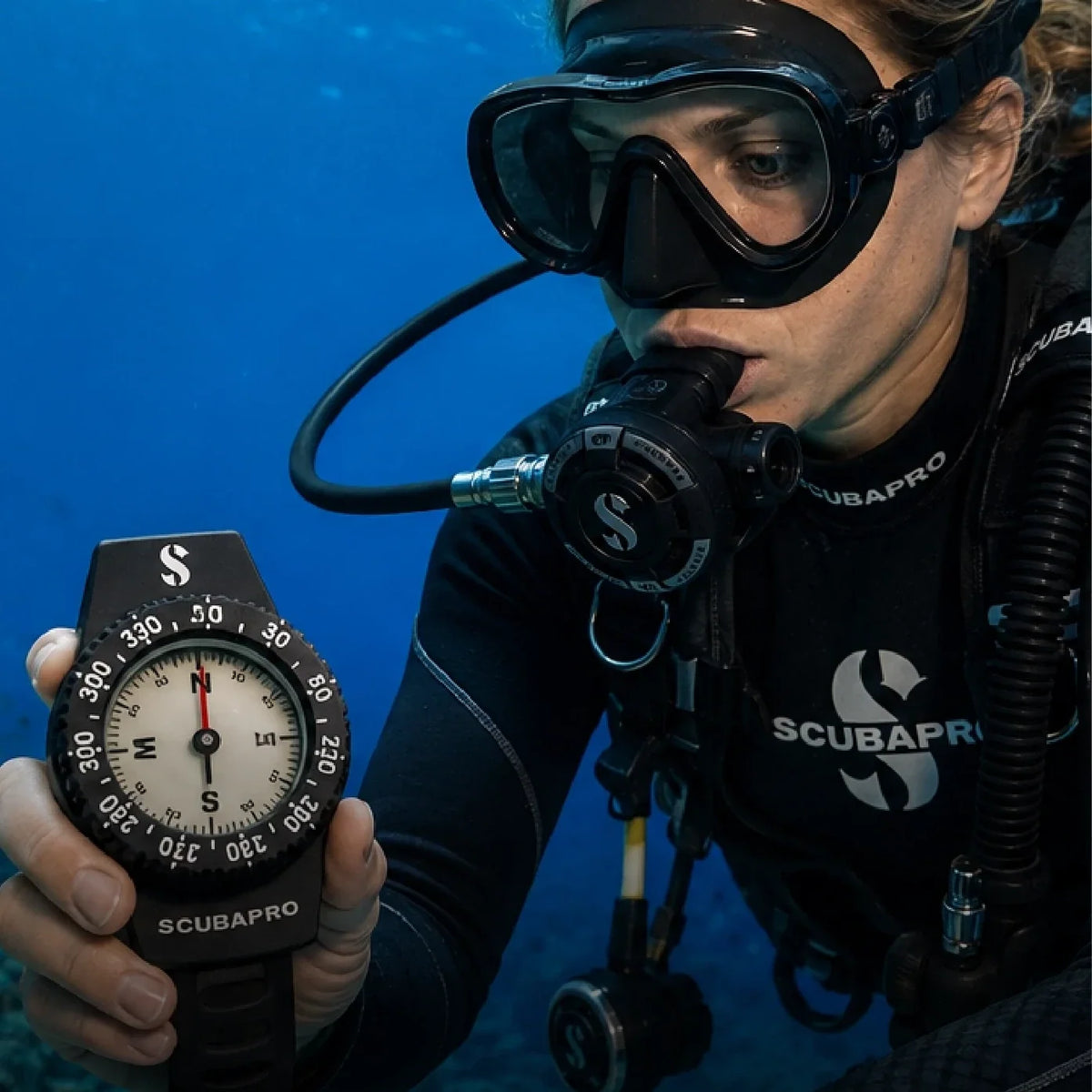
The BCD comes off after the second dive, and her ponytail comes with it, or part of it does. Somewhere between the descent and the safety stop it worked loose, wound itself round the first stage and set into a knot at the nape of her neck. Three days into a coastal trip, the salt has left the rest of it dry and stiff, and it won't take a comb.
Plait long hair, or pull it into a high ponytail, before you kit up, with elastics down its length so it can't loosen and tangle. Keep every strand out from under the mask skirt. Wet your hair with fresh water and work in a reef-friendly leave-in conditioner first, then rinse and comb it out from the ends up afterwards.
What should you do with long hair when scuba diving?
Tie it back and keep it contained, because loose hair finds every gap in your kit. PADI's guide to hair and diving admits that long hair and diving don't mix well. The trouble collects in a few predictable places.
- Under the mask skirt. TUSA's mask manual names trapped hair as the most frequent cause of a leaking mask. Anything that crosses the seal does the same, which is why glasses can't go under a dive mask.
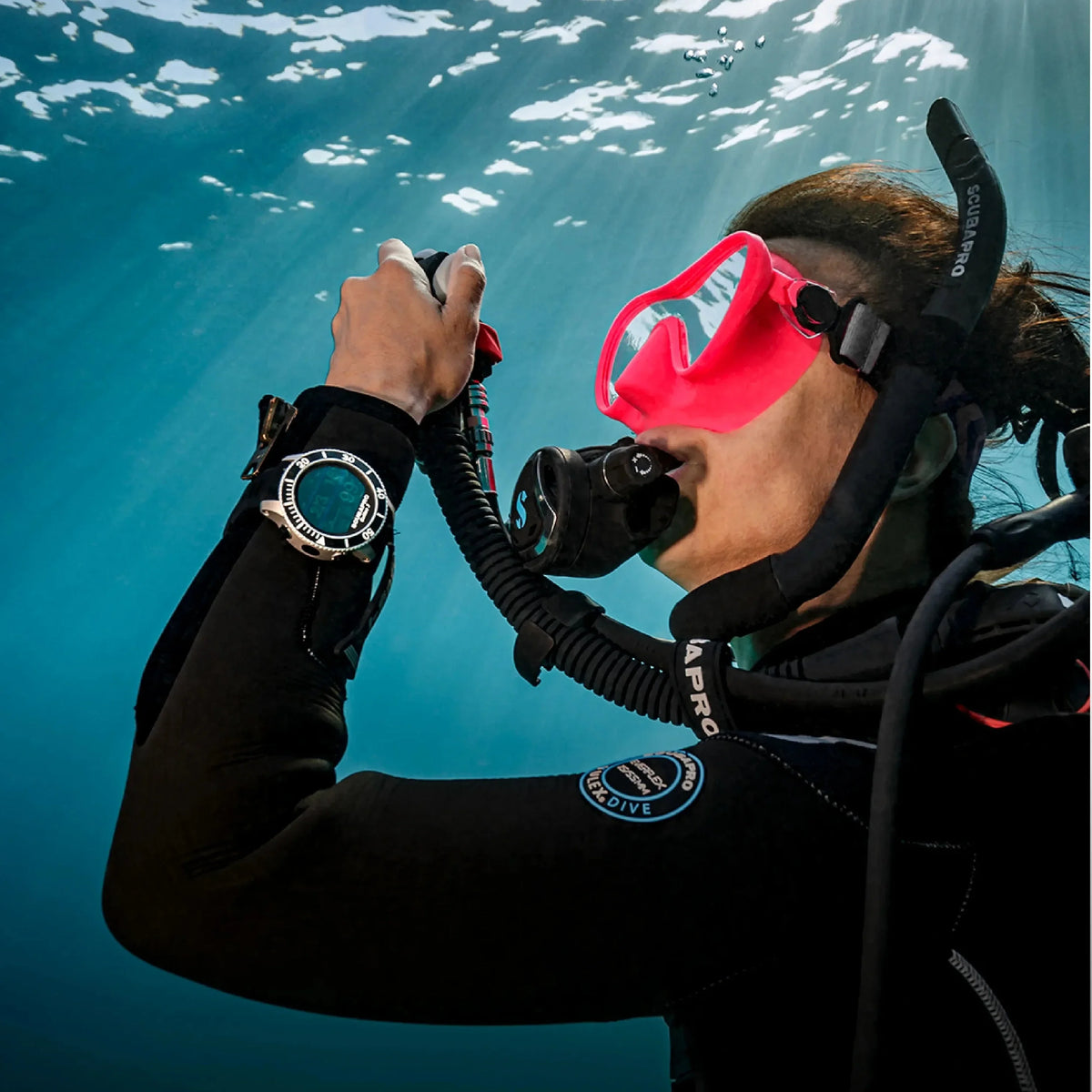
- Round the first stage. It sits on the cylinder valve behind your head, right where a ponytail falls. PADI suggests a low ponytail worn to one side to keep hair off it.
- In the mask strap. PADI says a bare strap can grab and tangle hair, and suggests a neoprene cover over it.
- In clips and buckles. The notches on a standard snorkel keeper trap stray strands, PADI notes, and the BCD's shoulder straps sit where loose hair lands.
A slow leak is a nuisance for most divers. For anyone uneasy in a mask, water around the nose is what unsettles, and our article on claustrophobia and scuba explains why the mask is usually the trigger. The strap-off seal test in our guide to preparing a new dive mask gives a truer answer with your hair already tied back.
What's the best hairstyle for scuba diving?
At Scuba Evolution we usually recommend one of three: a plait, a plait set low at the nape of the neck, or a high ponytail. With a plait, we advise lots of elastics down its length, because that's what stops the hair tangling.
Position does the rest. PADI's reasoning for buns works for every style: hair goes at the top of the head or at the nape, because the mask strap sits in the middle. PADI ranks two plaits first, a French plait second, a bun third and a ponytail last, since ponytails can loosen during a dive. For a long ponytail it suggests several elastics spaced down it, the same fix we use on plaits. Scuba Diving magazine adds that the plait has to catch all of the hair, shorter front layers included.
| Style | Where it sits | What to watch |
|---|---|---|
| Plait | Down your back | Elastics down its length, every layer caught in it |
| Low plait | At the nape, below the mask strap | Leaves the strap clear; still needs elastics |
| High ponytail | At the crown, above the strap | Can loosen (PADI), so add elastics down it |
| Two plaits | One on each side | PADI's first choice, the least likely to snarl |
| Bun | At the crown or the nape | Has to leave room for the strap |
Do you need a headband, hood or swim cap?
A headband helps with a fringe and flyaways, while a hood or beanie does more for long hair. PADI rates a beanie or hood as the best way to stop hair snarling, and says headbands and buffs usually let flyaways escape. Scuba Diving magazine still suggests a wide headband for front strands. Skip ties and clips with exposed metal or seams: the magazine says they can break hair as you take them out.
For a hood, it suggests one with no internal seams and a longer shape, so there's less to snag on. Keep the hood's edge out from under the mask skirt, since DAN Europe's Alert Diver describes neoprene creeping under the skirt and causing a leak. Let water in, too. Alert Diver says water must reach the ear canal and air must escape, because a hood that seals over the ear can cause a squeeze in the outer ear. Its fix is a finger slipped into the hood beside the ear.
Some divers wear a thin silicone swim cap under the hood to keep long hair flat. If you do, keep the cap above your ears, for the same reason.
Does salt water damage your hair?
It roughens hair more than it breaks it down, and conditioning goes a long way. Research on seawater and hair is thin. One laboratory study, a 2022 University of São Paulo master's dissertation, soaked natural, bleached and dyed hair in artificial seawater. Every group took more force to comb afterwards, the lightest bleached and dyed blonde over 70% more than untreated hair. Dyed samples lost shine, though colour mostly held. Protein loss stayed under 10%, and the author concluded the hair was porous and dull but not damaged, and that conditioning can be enough to restore it.
Treated hair came off worst, which fits Scuba Diving magazine's advice to book colouring for after a dive trip. For Joburg divers the salt tends to arrive with a trip to the coast. Our open-water training sites near the city, Bass Lake and Miracle Waters, are fresh water, and pool sessions bring chlorine. Tangles turn up in all three, and PADI suggests periodic deep conditioning for anyone diving every week.
How do you protect your hair from salt water before a dive?
Soak it in fresh water first, then condition it. PADI Pros say saturating hair with fresh water limits how much salt water it takes up. Scuba Diving magazine suggests a bottle of fresh water in the kit bag to wet it again between dives.
At Scuba Evolution we also recommend leaving a reef-friendly leave-in conditioner in your hair for the dive. It lubricates the hair against what the salt does to it over a full day. PADI makes the same case: a leave-in conditioner acts as a barrier to salt water and makes detangling easier afterwards. Plait over the top of it.
What does reef-friendly mean on a hair product?
Less than the label suggests, so read the ingredients. "Reef-friendly" is a claim, not a standard, and the US National Park Service warns that products carrying it can still contain ingredients that harm coral.
The evidence concerns chemical UV filters. NOAA says some chemicals in sunscreen and other personal care products can bleach coral, damage its DNA and deform its young. Its list names ten, oxybenzone and octinoxate among them. A 2022 National Academies review called for a fuller risk assessment of UV filters, and NOAA describes the field as active research.
For a leave-in conditioner, look for one free of oxybenzone and octinoxate, the two that Scuba Diving magazine and the National Park Service both name. Labels may list them as benzophenone-3 and ethylhexyl methoxycinnamate. Leaving them out removes the two names that come up most. It doesn't prove a product is harmless to a reef.
How do you detangle hair after diving?
Slowly, with conditioner in it, and from the ends up. Hair is delicate when wet, so the American Academy of Dermatology recommends a wide-tooth comb over a brush, ends first.
- Rinse before you unpick. PADI's advice is to rinse the plait with fresh water before you undo it.
- Condition the plait. One diver Scuba Diving magazine interviewed runs leave-in conditioner down each plait before taking it out.
- Ease the elastics out. If one snags, add more conditioner so it slides free.
- Comb from the ends up. PADI and the AAD both start at the bottom and work up.
- Wrap, don't rub. The AAD says rubbing hair dry roughly can damage it.
What's the next step?
Scuba Evolution's Discover Scuba Diving is a single pool session with a PADI instructor, at R1,000, with all scuba equipment included. It's a low-stakes place to find out what your hair does under a mask strap, and the routine above works the same way with chlorine in place of salt.
Sources
- PADI, How to Avoid Hair-Related Issues When Scuba Diving. The hairstyle ranking, elastics down a long ponytail, strap position, strap covers, snorkel keepers, hoods, the fresh-water rinse, leave-in conditioner, combing and deep conditioning.
- Scuba Diving, The Ultimate Guide to Scuba Haircare (January 2026). Hoods, ties with exposed metal, catching every layer, headbands, re-wetting between dives, oxybenzone and octinoxate, and colouring after a trip.
- TUSA, Diving Mask and Snorkel Manual. Hair under the skirt as the most frequent cause of leaks.
- DAN Europe, Alert Diver: Neoprene Hoods and Equalisation. Tight hoods and the outer ear, venting a hood, and neoprene under the mask skirt.
- American Academy of Dermatology, Tips for Healthy Hair. Wet hair, wide-tooth combs, ends first and towel drying.
- NOAA, Skincare Chemicals and Coral Reefs. The ten chemicals, their effects on coral and the 2022 National Academies review.
- US National Park Service, Protect Yourself, Protect the Reef. Reef-friendly labels and the ingredients to avoid.
- University of São Paulo, Artificial Sea Water and Bleached and Coloured Hair (M. B. Fileto, 2022). Combing force, shine, colour and protein loss after artificial seawater.
Frequently Asked Questions
Can you scuba dive with long hair?
Yes. Tie it back before you kit up, in a plait or a high ponytail with elastics down its length, and keep it out from under the mask skirt. TUSA names trapped hair as the most frequent cause of mask leaks.
How do you keep hair out of your face when diving?
A wide headband keeps front flyaways back, and clips without exposed metal can manage a fringe. For full containment, PADI rates a beanie or hood highest, because headbands and buffs usually let some strands escape.
Can you scuba dive with braids?
Yes, and braids are among the most secure styles for diving. PADI ranks two plaits first. Scuba Diving magazine profiles a diver who keeps her hair in braids as a protective style, and she found it broke and dried out less that way.
Do divers wear swim caps under a hood?
Some do, a thin silicone cap to keep long hair flat. Keep it above your ears. DAN Europe's Alert Diver says water must reach the ear canal under a hood, and a seal over the ear can cause a squeeze.
Does salt water damage dyed or bleached hair?
Treated hair tends to come off worst. In a 2022 University of São Paulo laboratory study, the lightest bleached and dyed blonde needed the most force to comb after artificial seawater, though colour mostly held. Scuba Diving magazine suggests colouring after a dive trip, not before.
Should you put leave-in conditioner in your hair before diving?
Yes. At Scuba Evolution we recommend a reef-friendly leave-in conditioner, worked into hair you've wet with fresh water first. PADI says it acts as a barrier to salt water and makes detangling easier. Check the label for oxybenzone and octinoxate.
Reviewed October 2026. Devon Ford runs Scuba Evolution, a PADI 5 Star Dive Centre in Glenvista, Johannesburg.