It tends to happen at the counter. One partner is booking Discover Scuba Diving for two, and the other says the line every instructor knows: "Can't. Claustrophobic." Sometimes it's a flat "no thanks", which is the same answer with the fear tucked further back. It's one of the questions we're asked most, and it deserves more than "you'll be fine".
Yes, most people who call themselves claustrophobic can learn to dive. What closes in is usually the equipment: a mask over the nose, breathing only through the mouth, a tight wetsuit. The water is the opposite of a small space. Treatment for panic attacks or another psychological condition in the past five years means seeing a doctor first.
Does scuba diving feel claustrophobic?
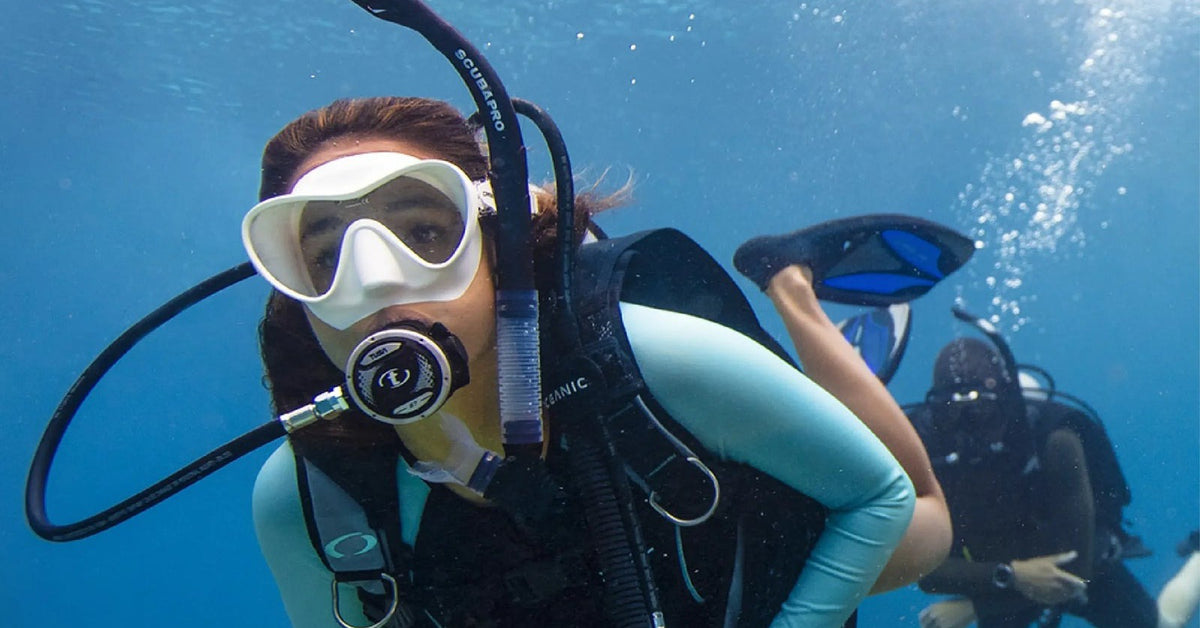
For some people it does, for the first few minutes, and the cause is usually the kit rather than the water. A PADI blog puts the wider point plainly: the ocean is the largest open area on the planet. The closed-in feeling comes from what's strapped to your face and body.
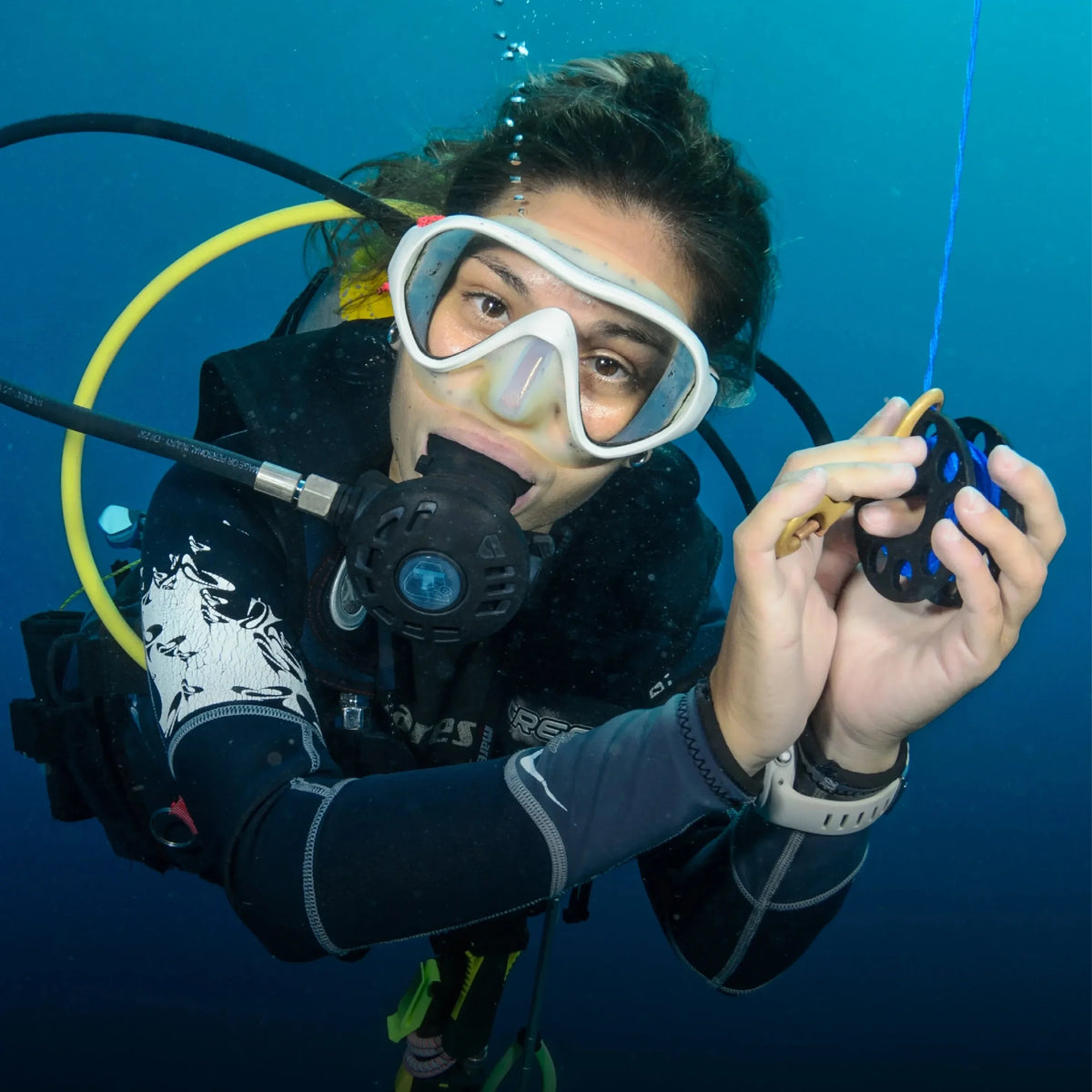
- The mask. It encloses your nose so you can equalise, which means you can't breathe in through it. The frame narrows your view.
- The regulator. Every breath comes through a mouthpiece. Most new divers find the first one slow, loud and strange, and within a few minutes it tends to feel normal.
- Water on your face. PADI's May 2026 guide to mask removal names water around the nose as the most common worry with that skill. It often sets off breath-holding, the one thing not to do.
- The wetsuit. Neoprene squeezes, measurably. In a 2017 study of 24 experienced divers, a full wetsuit worn on dry land cut expiratory reserve volume by 25%. A suit that feels tight across the chest is pressing on it.
- Depth and low visibility. DAN notes that true claustrophobia may surface only under stress and in reduced visibility: murky water, night dives, long dives.
- The weight of the kit. A cylinder on your back, a BCD buckled across your chest, weights at your waist. PADI's guide to fear of diving lists feeling constrained by your gear among the fears to name to an instructor.
Most of that list can be changed or rehearsed. A different mask or a looser suit, and more breaths in shallow water before anything else happens.
Can you scuba dive if you're claustrophobic?
Usually, if you mean the closed-in feeling above. A diagnosed phobia is a separate question for a doctor. DAN puts troublesome anxiety or a phobia at about one person in 10 at some point in life, most of whom don't seek treatment. Its position is that many people with everyday anxieties and fears can dive safely.
True claustrophobia is different. DAN describes divers whose claustrophobia keeps them out of the water altogether, or out of a recompression chamber. That second one isn't a side issue, since a chamber is where decompression sickness is treated.
The everyday version tends to fade. Our Discover Scuba page describes the pool as feeling strange for about five minutes before it starts to feel natural. A feeling that doesn't fade, or that sends you for the surface each time, tells you and your instructor something too. The guide to panic underwater covers what to do when it builds on a dive.
Can you scuba dive with anxiety or panic attacks?
Often, yes, and the medical form decides who sees a doctor first. Question 7 of the Diver Medical Participant Questionnaire, version 2026-01-01, asks about treatment now or in the last five years. It names "psychological problems, personality disorder, panic attacks, or an addiction to drugs or alcohol". A yes sends you to Box E, which lists "major depression, suicidal ideation, panic attacks, uncontrolled bipolar disorder requiring medication/psychiatric treatment" among its lines. A yes in Box E means a physician's evaluation before you dive. We follow the form as written: wherever it calls for a physician's evaluation, the signed form has to come before any in-water session, the pool included.
The word claustrophobia isn't on the 2026 form. It's in the guidance the doctor reads. The UHMS Diving Medical Guidance lists claustrophobia or agoraphobia, and anxiety disorder, as relative risks. That means a moderate increase in risk that may be acceptable once the doctor has assessed you. A history of panic attacks is a severe risk, where the authors would generally discourage diving.
One more relative risk on that list is worth reading before booking for two: wanting to dive solely to please a spouse, partner or family member. Temperament counts as well. In a 2004 study, 42 beginners filled in an anxiety questionnaire before their course. Eleven showed panic behaviour twice or more in four months of training, and the score called the outcome correctly for 35 of the 42. Tell your instructor you're anxious at the briefing, not at three metres. The guide to what a yes on the medical form means covers the rest of the form.
Does a clear or black mask skirt make a difference?
It can, which is why our instructors start claustrophobic students in a mask with a clear skirt. The skirt is the soft silicone that seals against your face. A black one blocks light from the sides, so the view ends at the frame. A clear one lets light through all the way round, and the mask feels less like a box. It seems to help. That's an instructor's observation from the pool, not a clinical finding.
Scuba Diving magazine's ScubaLab testers describe a clear skirt as giving an "open airy feel", and say divers prone to claustrophobia "tend to feel less boxed in" wearing one. Black has its own advantages, which is why most masks come in both.
| What differs | Clear skirt | Black skirt |
|---|---|---|
| Feel | Open and airy | "A bit more claustrophobic" |
| Light inside the mask | Lets light in from the sides | Blocks light that reflects on the inside of the lens |
| Bright water over white sand | Reflected light can be blinding | Shades the eyes and cuts glare |
| Usually preferred by | Divers prone to claustrophobia | Underwater photographers and hunters |
| ScubaLab rule of thumb | Dark water | Bright water |
The magazine's buying guide adds that oversized lenses can help a claustrophobic diver feel less hemmed in, and that the extremely low-volume masks made for freediving may not suit new or claustrophobic divers.
Fit comes before colour. A good mask seals without the strap, and DAN points out that extra strap tension doesn't improve the seal and can make equalising harder. The checks are in the guide to preparing a new dive mask, and a fogged lens shrinks the view further, which the guide to mask fog deals with.
How do you overcome a fear of scuba diving?
In small steps, in water shallow enough to stand up in, with an instructor who knows what bothers you. PADI's guide to fear of diving borrows the fear ladder from exposure therapy: start with the easiest step and move up only once it feels comfortable. It also asks you to tell your instructor exactly what you're afraid of. Our instructors use the same order in the pool.
- Stand and breathe. Stand in the shallow end, face in the water, breathing from the regulator. Nothing else happens until that feels ordinary.
- Kneel. Sink to your knees in the same shallow water and keep breathing.
- Swim. Move off along the bottom with the instructor beside you.
- Then the skills. Mask clearing comes once breathing underwater has stopped being an event. PADI's mask guide calls a mask "a vision device and not a life-support mechanism".
You set the pace, and going slowly in the shallow end buys margin for everything after it. Courses run at four students per instructor, and a student who mentions claustrophobia beforehand starts in a clear-skirt mask with those steps. One caution from DAN applies. Exposure is a recognised treatment for phobias, but DAN calls confronting the trigger underwater "a dangerous method of treatment". A diagnosed phobia is work for a professional on dry land, and DAN asks divers to disclose conditions and medication to their instructor.
Where does a nervous beginner start?
Discover Scuba Diving is R1,000 for one session in a heated indoor pool in Fourways, with a PADI instructor beside you throughout. The minimum age is 10, and a short eLearning module and the medical questionnaire come first. Say you're claustrophobic when you book. The guide to scuba without certification covers what the session does and doesn't count for.
The Open Water Diver course is R5,650. It runs five pool sessions in a heated indoor pool in Fourways at four students per instructor, then four open water dives at Bass Lake Adventures or Miracle Waters. Discover Scuba can count towards Open Water if you start the course within PADI's 12-month window, and Open Water is booked as its own course, at its normal price.
Sources
- Diver Medical Participant Questionnaire, form 10346, version 2026-01-01, for question 7, Box E and when a physician's evaluation is required.
- UHMS: Diving Medical Guidance to the Physician (2023-05-31), for the behavioural health section and its severe and relative risk conditions.
- DAN: Psychiatric Conditions and Diving, for the one-in-10 figure, true claustrophobia, the caution on underwater exposure and disclosure to the instructor.
- Morgan WP, Raglin JS, O'Connor PJ, "Trait anxiety predicts panic behavior in beginning scuba students", International Journal of Sports Medicine 2004;25(4):314-22, for the 42-student study.
- Marabotti C et al., "Cardiovascular and respiratory effects of the neoprene wetsuit in non-immersed divers", Undersea and Hyperbaric Medicine 2017;44(2):141-147, for the wetsuit figures.
- Scuba Diving magazine: ScubaLab, Black vs. Clear Skirts and Best Tips for Buying the Perfect Scuba Diving Mask, for clear against black skirts, lens size and mask volume.
- PADI: How To Master Underwater Mask Removal With Confidence (May 2026), for water around the nose as the most common worry.
- PADI: How to Get Over a Fear of Scuba Diving, for the fear ladder and telling the instructor what you fear.
Frequently Asked Questions
Can you scuba dive if you are claustrophobic?
Most people who say they're claustrophobic can, because what bothers them is the mask, the regulator or a tight suit rather than the water. Treatment for panic attacks or another psychological condition in the past five years means a doctor's evaluation first.
Why does a dive mask feel claustrophobic?
It covers your nose, so every breath goes through the regulator, and the frame narrows your view. Scuba Diving's testers say a clear skirt and a larger lens both help divers feel less hemmed in.
Is a clear or black mask skirt better?
ScubaLab's testers say claustrophobic divers tend to feel less boxed in with clear silicone, while photographers prefer black because it blocks reflections and glare. Their rule of thumb is black for bright water, clear for dark.
Do you have to declare claustrophobia on the dive medical form?
The 2026 form doesn't name it. Question 7 asks about treatment in the last five years for psychological problems, panic attacks or addiction. The doctor's guidance lists claustrophobia or agoraphobia as a relative risk, so mention it if you're referred.
Can you scuba dive with anxiety?
DAN's view is that many people with everyday anxieties dive safely, and diagnosed cases are assessed on their own merits. Treatment within five years means a physician's evaluation before any in-water session.
Does Discover Scuba Diving count towards Open Water?
It can, if you start the Open Water Diver course within PADI's 12-month window. Open Water is still booked as its own course, at its normal price of R5,650.
This is general information, not a substitute for a dive medical or advice from a doctor trained in dive medicine. In an emergency, contact your local emergency services and DAN Southern Africa on +27 82 810 6010.
Reviewed October 2026. Devon Ford runs Scuba Evolution, a PADI 5 Star Dive Centre in Glenvista, Johannesburg.