 Pay Later


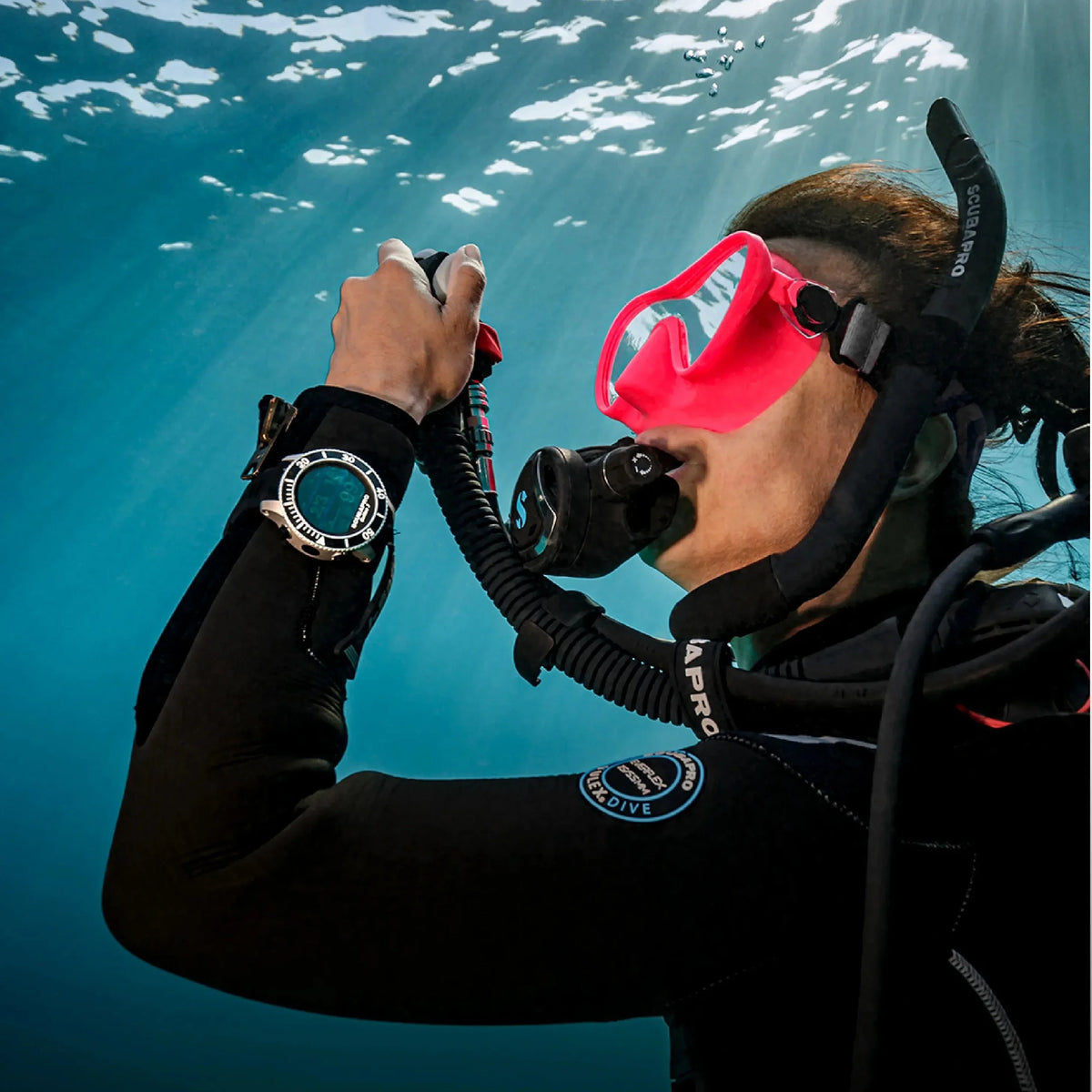
The mask came out of its box on Thursday night, and the checkout dive at Miracle Waters is on Saturday. Somebody at the braai has already said to burn it with a lighter. Somebody else swears by toothpaste. The leaflet folded inside the box says something different again, and it's the one to read first.
To prepare a new dive mask, check what the lens is made of first. On plain tempered glass, scrub the inside with a plain paste toothpaste, not a gel and not a whitening one, and a clean fingertip, rinse thoroughly, and repeat once or twice. Tinted lenses get no toothpaste and no flame. Then test the seal with the strap off. Leave flame prep to a professional, as PADI advises. Bought the mask from us? We'll do it in store.
How do you prepare a new dive mask?
The reason decides the method. PADI explains that new lenses carry a fine layer of silicone from manufacture, and that the mask keeps fogging until the film wears away or is removed. Our article on why a new mask keeps fogging covers the science. This page is the checklist.
Day one: five steps.
- Read the leaflet and identify the lens. Plain glass, tinted, coated, plastic and bonded prescription lenses each take different treatment, and makers disagree on cleaners.
- Scrub off the factory film. On plain glass, work a bead of plain paste toothpaste, not a gel and not a whitening one, into every corner of each lens with a clean fingertip. Concentrate on the inside, then rinse in fresh water. If the leaflet gives an anti-fog routine instead, follow that. Bought the mask from Scuba Evolution? Bring it in and we'll flame-prep plain glass for you instead.
- Check the result. Wet the inside of the lens: clean glass wets in an even sheet, while leftover film pulls the water into beads. PADI's test is to breathe into the mask and see whether it fogs. Either sign means another scrub.
- Test the fit with the strap off. Press the mask to your face, inhale gently through your nose and let go. It should stay put.
- Pack it properly. Dry it out of the sun and box it, away from black rubber and neoprene.
Is toothpaste safe on a new dive mask?
On plain tempered glass, yes, and it's the method PADI and TUSA both describe. TUSA's support page says toothpaste or a mild abrasive can gently scrub the production film off the inside of glass lenses. Our advice is PADI's: a plain paste, not a gel and not a whitening one. PADI warns against whitening varieties because their crystals may scratch the lens, and the same goes for any paste you can feel grit in. On a tinted lens, skip toothpaste altogether.
The scrub is where masks get scratched, which is why PADI warns against a textured sponge or steel wool. Fingertips only. Wash your hands first, since PADI's fog guide notes that finger oils stop the lens coming clean, and keep the paste off the skirt. With time to spare, PADI suggests leaving the paste on overnight before rinsing.
Not every maker goes the toothpaste route. SCUBAPRO's manual has you apply its anti-fog to the inner surface and rinse thoroughly, three times over on a new mask. Mares's manual says anti-fog and a rinse, and rules out soap of any kind. Treat the leaflet as the briefing and follow it over anything said at the braai.
Should you burn a new dive mask with a lighter?
Not yourself. PADI describes the flame method, but says only an experienced professional should attempt it. It warns that extreme care is needed not to burn or melt the silicone skirt at the lens edges. Some makers go further. Mares's user manual says: "Do not allow open flames or streams of hot air to touch the lenses". Heat could damage the tempering, break the lens and lead to severe damage to the eyes and face, and Mares's warranty terms exclude defects caused by heat.
That makes it a workshop job. Buy a new mask from Scuba Evolution and our instructors will flame-prep it in store, on plain tempered glass only, and only where the mask's maker allows it. Our article on why a new mask keeps fogging describes that routine. At home, use the toothpaste method above. It takes a little longer and puts no heat into the glass.
Which lenses shouldn't get toothpaste or a flame?
The toothpaste advice is written for plain tempered glass, and other lenses change the answer.
| Lens type | Toothpaste OK? | Flame OK? | Use instead |
|---|---|---|---|
| Plain tempered glass | Yes, unless the leaflet says otherwise. Plain paste, not gel, fingertip only. | A professional's job only (PADI), and only where the maker allows it. Mares doesn't. | The maker's anti-fog routine where the leaflet gives one. |
| Tinted lens | No. | No. | The maker's own lens cleaner and an anti-fog. |
| Anti-reflective or UV-coated glass | Inside only, where the coating is on the outer face, as on TUSA's. TUSA says it could be scratched or removed. | No. No maker here approves heat on a coating. | Anti-fog on the inside and the mask's own care sheet. |
| Plastic lens | No maker guide here covers it. TUSA's advice is for glass. | No. Mares warns of serious deformation. | The leaflet's instruction and an anti-fog. |
| Bonded prescription lens | No maker guide here covers it. Ask the lab that fitted it. | No. Heat on the lens is what Mares warns against. | The lab's care instructions. |
| Frameless | On glass, yes, with paste kept off the skirt. | Not recommended. The skirt meets the glass, and PADI warns about melting it. | The plain glass routine, gently at the edges. |
Mirrored and colour-correcting lenses are coated too, so their care sheet is the authority, and some snorkel masks have plastic lenses. Prescription options are in our guide to diving in glasses or contact lenses.
How should a dive mask fit, and how tight should it be?
A mask that fits seals before the strap goes on. SCUBAPRO's manual says that with no strap, the mask should stay on your face when you inhale through your nose. DAN's Alert Diver made the same point in its first issue of 2026. PADI's version loops the strap in front of the mask, out of the way.
Hair spoils the test most often. TUSA's manual names hair trapped under the skirt as the most frequent cause of leaks, so brush it clear. PADI says moustaches and beards make a seal harder, though still possible.
Mares's instruction is to pull the split strap onto the back of your head and tighten it until the mask adheres comfortably, releasing it if you've pulled too hard. On most heads the split sits high on the back of the skull, above the ears. Tighter isn't better: DAN says extra tension doesn't improve the seal and can make equalising harder. A mask that only stops leaking when the strap is cranked down doesn't fit. Try the strap-off test on a few from our scuba masks at the shop in Glenvista.
How do you clean a silicone dive mask, and can yellowing be reversed?
Gently, and prevention does more than any cleaner. SCUBAPRO warns that black rubber can brown clear silicone. PADI says neoprene, black fins included, leaches into clear silicone and discolours it. TUSA adds colour transfer from wetsuits and swimwear, and says heat and ultraviolet light can damage a mask and shorten its life. Mares wants masks kept away from oils, sun creams and lotions.
None of these makers offers a way to reverse discolouration once it's in the silicone, and their advice on surface grime differs. TUSA suggests an occasional wash with mild liquid soap, rinsed off completely. SCUBAPRO allows liquid soap and rules out solvents such as alcohol. Mares wants fresh water only. What retires a mask is damage: SCUBAPRO says to stop using one with cracks or cuts in the silicone or glass.
What should you do before and after every dive?
Before each dive, SCUBAPRO's manual asks for a leak test, a pull on the strap with roughly 3 kg of force and a check of the buckles. Defog goes on the inner surface and is rinsed once. After that rinse, keep your fingers off the inside of the lens: PADI notes that touching it transfers oils and cancels the defog. Going in, keep a hand on the mask, as SCUBAPRO and Mares both instruct.
- Rinse it in fresh water. SCUBAPRO says after each dive; TUSA says as soon as possible.
- Dry it in the shade. SCUBAPRO, Mares and TUSA all say out of direct sunlight, and TUSA rules out a car parked in the sun.
- Box it once it's completely dry. PADI says the original plastic box.
- Keep it apart. TUSA recommends a case that separates the mask from wetsuits and rubber fins.
What's the next step?
Scuba Evolution's PADI Equipment Specialist course is R2,600. It has no dives: PADI eLearning, then a hands-on practical session on routine care, common equipment problems and simple field repairs. Part of the course is building a save-a-dive kit, the small set of spares, a spare mask strap among them, that keeps a minor fault from ending a dive.
Sources
- PADI, How to Prepare a New Mask for Scuba Diving. The factory silicone film, no whitening paste, fingertip scrubbing, no sponge or steel wool, the overnight option, the flame caution and the original box.
- PADI, Tips for Preventing Mask Fog. Washing hands first, the breathe-in test and not touching the lens after defog.
- PADI, Masks. The strap-free inhale test, moustaches and beards, and neoprene staining clear silicone.
- DAN, Alert Diver Q1 2026, Preventing Mask Squeeze. Sealing without the strap and why extra tension doesn't help.
- SCUBAPRO, Mask Owner's Manual. Fit and leak tests, the 3 kg strap pull, anti-fog three times when new, liquid soap only, black rubber staining, storage and retirement.
- Mares, Mask, Snorkel and Fins User's Manual. No flame or hot air on the lenses, fresh water only, sun creams and strap adjustment. Also the Mares warranty terms.
- TUSA, Customer Support. Toothpaste on glass lenses, occasional mild soap and the outer coating on CrystalView AR/UV lenses.
- TUSA, Diving Mask and Snorkel Manual. Hair under the skirt, colour transfer, heat and UV, and storing the mask in a case.
Frequently Asked Questions
How do you clean a new dive mask for the first time?
Scrub the inside of a plain tempered glass lens with a plain paste toothpaste, not a gel and not a whitening one, and a clean fingertip, rinse thoroughly, and repeat once or twice. Tinted lenses get no toothpaste. SCUBAPRO's and Mares's manuals give an anti-fog routine instead, so read the leaflet first.
What toothpaste should you use on a new dive mask?
A plain paste toothpaste, not a gel and not a whitening one. PADI says whitening crystals may scratch the lens, so skip anything gritty. Use it on plain glass lenses only, not on tinted ones, with a fingertip rather than a sponge or steel wool.
How do you burn a new dive mask?
Leave it to a professional. PADI says only an experienced professional should try it, and Mares's manual forbids flame on its lenses. Bought the mask from Scuba Evolution? We'll flame-prep plain glass in store. At home, toothpaste does the job without heat.
How tight should a dive mask be?
Snug enough to stay put, and no tighter. DAN says extra tension doesn't improve the seal and can make equalising harder. Mares says to tighten until the mask adheres comfortably, and no further.
How do you test if a scuba mask fits?
With the strap out of the way, place the mask on your face and inhale gently through your nose. If it stays on, it seals. Brush hair from under the skirt first, as TUSA names trapped hair as the most frequent cause of leaks.
How do you clean a yellowing silicone dive mask?
Rinse off surface grime with fresh water; TUSA and SCUBAPRO also allow mild liquid soap, Mares fresh water only. None of these makers offers a way to reverse discoloured silicone, so keep it out of the sun and away from black rubber and neoprene.
Reviewed October 2026. Devon Ford, PADI IDC Staff Instructor, runs Scuba Evolution, a PADI 5 Star Dive Centre in Glenvista, Johannesburg.