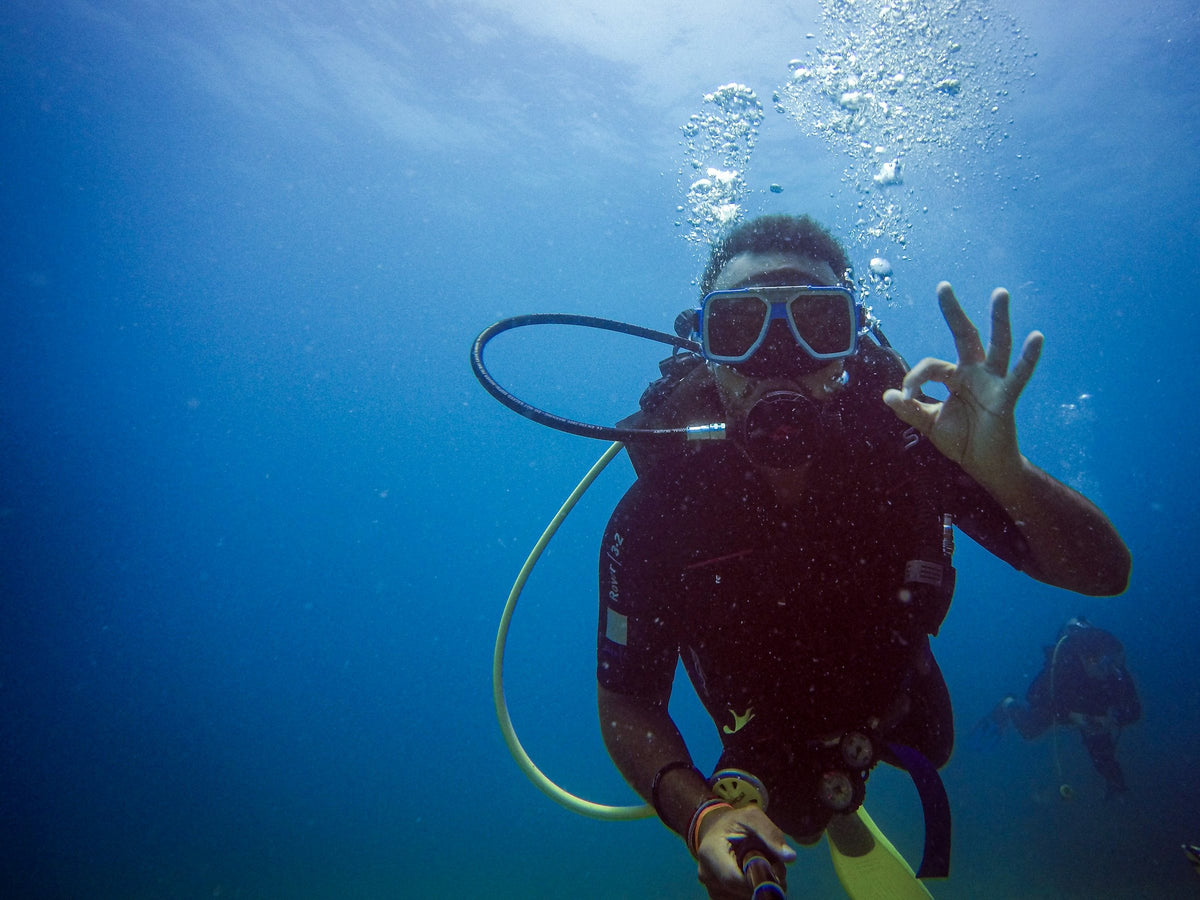

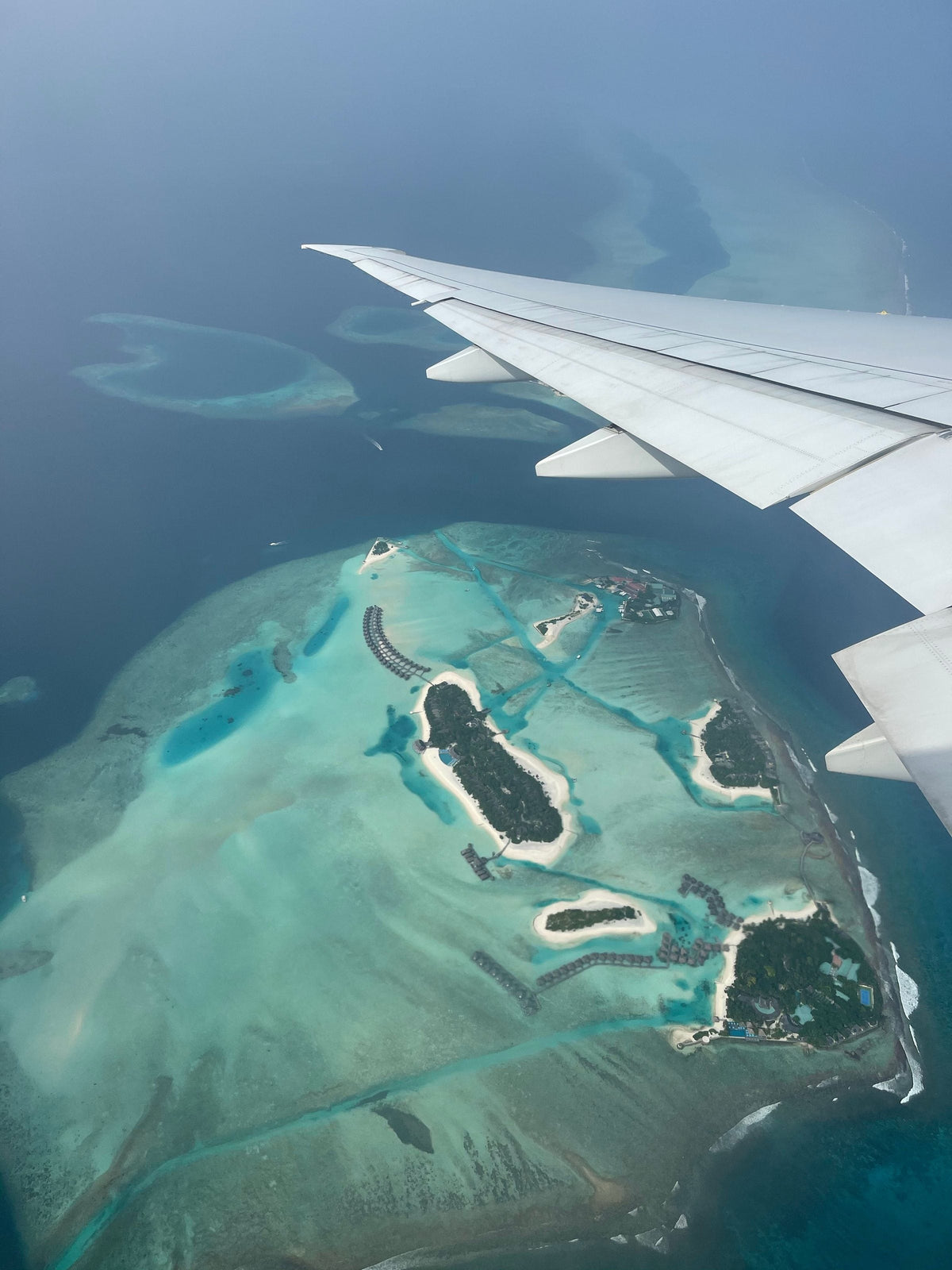
Between 1992 and 1999, DAN-funded researchers at Duke University ran 802 chamber trials of flying after diving, and 40 ended in decompression sickness. Those trials set today's minimum waits. Allow at least 12 hours after a single no-decompression dive, and at least 18 hours after several dives in a day or several days of diving. After dives with decompression stops, the guidance is "substantially longer than 18 hours". PADI's own advice rounds all of it up to 24 hours before flying after any diving.
The reason is pressure. After a dive to 20 metres, surfacing has already cut the pressure on your body from 3 atmospheres to 1. An airliner cabin at its permitted maximum of 8,000 feet sits at about 0.76 atmospheres, which turns that threefold drop into roughly fourfold. Any nitrogen still leaving your tissues gets a second, bigger push to form bubbles. For hours, not minutes.
Why does flying after diving cause decompression sickness?
Airliners aren't pressurised to sea level. DAN notes that cabins usually run at the equivalent of 6,000 to 8,000 feet, and a 2013 study it cites found about 10% of commercial flights went above 8,000. For a diver that's an extra ascent, with no safety stop, taken while slow tissues are still offloading the morning's nitrogen. The mechanism is the same one covered in how decompression sickness starts: dissolved gas meets lower pressure and comes out as bubbles.
The slow tissues are the problem. Blood clears nitrogen within minutes of surfacing, but poorly perfused tissue can still be loaded half a day later. DAN notes that some decompression algorithms give their slowest compartments half-times of almost 500 minutes. Over eight hours, in those models, to shed half the excess. A flight that feels like a separate day to you is still the tail end of the dive to your tissues.
Where do the 12- and 18-hour rules come from?
They came from a gap in the evidence. The first flying-after-diving workshop in 1989 advised 12 hours after a single no-stop dive. It set 24 hours after multi-day diving and 48 hours after decompression dives. DAN then proposed a flat 24 hours after any diving. The dive industry objected that the risk was too low for such a long delay and that island resorts would lose business. The 2002 workshop proceedings even include an economic model of that trade-off, which is more commercial candour than most safety rules get.
The trials were DAN's answer. Dry, resting volunteers at Duke completed nine single and repeat dive profiles close to recreational no-decompression limits, then sat through four-hour simulated flights at 8,000 feet. After single dives to 18 metres or deeper, nobody developed DCS with a surface interval of 11 hours or more. After repeat dives, cases kept appearing at intervals shorter than 17 hours, and 52 trials at 17 hours produced none. The 2002 workshop, run with the Undersea and Hyperbaric Medical Society, rounded those numbers up into the guidelines still in use.
What do the DAN flying-after-diving guidelines say exactly?
The wording is tighter than most summaries suggest, and the conditions count as much as the hours. The guidelines cover air dives followed by flights at cabin altitudes of 2,000 to 8,000 feet, for divers with no symptoms of DCS. They state plainly that the intervals don't guarantee you avoid DCS and that longer intervals reduce the risk further.
| Your diving | 2002 minimum preflight surface interval |
|---|---|
| A single no-decompression dive | 12 hours |
| Multiple dives in a day, or multiple days of diving | 18 hours |
| Dives requiring decompression stops | Substantially longer than 18 hours |
The "24 hours after decompression dives" figure that circulates online isn't in the 2002 text. DAN's Neal Pollock explains that "substantially longer" was chosen because the data couldn't support a precise number. He adds that 24 hours has become a common rule of thumb for those dives. Most dive holidays involve several dives across several days. That puts the typical recreational diver in the 18-hour row, not the 12-hour one.
Is waiting 24 hours before flying enough?
For most divers it's a sensible buffer. Not a guarantee, though. DAN also ran a case-control study of 382 divers who got DCS after flying, compared against divers who flew without problems. A third of those injured divers had waited more than 24 hours. After a dive to 18 metres, flying at 12 hours carried 2.5 times the relative risk of flying at 24 hours. After a 40-metre dive with a 12-hour wait, the figure was seven times.
The gap between lab and field explains part of it. The chamber volunteers were dry, rested and made their dives on a single day. Real diving adds immersion, cold, finning against current and a week of repeat dives. The workshop itself warned that longer waits might be needed for divers who were immersed and exercising. The 18-hour minimum is a margin measured on volunteers sitting still, and a week of boat dives at Sodwana is nothing like that.
Does driving home to Johannesburg count as going to altitude?
It does, and it's easy to miss because nobody boards anything. O.R. Tambo International sits at 5,558 feet, well inside the 2,000 to 8,000 foot band the flight guidelines cover. The difference is duration: a flight lasts a few hours, while arriving home means staying at altitude. DAN's medical reference says any post-dive ascent to altitude, including by road, adds decompression stress. Its advice is to keep the final dives conservative, delay the trip, or both.
There's no road-specific table for recreational divers. The DAN guidelines were written for aircraft, and the US Navy's altitude procedures need repetitive-group letters that dive computers don't show. PADI's guidance is to avoid mountain climbing in the first 24 hours after a dive. Applying the same waits to the drive back up to Gauteng is the cautious reading, and the drive belongs in the dive plan rather than the debrief. The physics of diving and travelling at Johannesburg's altitude works the same way in both directions.
What should you do if symptoms start before or during a flight?
Don't board. The 2002 workshop found that more divers fly with symptoms than develop them during or after a flight, and called it an education problem rather than a scientific one. DAN's case data shows what it costs. Flying with symptoms made serious Type 2 DCS 1.6 times more likely, and symptoms left over after treatment 2.7 times more likely. Joint pain, numbness, unusual fatigue or a rash after diving means a phone call before a boarding gate. DAN Southern Africa's 24-hour emergency hotline is +27 82 810 6010, and its medical staff can advise on what happens next.
Sources
- DAN: Guidelines for Flying After Diving (Workshop Proceedings Summary)
- DAN Europe Alert Diver: Flying After Diving
- Undersea & Hyperbaric Medicine: Experimental Trials to Assess the Risks of Decompression Sickness in Flying After Diving (Vann et al., 2004)
- DAN: Decompression Sickness (Health & Diving Reference Series)
- DAN Alert Diver: Flying After Pool Diving
- DAN Southern Africa: Guidelines for Flying After Diving
- PADI: 10 Things You Should Never Do Immediately After Diving
- SKYbrary: Johannesburg International Airport
Frequently Asked Questions
Do you need to wait to fly after a pool training session?
Usually not. DAN's Neal Pollock writes that a 60-minute session in a pool 3 to 3.7 metres deep is of little concern for normal cabin altitudes or driving to a similar height. Deeper pools, longer sessions and hard work underwater call for more caution.
Does diving on nitrox shorten the wait before flying?
No. The 2002 workshop grouped certified divers making no-decompression air or nitrox dives over several days together, with the same 18-hour minimum. Nitrox dived to air limits leaves less nitrogen behind, which adds margin rather than shortening the rule.
Is it safe to fly before diving?
Generally, yes. DAN's reference says flying to a destination near sea level before diving carries virtually no decompression risk, because your tissues are undersaturated when you land. Mild dehydration and hours of sitting still are the caveats it mentions.
What about a low scenic flight or a small unpressurised plane?
The guidelines ignore cabin altitudes below 2,000 feet, which covers short, low flights. Unpressurised aircraft expose you to their full altitude. For cabin altitudes between 8,000 and 10,000 feet, DAN Southern Africa suggests doubling the usual waits to 24 and 36 hours.
Should you follow your dive computer's no-fly time or the DAN guidelines?
Whichever is longer. PADI advises waiting beyond the guidelines if your computer's no-fly countdown says so. DAN notes that dive computers run different models with no universal standard, and none can see how cold or tired you were.
How soon can you fly after treatment for the bends?
DAN Europe reports that three days after treatment is the most commonly recommended wait. That figure rests on limited data, and it appears inadequate for divers with symptoms that persist after recompression. The treating dive doctor makes that call.
This is general information, not a substitute for a dive medical or advice from a doctor trained in dive medicine. In an emergency, contact your local emergency services and DAN Southern Africa on +27 82 810 6010.
Reviewed September 2026. Devon Ford runs Scuba Evolution, a PADI 5 Star Dive Centre in Glenvista, Johannesburg.
Header photo: Maria on Pexels, used under the Pexels License. View the original photo