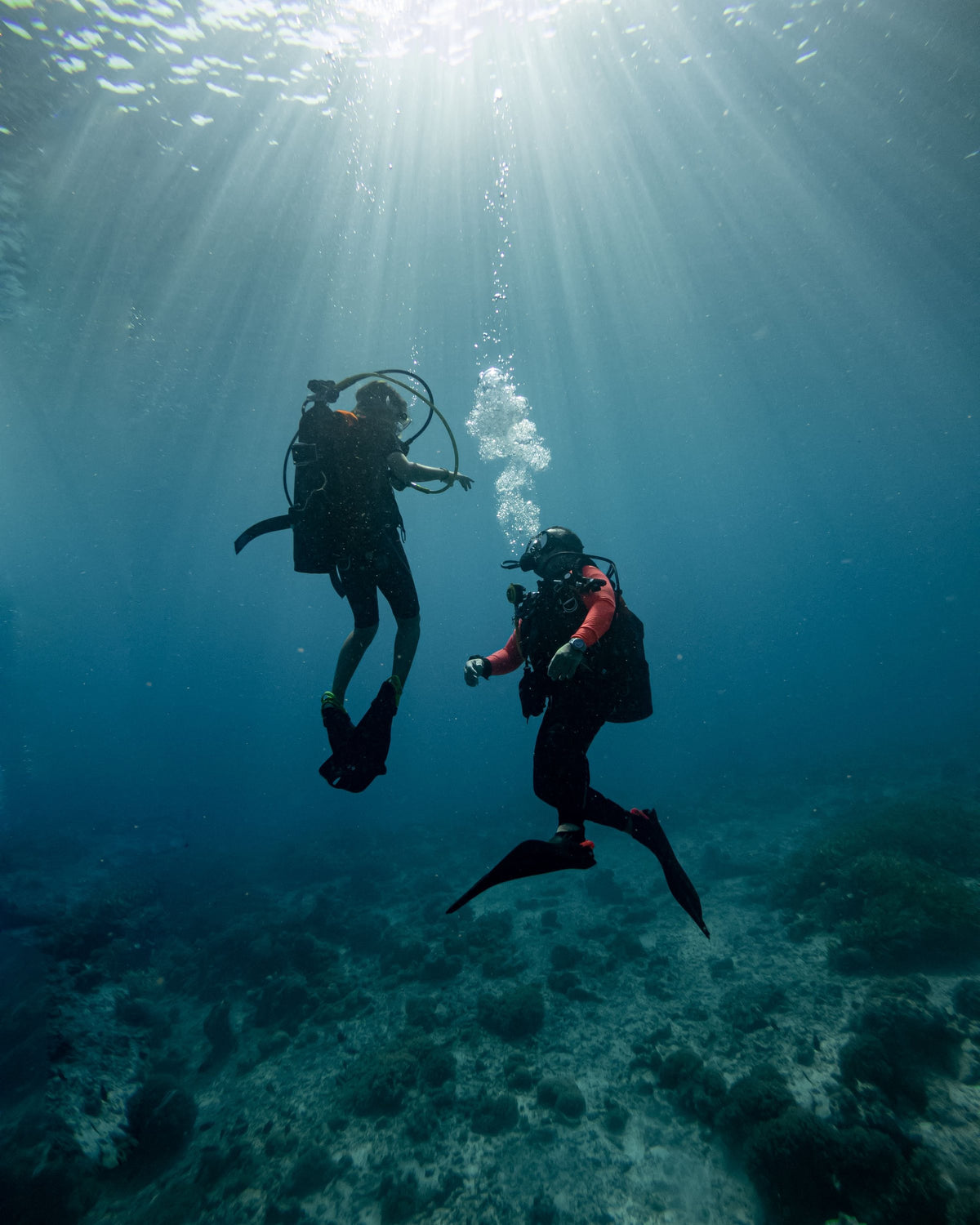
A glucose meter sits on the kit bench next to the mask and fins. Sixty minutes before the dive it reads 9.1. Thirty minutes out it says 8.8, and on the last check before the giant stride it's 8.6. The numbers are high enough, but they're falling, and that alone moves the dive back.
Diabetes doesn't rule out scuba. Divers with type 1 and type 2 diabetes dive under a protocol from a 2005 workshop. The Undersea and Hyperbaric Medical Society (UHMS) and Divers Alert Network (DAN) ran it together. It asks for a doctor's clearance first. On the day, it asks for blood glucose of at least 8.3 mmol/L (150 mg/dL), stable or rising across three checks in the hour before the dive. Below 8.3 or above 16.7 mmol/L, the dive waits. Oral glucose goes on every dive, glucagon stays at the surface, and the plan stays inside 30 metres and 60 minutes with no decompression stops.
Can you scuba dive with diabetes?
Yes, with medical clearance and a routine that the dive centre can see you follow. The concern is hypoglycaemia. The UHMS guidance for doctors explains that a fast change in consciousness from low blood sugar can end in drowning. For divers on insulin or certain tablets, it calls diving generally contraindicated unless it follows the consensus guidelines. Read the other way, the guidelines are the route in.
The medical form flags it early. Question 8 of the Diver Medical Participant Questionnaire, version 2026-01-01, covers back problems, hernia, ulcers or diabetes. A yes sends you to Box F, which lists diabetes, drug or diet controlled, and gestational diabetes in the last 12 months. That yes means a doctor signs the form before you get in the water. Our rule is that a yes anywhere means a signed page three before any in-water session, the pool included. The guide to what a yes on the medical form means covers how the form is routed.
Who do the guidelines clear to dive?
The UHMS and DAN criteria are specific. They're also a floor, not a promise: the doctor who examines you makes the call.
- Age: 18 or older, or 16 in a special training programme.
- Time on the current treatment: three months after starting or changing tablets, and a year after starting insulin.
- Recent episodes: no low or high blood sugar needing help from another person in the past year, and no history of hypoglycaemia unawareness.
- HbA1c: 9% or lower, measured within a month before the first assessment and again at every annual review.
- Complications: none significant, such as damage to the eyes, kidneys or nerves.
- Review: a yearly check with a physician or diabetologist. Over 40, the doctor also looks for silent heart disease.
The diver also signs a statement of intent to follow the protocol and to stop diving after any diabetes-related incident until a doctor has reviewed it. A 2020 review in Diving and Hyperbaric Medicine adds graduated clearance. You start at the shallowest depths with experienced buddies and go deeper once your glucose control there is proven.
Does type 2 on tablets count the same as insulin?
Not for low blood sugar risk. The 2020 review by Jendle, Adolfsson and Pollock sorts diabetes medicines into two groups:
- Low risk of hypoglycaemia: metformin, DPP-4 inhibitors, SGLT2 inhibitors, GLP-1 medicines such as semaglutide, and pioglitazone.
- High risk: every type of insulin, and sulfonylureas such as glimepiride, glibenclamide and glipizide.
Lower risk still means the form gets a yes and a doctor signs it off. The review doesn't exempt anyone from the routine, and a dive can change how a body uses glucose in ways a dry-land day doesn't show. Mixing a low-risk tablet with insulin or a sulfonylurea puts you back in the high-risk group. If a weekly injection is part of your treatment, the guide to diving on Ozempic or Mounjaro covers its own side effects.
What blood sugar do you need before a dive?
The 2005 guidelines set the trigger at 8.3 mmol/L or higher, stable or rising. Check at 60 minutes, at 30 minutes and immediately before the dive, and compare the three. Delay the dive if any reading is below 8.3 or above 16.7 mmol/L. The 2020 review suggests a pre-dive target range of 7 to 12 mmol/L. Which figure you work to is for your doctor to set. Both approaches agree on the direction: a falling number delays the dive, whatever its value.
One trap for South African divers: meters here read in mmol/L, and most diving guidance was written in the US in mg/dL. The conversion is a factor of about 18.
| Reading | mmol/L | mg/dL |
|---|---|---|
| Bottom of the 2020 target range | 7.0 | 126 |
| 2005 minimum before a dive | 8.3 | 150 |
| Top of the 2020 target range | 12.0 | 216 |
| 2005 upper limit, delay above this | 16.7 | 300 |
A delayed dive costs a few minutes on the bench. Adjusting tablets or insulin the evening before or on the morning of the dive can help, and that's a plan to make with your doctor, not on the day.
What if your blood sugar drops underwater?
Early hypoglycaemia looks like plenty of other dive problems: shakiness, sweating, confusion, blurred vision. Cold, narcosis and a bad night's sleep can all look the same from the outside. That's why the protocol settles the response in the briefing, not at depth.
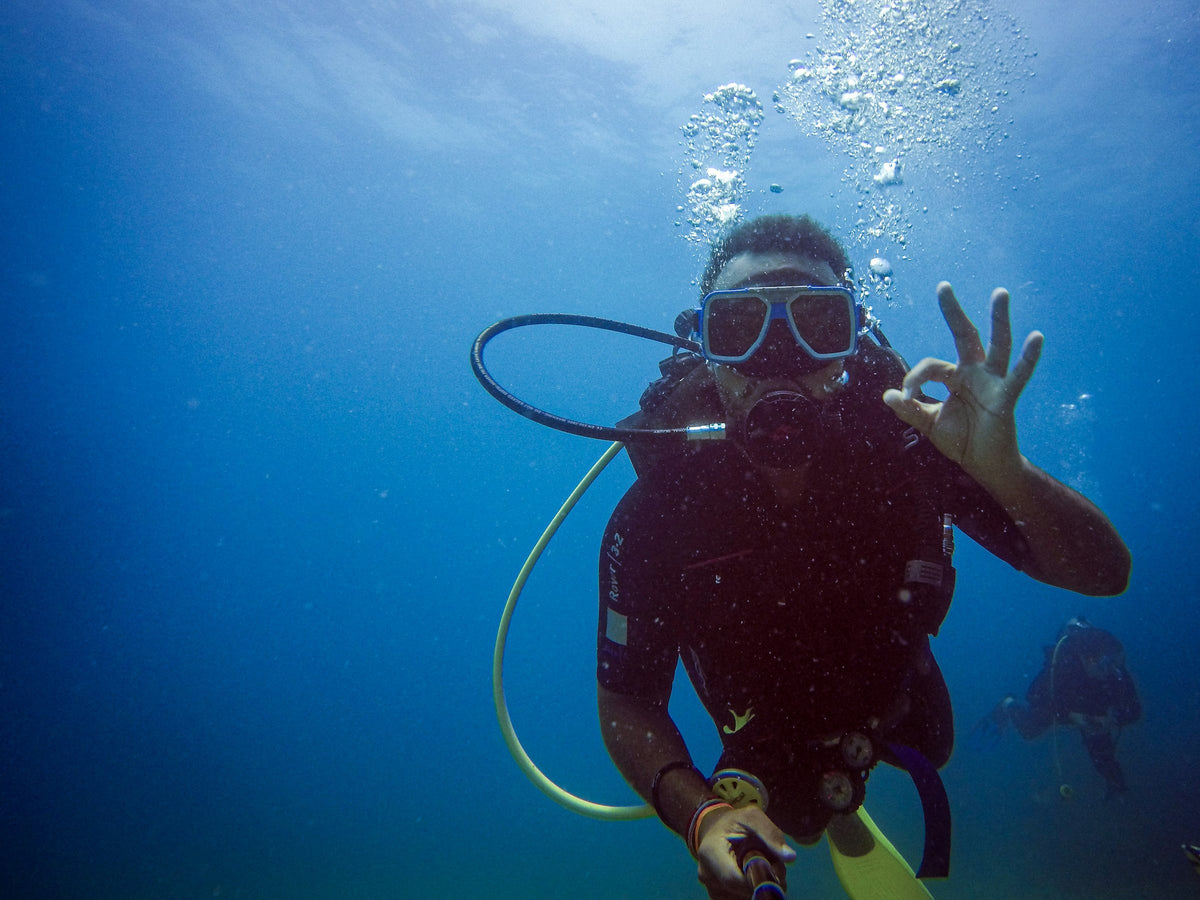
- Signal: DAN's guidelines suggest an "L" made with the thumb and index finger for suspected low blood sugar.
- Surface: go up with your buddy and get positively buoyant.
- Glucose: carry oral glucose where you can reach it on every dive, such as a gel in a BCD pocket, and take it at the surface.
- Exit: leave the water. Glucagon stays at the surface for anyone who can't take glucose by mouth.
The guidelines say your buddy or dive leader should know about the diabetes and what to do, and shouldn't have diabetes themselves. They also say to avoid long, cold or hard dives, because each one burns through glucose. Inland water in winter makes that part easy to get wrong; the guide to why water steals heat faster than air explains the cold. After the dive, check glucose when you get out, then check often for the next 12 to 15 hours, since the drop can come late. Drink enough on dive days too, because high blood sugar makes you pass more urine.
Can you dive with a CGM or Libre sensor?
You can wear one, but it doesn't replace the meter. The 2020 review recommends at least two weeks of CGM data before you start diving, so you and your doctor can see how your glucose moves. It also notes that insulin pumps are only water resistant to about 2.5 to 3.5 metres, so pumps come off before the dive.
The best data from the water is recent and small. A 2024 study in Diabetes Technology and Therapeutics followed 13 divers with type 1 diabetes over 202 dives, averaging 27.1 metres. Against fingerprick readings, the FreeStyle Libre 3 had a mean error of 14.2% and the Dexcom G7 31%. Neither reached the accuracy needed to use the sensor on its own, and the authors concluded that fingerprick tests remain crucial for planning dives. A 2025 commentary reviewing every study so far reached the same view: no system yet meets the standard for accurate use underwater. Treat the sensor as a trend line and the meter as the decision.
What to sort out before your first dive
Start with the doctor, ideally one trained in dive medicine. SAUHMA lists dive medical examiners in South Africa. Take the medical form, your recent HbA1c and your glucose logs. Ask about the waiting period after any recent change in medication, the pre-dive target and how to adjust doses on dive days.
Then tell the people in the water with you. Your instructor and buddy need to know the signal, where your glucose is and where the glucagon is kept. Pack a meter, strips, fast glucose and a spare, and write every glucose reading in your logbook next to the dive it belongs to. After a season, that log shows how you respond to diving.
Our Open Water Diver course (R5,650) starts in the heated indoor pool in Fourways before the open water dives. Your first readings come from shallow, warm water. The signed medical form comes first.
Sources
- DAN, Guidelines for Diabetes and Recreational Diving, from the UHMS and DAN workshop of 19 June 2005 (Pollock NW, Uguccioni DM, Dear GdeL, eds). Selection criteria, the 8.3 mmol/L rule, the three checks, dive limits, the "L" signal and checks after the dive.
- Diver Medical Participant Questionnaire (version 2026-01-01) and Diving Medical Guidance (version 2023-05-31), hosted by UHMS. Question 8, Box F and the hypoglycaemia risk statement.
- Jendle JH, Adolfsson P, Pollock NW. Recreational diving in persons with type 1 and type 2 diabetes: advancing capabilities and recommendations. Diving and Hyperbaric Medicine, 2020;50(2):135-143. Hypoglycaemia risk by medicine, the 7 to 12 mmol/L target, graduated clearance, CGM and pumps.
- Gamarra E et al. Continuous glucose monitoring and recreational scuba diving in type 1 diabetes: FreeStyle Libre 3 and Dexcom G7. Diabetes Technology and Therapeutics, 2024;26(11):829-841. 202 dives, sensor accuracy against fingerprick readings.
- Popovic DS et al. Continuous glucose monitoring during recreational diving in type 1 diabetes. Diabetes, Metabolic Syndrome and Obesity, 2025;18:3089-3092. A review of every underwater CGM study to date.
- Reno C. Diving with Diabetes. DAN Alert Diver, 2019 and Alert Diver Europe, Diving with Diabetes: Guidelines and Latest Research. Pre-dive checks and DAN Europe's glucose monitoring research.
Frequently Asked Questions
Can type 1 diabetics scuba dive?
Yes, with a doctor's clearance and the UHMS and DAN protocol. The guidelines ask for a year on insulin and no severe low blood sugar needing help in the past year. They also ask for an HbA1c of 9% or lower and three glucose checks before every dive.
Can you scuba dive with type 2 diabetes on metformin?
Usually, once a doctor clears you. Metformin carries a low risk of hypoglycaemia, but diabetes is still a yes on the medical form. Insulin or sulfonylureas such as glimepiride and glibenclamide raise the risk and bring in the full glucose routine.
What blood sugar do you need to scuba dive?
The 2005 UHMS and DAN guidelines ask for at least 8.3 mmol/L (150 mg/dL), stable or rising over three checks in the hour before the dive. Delay the dive below 8.3 or above 16.7 mmol/L. A 2020 review suggests 7 to 12 mmol/L.
Can you wear a Libre or Dexcom sensor while diving?
You can wear one, but research so far says not to rely on it alone. A 2024 study of 202 dives found neither the FreeStyle Libre 3 nor the Dexcom G7 accurate enough on its own, so fingerprick checks still decide the dive.
Is diabetes on the scuba medical form?
Yes. Question 8 of the 2026 Diver Medical Participant Questionnaire covers diabetes. Box F lists it whether it's treated with medicine or diet, plus gestational diabetes in the last 12 months. A yes means a doctor signs the form before any in-water session.
How deep can a diver with diabetes go?
The guidelines set 30 metres, dives of up to 60 minutes and no decompression stops, and rule out caves and wrecks. A 2020 review adds starting shallower and going deeper only once glucose control at depth is proven.
General information only, not medical advice. Diabetes treatment and fitness to dive are decisions for your own doctor, ideally one trained in dive medicine. In an emergency, call the DAN Southern Africa 24-hour hotline on +27 82 810 6010.
Reviewed October 2026. Devon Ford runs Scuba Evolution, a PADI 5 Star Dive Centre in Glenvista, Johannesburg.