It's the Thursday before a Sodwana weekend, and a diver is at a pharmacy counter in Joburg asking for something strong for seasickness. The pharmacist asks what it's for. A boat trip, comes the answer. The one word that would change the conversation, diving, doesn't come up.
Seasickness tablets and diving can mix, on conditions. A pharmacist or doctor checks the medicine first, knowing you'll be scuba diving. You try it on a non-diving day, and dive on it only if it left you unimpaired. Many motion sickness medicines list drowsiness, blurred vision or confusion, and depth adds nitrogen narcosis on top.
Can you take seasickness tablets before diving?
In many cases, yes, but not on the day you first meet the medicine. DAN Southern Africa's rule is plain: don't dive under the influence of any medication you're using for the first time. Its method is to take one dose on a day when you won't need to drive or be sharp, then judge how you feel. Come through that day unimpaired, with the tablet working, and it's a candidate for the boat.
DAN's medical page warns that drowsiness, the common side effect of the antihistamine group, could seriously affect how safely a diver performs. Taking nothing isn't automatically safer either. DAN's travel medicine guide notes that seasickness itself can bring inattentiveness, and sick divers may rush in with less care over their kit and their buddy. The aim is a medicine that settles your stomach without dulling your head. The boat-side half of the problem is in Seasick on the Boat: What to Do Before and Below.
What should you ask your pharmacist about seasickness tablets?
Start by saying the word diving. At Scuba Evolution we don't recommend or name seasickness tablets, because we're dive instructors, not doctors or pharmacists. We send divers to the pharmacy with these questions instead.
- Will this cause drowsiness? Ask about the exact product. Under US rules for over-the-counter motion sickness tablets, every approved ingredient carries a drowsiness warning, and two of the four say "marked".
- Is it safe to take before scuba diving? Depth changes the answer you'd get for a ferry crossing.
- Should it be tried on a non-dive day first? DAN says yes for any new medicine.
- When should it be taken, and how long does it last? DAN Southern Africa tells divers to check both. The Cochrane reviews below found trials of these medicines as prevention only, none as a fix once you're already sick.
- Does it interact with anything else on this list? Bring the list. US label wording warns against combining these tablets with sedatives or tranquillisers without a doctor's say-so.
- Is alcohol safe with it? More on that below.
- Is it safe with other conditions? The same labels name glaucoma, an enlarged prostate, emphysema and chronic bronchitis as reasons to see a doctor first.
Which seasickness medicines make you drowsy?
Most of them can, to a degree that varies by class and by person. Three classes come up, each with its own trade-off.
| Class | Side effects the sources list | The diving catch |
|---|---|---|
| Sedating (first-generation) antihistamines, as tablets | Drowsiness, sometimes marked | Drowsiness may add to narcosis at depth |
| Hyoscine, also called scopolamine, as tablets or a skin patch | Dry mouth and blurred vision; less often confusion, disorientation or hallucinations | A dilated pupil could prompt an unnecessary evacuation; a patch worn over three days can bring withdrawal that mimics decompression sickness |
| NK-1 receptor antagonist, approved in the US in 2025 | Sleepiness, headache and fatigue | Prevents vomiting rather than nausea; no diving data that we found |
The best antihistamine numbers come from a 2022 Cochrane review with authors in Durban. Under real travel conditions, first-generation antihistamines prevented symptoms in 40% of susceptible people against 25% on placebo. Sedation was reported by 66% on the antihistamine and 44% on placebo. A peer-reviewed 2012 family medicine summary reports that two non-sedating hay fever antihistamines made no significant difference in a small lab trial.
For hyoscine, a 2011 Cochrane review found it beat placebo. It was no more likely than the alternatives to cause drowsiness, blurred vision or dizziness, though dry mouth was more common than with some. DAN's travel guide adds a diving trap: touch the patch and then your eye, and that pupil can dilate. DAN suggests wearing a patch for at least 24 hours as a test before you need it.
The newest class, an NK-1 receptor antagonist, was approved by the US Food and Drug Administration in 2025 for preventing vomiting caused by motion. Its label reports sleepiness in up to 12% of trial participants against 6% on placebo, and nausea scores no better than placebo. Whether it's registered in South Africa is a question for your pharmacist.
Why is a drowsy tablet a bigger problem at depth?
Because depth brings its own sedation, and the two may add up. The nitrogen narcosis guide explains how air under pressure slows the brain, an effect DAN Europe places at or beyond 30 metres. A 2005 review in the Malta Medical Journal warns that narcosis combined with a sedating drug such as an antihistamine may produce unexpectedly severe impairment. It advises avoiding sedating medicines when diving, especially beyond 20 to 30 metres.
The evidence is thin in both directions. DAN Europe lists medication among factors that can deepen narcosis, while noting the science behind those factors isn't strong. For the patch, DAN's travel guide reports a US Navy evaluation that found minimal adverse effects in divers. None of it tested your medicine at your depth. A tablet that leaves you slightly slow at a braai may leave you slower at 25 metres, with less margin to notice.
Can you drink alcohol with seasickness tablets?
Not on a dive trip, and the label usually says not at all. US rules require over-the-counter motion sickness tablets to tell you to avoid alcohol, because alcohol, sedatives and tranquillisers may increase the drowsiness. DAN's travel guide says not to drink while wearing a hyoscine patch. DAN Southern Africa puts alcohol on the avoid list for the day before a boat dive.
Our house rule for course students is that a drink the night before is allowed if you stay in control, and anyone still intoxicated in the morning doesn't dive. Add a tablet whose label says no alcohol, and the sensible night before a boat dive is a dry one. The morning after is covered in Diving Hungover: What Alcohol Leaves Behind.
Do ginger and acupressure bands work for seasickness?
Neither has strong evidence behind it. The 2012 family medicine summary rates ginger as usable, on trials with conflicting results. The larger of its two better-quality trials, run at sea, found ginger cut vomiting and cold sweats but made no significant difference to nausea.
Wrist bands press on a point on the inner wrist, or send a small electrical pulse to it. DAN lists ginger and bands among remedies that may not have been tested in trials, and its travel guide calls this group mostly anecdotal. DAN Southern Africa applies the tablet rule here too: know how a remedy affects you before a dive day.
Where is the best place to sit on a boat for seasickness?
Low and in the middle of the boat, where the up-and-down movement is smallest, with your eyes on the horizon. Seasick on the Boat covers the rest of DAN's list, from a light meal before boarding to suiting up late. DAN also advises a well-ventilated spot away from engine exhaust, putting the phone away, and a proper night's sleep.
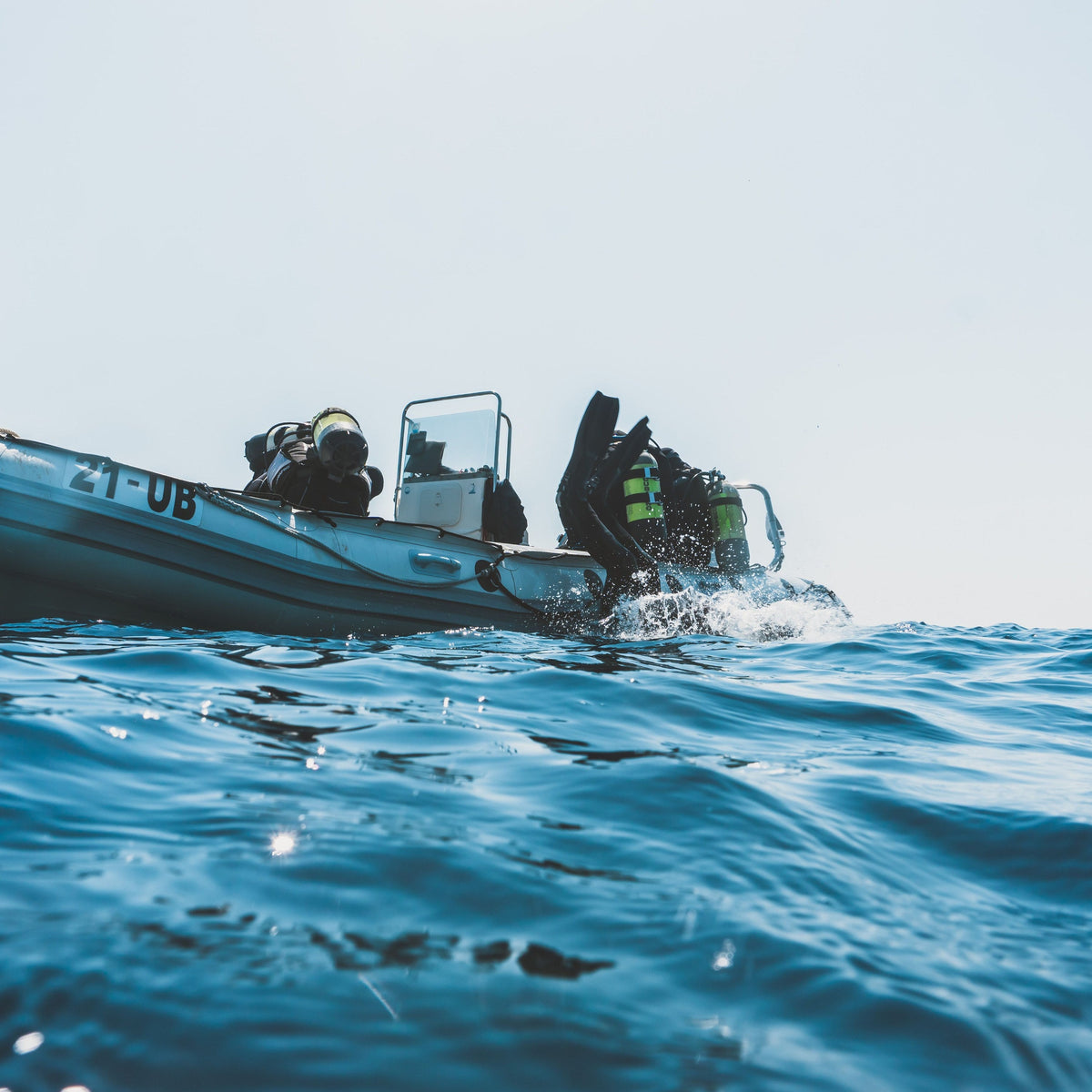
At South African beach launches such as Sodwana or Aliwal Shoal, divers go out through the surf on inflatable boats, and seating is the skipper's call. DAN's guidance to operators is to tell divers where to sit before boarding, so the seating plan is part of the briefing. Sit where you're put and keep a hand on the grab line. If it catches up with you underwater, signal your buddy and keep the regulator in, as PADI advises.
What to take to the pharmacy
Take the questions above and a list of every medicine and supplement you use. A prescribed medicine is a yes to question 10 on the 2026 Diver Medical Participant Questionnaire, which sends course students to a doctor before training. The dive medical form guide explains what a yes sets in motion, and SAUHMA lists dive medical examiners in South Africa.
Narcosis, and how it shows up in you, is part of the PADI Deep Diver course (R4,500). It takes you past the 30-metre limit of Advanced Open Water to the 40-metre recreational maximum.
Sources
- DAN, Motion Sickness. The medicine groups, drowsiness, the operator's seating briefing, ginger and wrist bands. Also DAN's Travelers Medical Guide: Motion Sickness: inattentiveness, the patch test, the dilated pupil, alcohol, fumes, rest and the US Navy evaluation.
- DAN Southern Africa, Seasickness Prevention and Treatment. The first-dose rule, the test day, timing, ventilation, alcohol the day before and ginger. Also PADI's Vertigo and vomiting while diving.
- Karrim N et al. Antihistamines for motion sickness. Cochrane Database of Systematic Reviews, 2022, and Spinks A, Wasiak J. Scopolamine (hyoscine) for preventing and treating motion sickness. Cochrane Database of Systematic Reviews, 2011.
- Sutton M, Mounsey AL, Russell RG. FPIN's Clinical Inquiries: Treatment of motion sickness. American Family Physician, 2012. Non-sedating antihistamines and the ginger trials.
- Pace T et al. Medication, recreational drugs and diving. Malta Medical Journal, 2005. Also DAN Europe's Alert Diver articles Physiological responses to high pressure during immersion and Measuring Inert Gas Narcosis.
- US Code of Federal Regulations, 21 CFR 336.50: labelling of antiemetic drug products. The drowsiness, alcohol and medical-condition warnings.
- US FDA prescribing information for the first NK-1 receptor antagonist approved for motion sickness (2025).
- Diver Medical Screen Committee, Diver Medical Participant Questionnaire (version 2026-01-01), hosted by UHMS, and the SAUHMA Dive Medical Examiner listing.
Frequently Asked Questions
Can you take seasickness tablets before diving?
Often, if a pharmacist or doctor has checked the medicine knowing you dive, and you've tried it on a non-diving day without feeling impaired. DAN Southern Africa says not to dive on any medication you're using for the first time.
Do seasickness tablets make you drowsy?
Many do. DAN names drowsiness as the common side effect of the antihistamine group, and a 2022 Cochrane review found sedation in 66% of people on an antihistamine against 44% on placebo. Hyoscine more often causes dry mouth and blurred vision.
Can you drink alcohol with seasickness tablets?
US labels for over-the-counter motion sickness tablets say to avoid alcohol because it may increase drowsiness. DAN advises against drinking while wearing a hyoscine patch and on the day before a boat dive.
Are non-drowsy seasickness tablets safe for diving?
No label is a diving clearance. Every over-the-counter motion sickness ingredient approved under US rules carries a drowsiness warning, and non-sedating hay fever antihistamines made no significant difference to motion sickness in a small trial. Test any product on a non-dive day first.
Do acupressure bands work for seasickness?
The evidence is weak. DAN describes wrist bands as mostly anecdotal and in many cases not scientifically proven, and advises knowing how any remedy affects you before relying on it on a dive day.
Where is the best place to sit on a boat to avoid seasickness?
Low and in the centre, with your eyes on the horizon and fresh air away from engine fumes. On a South African surf launch, sit where the skipper puts you and keep a hand on the grab line.
General information only, not medical advice. We don't recommend, name or prescribe seasickness medicines: ask your doctor or pharmacist, and see a doctor trained in dive medicine (SAUHMA lists dive medical examiners in South Africa). In an emergency, call the DAN Southern Africa 24-hour hotline on +27 82 810 6010.
Reviewed October 2026. Devon Ford runs Scuba Evolution, a PADI 5 Star Dive Centre in Glenvista, Johannesburg.