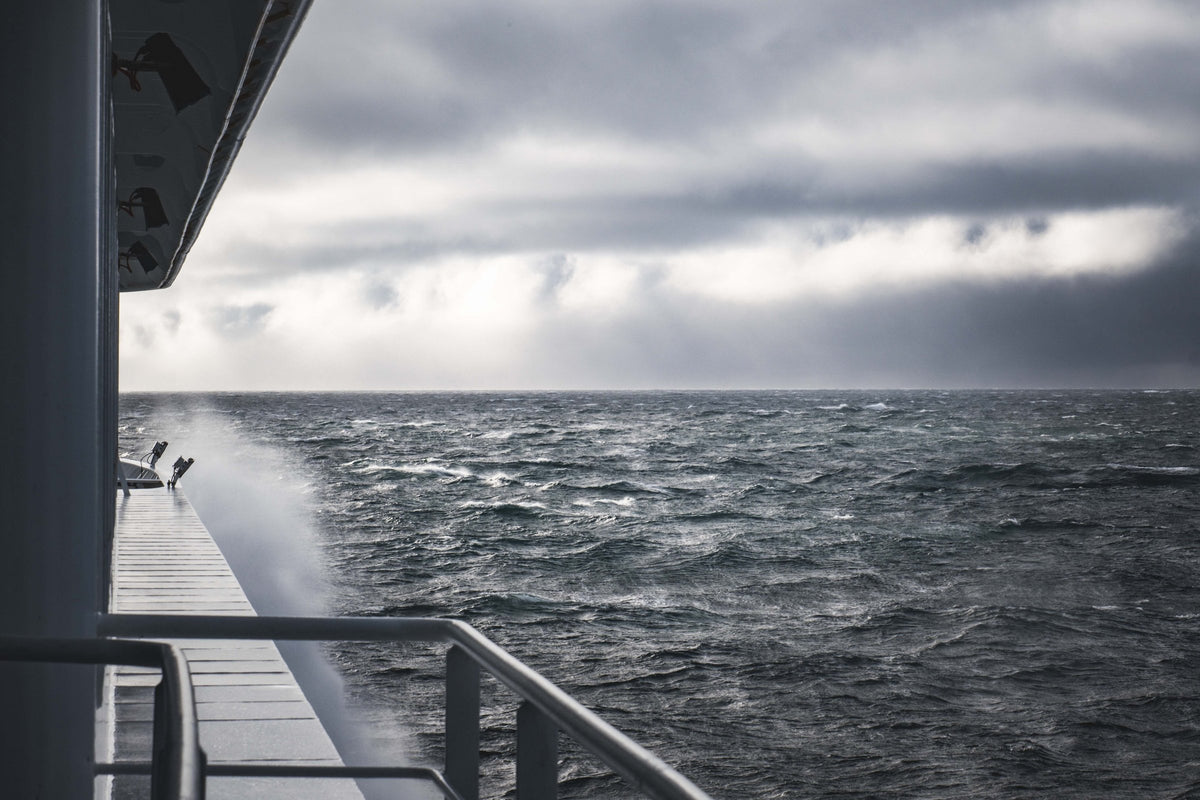
You are the one on the transom, kit on, staring at the horizon. The skipper is counting divers in. You are working out whether getting in will make this better or a great deal worse.
Two answers, and the second one counts for more. Most of this was decided on land. DAN's prevention guidance is specific down to the meal: something light 45 to 60 minutes before boarding, because an empty stomach is more susceptible to irritation. Water rather than alcohol the night before, a seat low and central on the vessel, eyes on the horizon. The underwater rule is one line. If you are going to be sick down there, the regulator stays in your mouth and you vomit through it.
Can you dive when you are already seasick?
Queasy and vomiting are two different states, and the second one settles the question. A diver who is actively being sick does not get in the water. DAN calls dehydration from vomiting a serious threat to divers prone to motion sickness, and a person who has been over the side twice is already short of fluid, cold and rattled before the descent starts.
The judgement in the grey zone belongs to you and the people running the dive. Whoever is running the boat that day knows their own operation, their entry and their conditions, so their call carries. Say out loud that you are struggling. DAN's symptom list runs yawning, pallor and headache first, then nausea and vomiting, with dizziness, fatigue, sweating and heavy salivation alongside. Divers tend to announce it at the vomiting stage, long after the crew could have helped.
What happens if you are sick underwater?
It goes better than people fear, on one condition. DAN's instruction is direct: if you become ill underwater, keep your primary regulator in your mouth and vomit through it. Most regulators can process it without trouble, and the spare second stage is there if the situation gets messy.
PADI's explanation of why is the part worth remembering on the boat. After the expulsion you may reflexively inhale. With the regulator out, that breath takes in water instead of air, which turns an unpleasant minute into an emergency. The reflex arrives before any decision does, which is the whole argument for leaving the thing where it is.
Afterwards, purge the second stage or switch to the alternate, then get your breathing back to normal. No breath-holding on the way up, for the reasons set out in the article on breath-holding on scuba. PADI's guidance from that point is to ascend safely and stop diving for the day, then rehydrate on the surface. Two dives after being sick at depth is not a plan.
Does getting in the water help?
Boat lore says yes, on the grounds that the motion cue disappears once you are under the surface chop. The published guidance from DAN and PADI makes no such claim, and it would be a poor reason to enter the water. Treat it as folklore that sometimes lines up with experience.
What the guidance does address is the state you take down with you. Motion sickness brings dizziness, fatigue and a fluid deficit. PADI lists seasickness medication side effects among the causes of vertigo underwater, alongside decompression sickness, hypoxia, contaminated breathing gas and ear equalisation problems. A diver who descends hoping the sea will fix them has removed their own ability to tell those apart.
Which seasickness medications do divers use, and what is the catch?
Two classes come up: antihistamines used for motion sickness, and the prescription scopolamine patch. No dive shop can recommend either, this piece names no doses, and the decision belongs to a doctor who knows your history. The catches are worth reading before that appointment.
For the antihistamine group, DAN names drowsiness as the common side effect and states it might seriously impair a diver's ability to perform safely. For the scopolamine patch, DAN lists hallucinations, confusion, agitation and disorientation among the possible effects. Then the one that changes an emergency: wearing a scopolamine patch for more than three days can bring on withdrawal symptoms that mimic decompression sickness, which complicates proper diagnosis.
Sit with that for a second. A diver on day four of a coastal week, who peels off a patch and feels dizzy and off-balance, presents with something no boat crew can distinguish from a hit. DAN's practical instruction is to find out how anything affects you on a non-diving day, well before the trip.
Why does seasickness make a decompression assessment harder?
The symptom lists overlap almost completely. Nausea, vomiting, dizziness, fatigue and headache appear on both, and a diver who spent the morning hanging over the rail will attribute every one of them to the boat. That is the trap. Decompression sickness after an unremarkable dive is uncommon, and it is not impossible, and the diver who has already explained their symptoms to themselves stops looking.
The fix is administrative rather than medical. Tell somebody what you took and when, what the profile was, when the symptoms started, and whether anything appeared after the dive that was absent before it. Then let a doctor and DAN Southern Africa do the sorting. Symptoms that arrive or worsen after surfacing deserve that call, seasickness on the day or not.
What can you sort out before the boat leaves?
Most Gauteng divers certify in fresh water at Bass Lake or Miracle Waters and meet a boat for the first time on a coastal holiday, with new kit, an unfamiliar entry and a swell they have not felt before. The week before the trip is where this is won.
- See a doctor early. Before the trip, not on the morning of it, and with your diving mentioned explicitly.
- Trial anything on dry land. DAN's line is to know how a medication affects you on a non-diving day first. Drowsiness discovered at 18 metres is a poor result.
- Alcohol and a heavy meal the night before are both on DAN's avoid list. So is boarding on an empty stomach; something light 45 to 60 minutes beforehand is the guidance.
- Take the low, central seat. DAN's positioning advice is low and centre, eyes slightly above the horizon. If the horizon is not available, keeping your eyes closed beats staring at the deck.
- Suit up late. DAN Southern Africa warns that a long spell fully suited before entry brings its own dizziness and nausea from heat stress. Adding that to a rolling deck is a poor trade.
- Have your kit setup automatic before you travel. Assembling gear on a moving boat, head down, with cold hands, is the classic trigger. A Refresher or ReActivate session in the pool fixes the fumbling part, which is the part you can control.
Nothing here makes you immune. Motion sickness is a normal response to a conflict between what your inner ear reports and what your eyes see, and plenty of experienced divers get it. The aim is to arrive at the entry gate hydrated, unhurried and able to say honestly whether you should be getting in.
Sources
- DAN Southern Africa: seasickness prevention and treatment. The prevention list, the meal timing, the scopolamine withdrawal caution and the instruction on vomiting through the regulator.
- DAN: seasickness prevention and treatment. The same guidance in DAN's international blog, including dehydration from vomiting as a threat to divers.
- PADI: vertigo and vomiting while diving. Why the regulator stays in, the reflex inhalation afterwards, and ending the day's diving once you are stable.
- DAN: motion sickness. The mechanism, the symptom list, positioning on the vessel and the side effects of each medication group.
- DAN Southern Africa: wetsuits and heat stress. Heat stress from suiting up early, and the dizziness and nausea it produces.
Frequently Asked Questions
Can you scuba dive if you are seasick?
Queasiness is a judgement call with the crew running the dive. Active vomiting is not: DAN treats dehydration from vomiting as a serious threat to divers, and a diver being sick on the transom should stay on the boat.
Do you take the regulator out to vomit underwater?
No. DAN's guidance is to keep the primary regulator in and vomit through it. PADI's reason is the reflex inhalation that follows, which would draw in water if the regulator were out of your mouth.
What do you do after being sick on a dive?
Purge the second stage or switch to your alternate, get your breathing settled, then ascend safely without breath-holding. PADI's guidance is to end the day's diving and rehydrate at the surface.
Do scopolamine patches cause problems for divers?
DAN cautions that wearing one for more than three days can produce withdrawal symptoms that mimic decompression sickness, complicating diagnosis. Listed side effects include confusion and disorientation. Use is a decision for your doctor.
Does getting in the water cure seasickness?
It is a common claim on boats and it appears in no published guidance from DAN or PADI. Descending to escape nausea also removes your ability to tell seasickness apart from anything more serious.
Why does seasickness complicate a decompression sickness assessment?
The symptom lists overlap: nausea, vomiting, dizziness, fatigue and headache sit on both. A diver who blames the boat may miss something else, so symptoms appearing after a dive warrant a call to DAN Southern Africa.
This is general information, not a substitute for a dive medical or advice from a doctor trained in dive medicine. In an emergency, contact your local emergency services and DAN Southern Africa on +27 82 810 6010.
Reviewed September 2026. Devon Ford runs Scuba Evolution, a PADI 5 Star Dive Centre in Glenvista, Johannesburg.