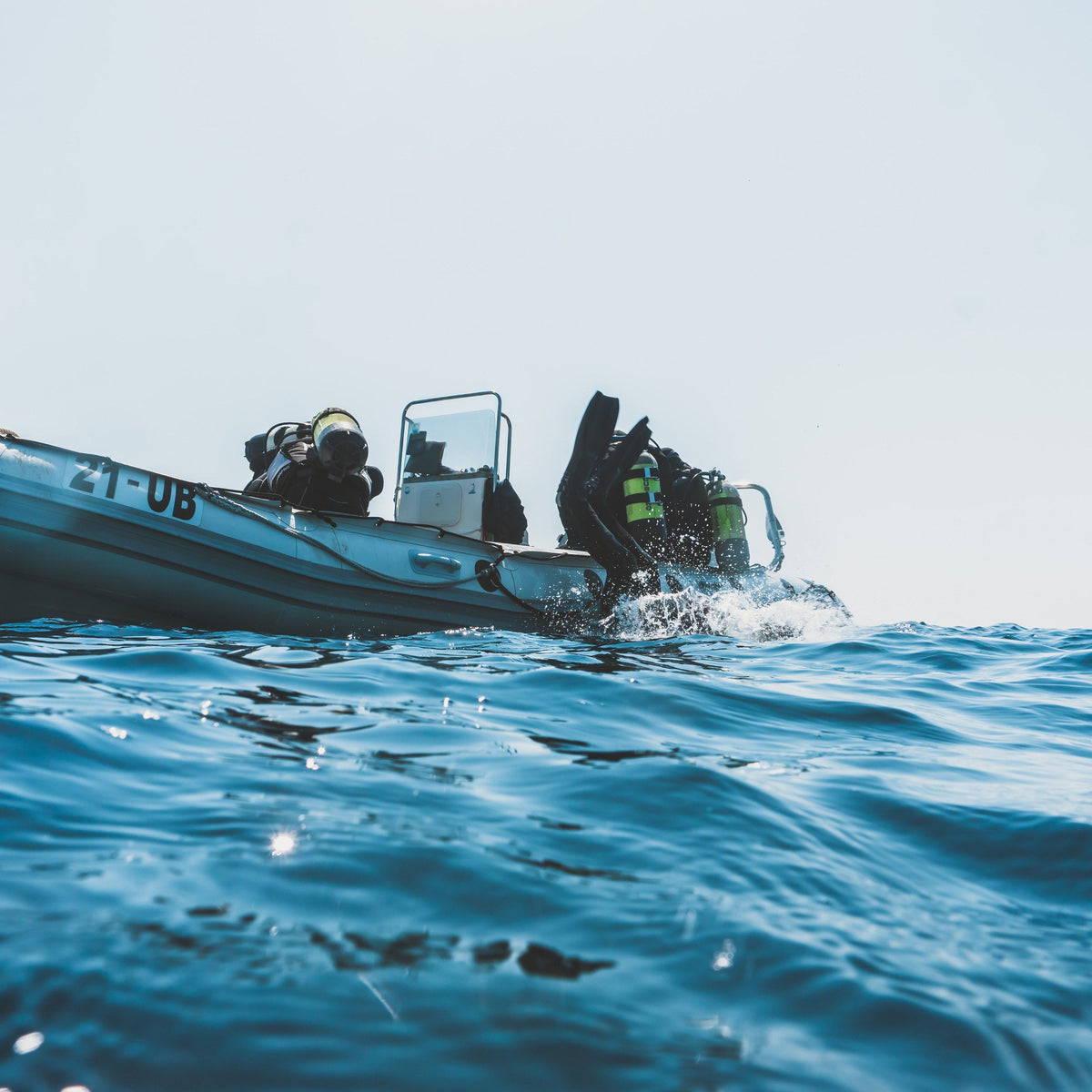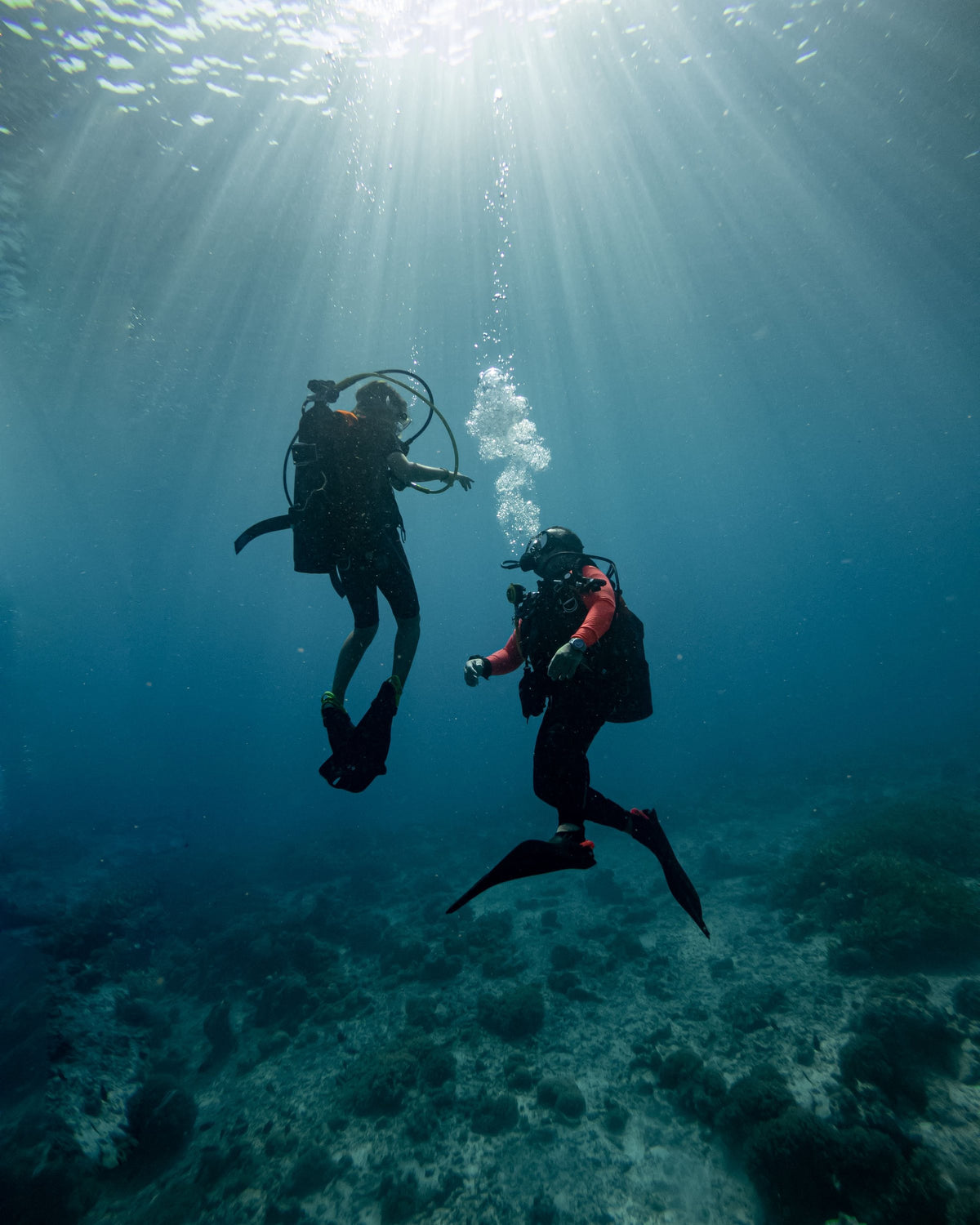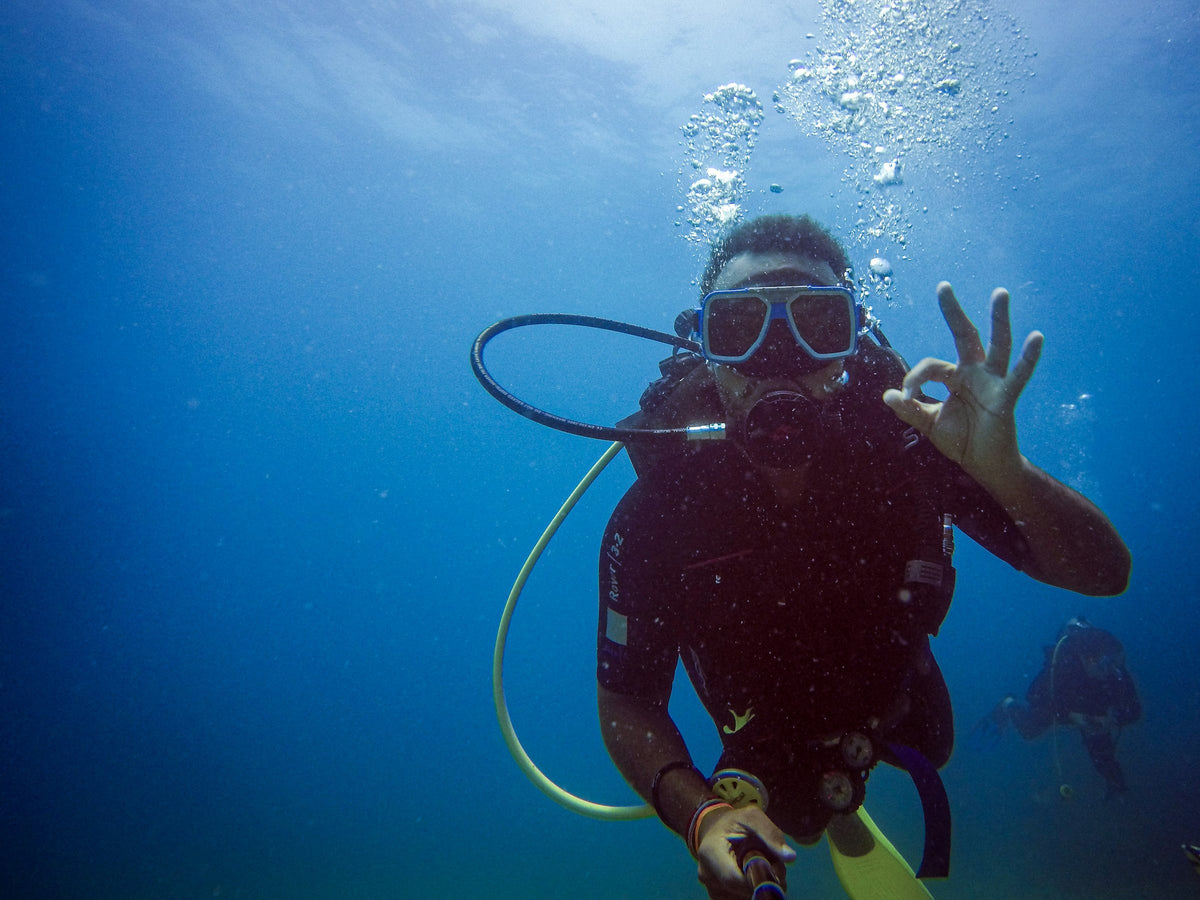

The braai ran late, the boat launches at seven, and kit-up is at half past five. You drove down from Johannesburg the day before, so the December trip started with eight hours in the car and finished around the fire. Now your mouth is dry, your head is thick, and you're telling yourself two litres of water will sort it out. It won't, and the reason has little to do with the water.
A hangover isn't the tail end of being drunk. According to the US National Institute on Alcohol Abuse and Alcoholism, hangover symptoms peak when blood alcohol returns to about zero, and they can last 24 hours or longer. So the morning you feel worst is the morning your judgement, coordination and attention are still impaired. DAN reports that diving skills were significantly compromised at a blood alcohol concentration of 0.04 percent. And the hangover's fatigue, headache and nausea are also symptoms of decompression sickness, which is the part that makes this a safety question rather than a comfort one.
How long before a dive should you stop drinking?
PADI gives no fixed interval on its alcohol page. Its position is that even one drink can increase your risk of a diving emergency. The useful evidence sits in what alcohol leaves behind the next day. NIAAA is plain on the point: coffee, a shower and a morning drink don't speed recovery, and only time clears the by-products of alcohol metabolism. Water helps you rehydrate. It does nothing for the rest.
The closest controlled data comes from aviation. In a 1986 study, ten Navy pilots flew a simulator 14 hours after drinking enough to reach a blood alcohol concentration of 100 mg/dl. Their performance was worse on virtually all measures than when they'd had no alcohol for 48 hours, though only a few differences reached statistical significance. The authors concluded that caution was needed when flying 14 hours or less after drinking similar amounts. A diver kitting up at half five after a midnight finish sits well inside that window.
The 0.04 percent figure tells you how little it takes on the way in. DAN cites a study of experienced divers, led by M.W. Perrine, that found skill performance significantly compromised at that level. A 180-pound man (about 82 kg) can reach it with two 12-ounce beers (about 355 ml each) in an hour on an empty stomach. The same work noted that situational awareness may drop even below that concentration. DAN also notes that people are often unaware of how impaired they are. That's the problem in one line.
Does a hangover raise decompression sickness risk?
Indirectly, through fluid loss, and less than most divers assume. Alcohol suppresses vasopressin, the hormone that tells the kidneys to retain fluid, so you urinate more and wake up mildly dehydrated. PADI explains why that counts underwater. Dehydration reduces the blood available for gas exchange, which can slow the removal of nitrogen from your tissues. Diving then adds its own losses: DAN lists breathing dry cylinder air, immersion and cold as further causes of fluid loss.
This is the part that undoes the two-litre plan. DAN's reference text on decompression sickness says dehydration gets more attention as a risk factor than is probably warranted. Thermal stress and exertion during the dive count for far more. So the bottle of water fixes the smallest part of the morning, while the poor sleep, the slow reactions and the cold carry on untouched. Rehydrating is sensible. A reset it isn't.
Why do hangover symptoms look like decompression sickness?
Because several of them are the same symptoms. PADI names fatigue, headache and nausea as hangover symptoms that also appear with DCS. It warns that a diver who has been drinking may blame the night before. DAN adds that dehydration symptoms such as fatigue and drowsiness can mimic DCS and cause diagnostic confusion. A diver who felt rough before the dive has a ready excuse for feeling rough after it.
That delay is the hazard. A hangover gives everyone on the boat a reason to wait and see. Our guide to how decompression sickness develops covers the symptoms in full. The practical rule is simple. Any symptom after a dive gets reported, whatever you drank the night before, and the people around you decide with that information in hand. Spotting a diver who isn't right, early, is a core skill on the Rescue Diver course.
What does the morning after carry into the water?
More than a headache. The NIAAA list of hangover effects reads like a list of what a dive needs from you. Stacked together at 18 metres, they shrink your margin.
- Slower reactions and weaker judgement. NIAAA states that attention, decision-making and muscle coordination can all be impaired during a hangover.
- Short, broken sleep. People fall asleep faster after drinking, but the sleep is fragmented and they tend to wake early.
- A drier start. Alcohol drives fluid loss overnight, and the dive adds more.
- A stomach that's already unhappy. Alcohol irritates the stomach lining and increases acid release, which is a poor starting point for a rolling boat ride.
- Anxiety. NIAAA describes a mini-withdrawal that leaves people restless and more anxious than before they drank.
Does alcohol make nitrogen narcosis worse?
DAN says alcohol may enhance the effects of nitrogen narcosis, and PADI says it can amplify them. Both act on the central nervous system, and narcosis already dulls problem-solving at depth. DAN's concern is the combination: raised blood alcohol, dehydration and narcosis together reduce problem-solving ability and can produce otherwise preventable accidents. Our article on why depth can feel like a martini explains the narcosis side.
Does alcohol change how cold you get?
Yes, while it's still in your system, and in the wrong direction. A review in Pharmacology & Therapeutics found that alcohol's most common effect in the cold is to inhibit shivering, while widening blood vessels in the skin increases heat loss. People feel more comfortable in the cold, yet their core temperature falls faster. That's a bad trade underwater, where the water is already pulling heat from you far faster than air does.
Cold also links back to decompression. DAN notes that a cool or cold state during the ascent and safety stop reduces inert gas elimination, which can prolong and possibly increase decompression stress.
Can you drink between dives, or after the last one?
Between dives, the DAN answer is short: alcohol and diving are not compatible. A lunchtime beer before a second dive puts alcohol straight into the next exposure, with all the effects above. The wider figures are sobering. DAN cites a review of more than 15 studies that found alcohol involved in roughly 50 percent of all accidents in people of drinking age. It also reports that alcohol is associated with up to 80 percent of drownings in adult males.
After the last dive of the day, PADI's guidance is to wait a few hours and hydrate first if you want a drink. The reason is the same diagnostic problem. Drinking soon after a dive makes it harder to recognise DCS symptoms, in yourself or in your buddy. One beer at the end of the evening is a different situation from rounds that start as the boat ties up.
Our rule on a course weekend: a drink in the evening is your call. Still intoxicated in the morning, and you don't dive that day. Turning up rested and in control is your part of the dive plan, the same as a working regulator.
Sources
- DAN Alert Diver: Drinking and Diving, Is It Safe?, for the 0.04 percent BAC finding, the 50 and 80 percent accident and drowning figures, dehydration causes, the DCS mimic and the narcosis interaction.
- PADI Blog: Why Scuba Diving and Alcohol Are a Dangerous Combination, for the hangover and DCS symptom overlap, dehydration and gas exchange, and narcosis.
- PADI Blog: Things You Should Never Do Immediately After Diving, for the guidance on drinking after diving.
- DAN: Contributing Factors in Decompression Sickness, for the weight of hydration against thermal stress and exertion, and cold during the ascent.
- NIAAA: Hangovers, for peak timing, duration, causes and impairment during a hangover.
- Yesavage and Leirer (1986), American Journal of Psychiatry, for pilot performance 14 hours after drinking.
- Kalant and Lê (1983), Pharmacology & Therapeutics, for alcohol's effect on shivering, skin blood flow and core temperature.
Frequently Asked Questions
Can you scuba dive with a hangover?
It isn't recommended. NIAAA reports that attention, decision-making and coordination can be impaired during a hangover. Its fatigue, headache and nausea also overlap with decompression sickness, which can delay treatment.
How long after drinking can you dive?
PADI gives no fixed interval on its alcohol page and says even one drink can raise your risk. A study of pilots found performance worse on virtually all measures 14 hours after drinking to a blood alcohol concentration of 100 mg/dl.
Will drinking lots of water before a dive fix a hangover?
No. Water helps with the mild dehydration alcohol causes, but NIAAA states there is no cure for a hangover other than time. DAN also notes that thermal stress and exertion are far more important decompression risk factors than hydration.
Is it safe to have a beer after the last dive of the day?
PADI suggests waiting a few hours and hydrating first if you want a drink after diving. Alcohol soon after a dive makes decompression sickness symptoms harder to recognise in yourself and your buddy.
Can a hangover hide decompression sickness?
It can. PADI and DAN both note that fatigue, headache, nausea and drowsiness appear in both, so a diver may blame the night before and delay getting help. Report any symptom after a dive, whatever you drank.
What is Scuba Evolution's rule on drinking during a course weekend?
A drink in the evening is the student's call. Anyone still intoxicated in the morning doesn't dive that day.
This is general information, not a substitute for a dive medical or advice from a doctor trained in dive medicine. In an emergency, contact your local emergency services and DAN Southern Africa on +27 82 810 6010.
Reviewed October 2026. Devon Ford runs Scuba Evolution, a PADI 5 Star Dive Centre in Glenvista, Johannesburg.