 Pay Later
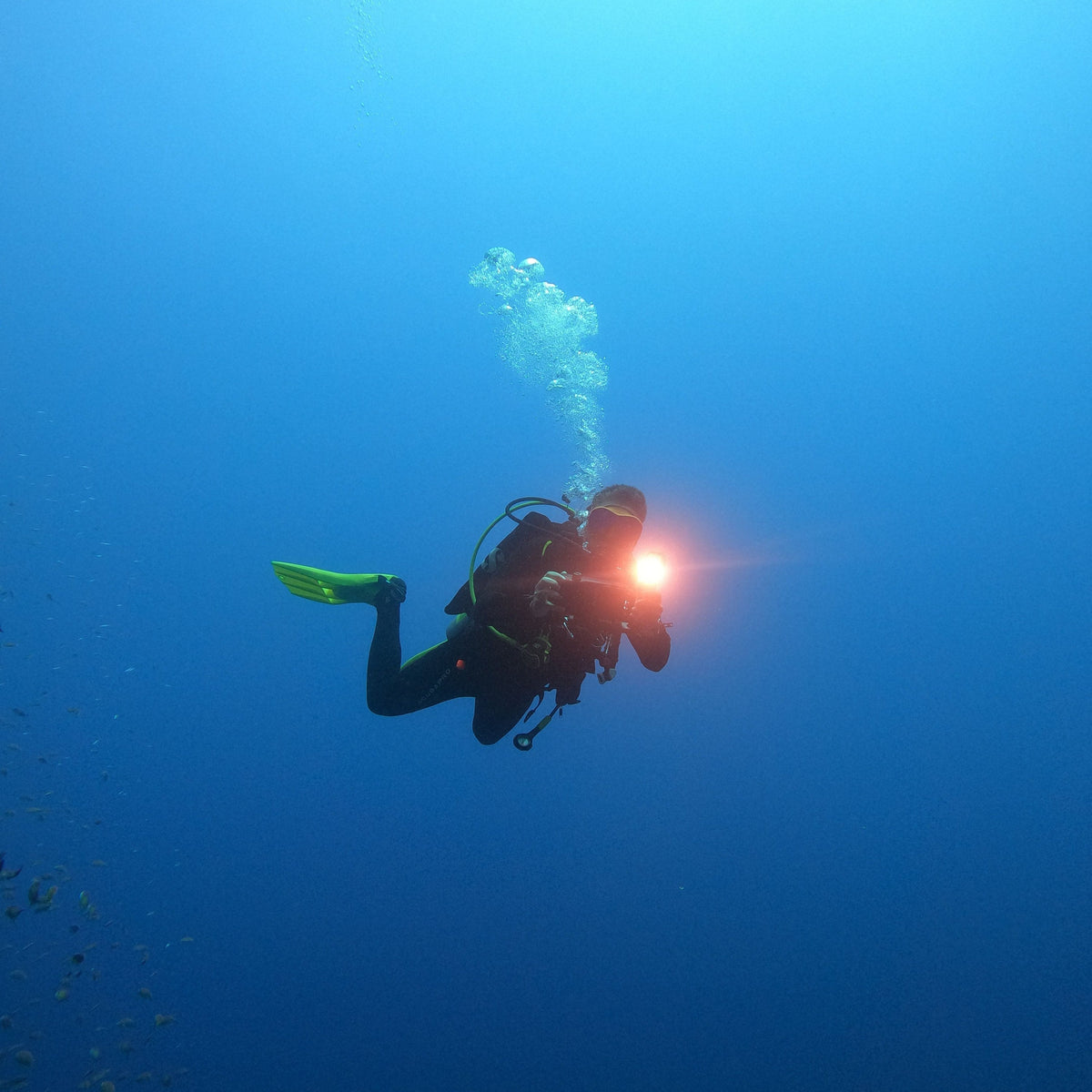
There is no single minimum surface interval for all dives. PADI says the time depends on the depth and duration of your last dive and on the dive you plan next, and your dive computer works out the number.
In practice, plan the deepest dive first, rest long enough for your computer to show the time you want on the next dive, and treat a longer break as a safer one.
What a surface interval is
A surface interval is the time you spend on the surface between two dives. PADI describes it as the period when the nitrogen your body absorbed under pressure gradually leaves. Divers keep some of that nitrogen for several hours after surfacing, and the deeper and longer your last dive, the longer the process takes.
If you want the detail of how nitrogen builds up and what happens when it comes out of solution too fast, read our article on how bottom time and nitrogen supersaturation cause the bends.
What PADI, DAN and the tables say about minimum times
PADI gives no fixed minimum. Its guidance is that the wait depends on the previous dive's depth and duration and on the plan for the next dive, and it can range from a short break to several hours. PADI also says never to rush a surface interval.
Longer is kinder. In an Alert Diver review of DAN's dive database, each additional hour of surface interval was associated with 6% lower decompression sickness risk. The author suggests, as an inference rather than a rule, that fewer dives a day with long intervals may be safest.
DAN's advice on planning is similar. When dives run close to the no-decompression limits, or when risk factors apply, DAN says to strongly consider longer surface intervals and fewer dives per day.
Deepest dive first
The standard plan for a repetitive series is to dive deepest first and make each later dive shallower than the one before. DAN Southern Africa calls deepest dive first a longstanding principle. A Smithsonian workshop did not recommend dropping it. It found that reversed profiles were not specifically harmful, but only when both dives were no-decompression, both shallower than 40 metres, and the depth difference was under 12 metres. Plan deepest first.
How a dive computer handles it
Your computer tracks the nitrogen it estimates you hold, using depth, time and the gas you told it you are breathing. After a dive it shows how long you can stay at your planned depth on the next dive. If you want more time, you extend the surface interval until the figure grows. For how computers differ and what their settings change, see our guide to what the algorithm actually changes.
DAN adds that a computer cannot count a dive it was not there for, so keep one computer through the whole series.
If you dive nitrox, set the computer to the gas in your cylinder. Nitrox gives you longer no-stop time, never a deeper dive. You learn this in our nitrox course.
Planning a two or three dive day
The idea is simple. Start with the deepest dive, dive within the no-stop time your computer gives you, then rest. Read the time your computer allows for the next dive. If it is shorter than the dive you planned, either shorten the dive or rest longer. Repeat for dive three, and keep it shallow.
On boat days your briefing sets the schedule, and the dive plan for each site decides your depth. Our first ocean dives guide describes the boat launches and site depths at Sodwana Bay, Aliwal Shoal and Ponta do Ouro. You learn dive planning in our Open Water course, and deeper sites come with our Advanced Open Water course.
What to do and what to avoid during the interval
- Hydrate, eat and rest. PADI suggests water, snacks and a chat with your buddy. DAN says adequate hydration is important but that no data show divers need to drink much more than usual, and overdrinking carries risks of its own.
- Avoid alcohol and heavy exercise. PADI says both may predispose divers to decompression sickness.
- Go easy on hot water. DAN suggests a delay of about 5 to 30 minutes before a hot shower or tub, or a lower temperature. PADI says to wait 30 minutes.
Driving and flying after several dives
Several dives over one day or several days change the flying advice, and our article on flying after diving sets out the guidance and the reasoning. Driving home inland is not the same as flying, and that article explains DAN Southern Africa's position. If symptoms such as joint pain, tingling or unusual tiredness appear, contact DAN and seek medical help.
Frequently asked questions
What is a minimum surface interval in scuba?
PADI describes a surface interval as the period a diver spends on the surface between dives. The length needed depends on the depth and duration of the previous dive and the plan for the next one, so there is no single minimum for all divers. Your dive computer or tables give the number.
How long should you wait between dives?
PADI describes the wait as anything from a short break to several hours, set by how deep and how long your last dive was and what you plan next. A longer rest also helps: DAN's analysis of its dive database linked each extra hour of surface interval to about 6% lower decompression sickness risk.
How many dives a day is safe?
None of the sources we checked sets a daily limit. DAN advises that when dives run close to the no-decompression limits, or when risk factors such as cold, hard work or depth apply, you should strongly consider longer surface intervals and fewer dives per day. Your computer and training set your own plan.
How long between dives for a deep dive?
The deeper and longer your last dive, the longer nitrogen takes to leave, according to PADI. Plan the deepest dive first and make later dives shallower. Allow a longer rest after a deep dive.
Does a dive computer replace the surface interval?
No. Your computer reads the interval you take and shows how much time the next dive allows. If you want a longer next dive, PADI says you can extend the surface interval until the computer shows the time you want.
Can I switch dive computers between dives?
DAN says no computer can account for an earlier dive it did not record, and that a decompression model is only valid when you start the series with a clean slate. If you leave your computer out of a series, DAN says to use tables for the rest of that series.
Is a hot shower safe between dives?
DAN's Neal Pollock says getting into a hot tub or shower straight after diving changes decompression stress, and suggests a delay of about 5 to 30 minutes or a lower water temperature. PADI advises waiting 30 minutes.
Is driving home after diving the same as flying?
Driving inland is not the same as flying, and DAN Southern Africa's position is covered in our flying article, which also sets out the flying guidance. Report symptoms straight away.
Sources
- PADI Blog, guide to surface intervals: definition, no fixed minimum, computer use, hydration, alcohol and exercise.
- PADI Blog, things not to do after diving: 30 minutes before a hot shower.
- Alert Diver Europe, DAN decompression sickness database analysis: 6% lower risk per extra hour, and the author's suggestion on fewer dives.
- DAN Alert Diver, A Critical Look at No-Decompression Limits: longer intervals and fewer dives per day near the limits, and risk factors.
- DAN, Effective Use of Your Dive Computer: one computer through a series, and tables if the computer is left out.
- DAN Southern Africa, Reverse Profiles: deepest dive first and the workshop conditions.
- DAN Southern Africa, Hot Tubs After Diving: 5 to 30 minute delay or lower temperature.
- DAN Alert Diver, Deep Vein Thrombosis and Diving: hydration position.
This article is general information, not medical advice. It does not replace your training, your dive computer's manual or a dive medical. If you have symptoms after diving, or any medical question, contact DAN or a doctor trained in dive medicine.
Reviewed November 2026. Devon Ford, PADI IDC Staff Instructor, runs Scuba Evolution, a PADI 5 Star Dive Centre in Glenvista, Johannesburg.