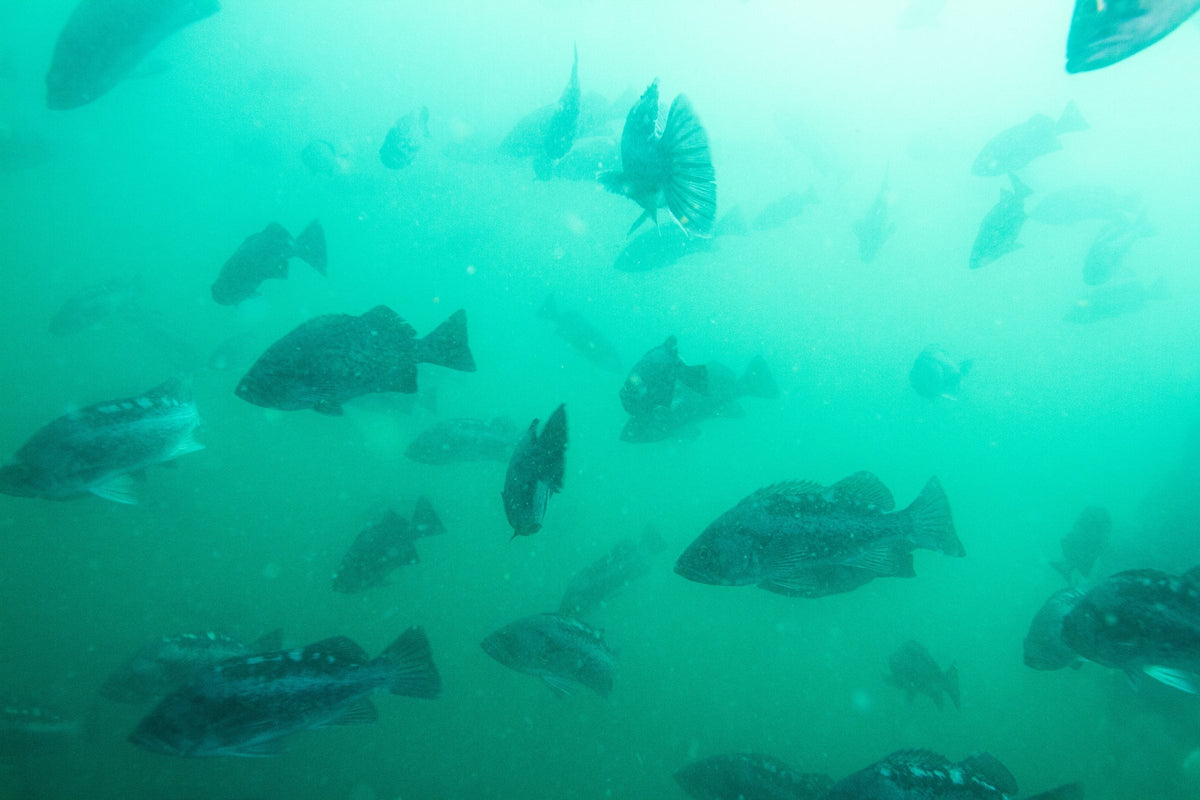
Reel a rockfish up from 30 metres and the gas in its swim bladder tries to expand to four times its volume. Most of the damage done to a fish pulled up fast comes from that expansion, which is barotrauma, not decompression sickness in the diver's sense. A 2012 study of rapid decompression in juvenile salmon found most injuries came from gas already inside the fish. The swim bladder stretching and rupturing did more harm than gas coming out of solution. Fish can still get gas bubbles in their blood and tissues. The biggest problem is the sealed bag of gas in the middle of the body.
The fixes look familiar to any diver. Fisheries scientists have put injured rockfish back under pressure in tanks and brought them up over two days. Studies of aquarium-fish collection have tested decompression stops on the way to the surface. The physics is the same one taught in an Open Water course, applied to an animal that often can't vent the gas.
Do fish get decompression sickness like divers do?
Not by the same route. A diver's decompression sickness starts with breathing gas at depth, which loads the tissues with nitrogen that has to come out slowly on the ascent. Our guide to how nitrogen supersaturation causes the bends covers that process. A fish doesn't breathe from a compressed supply. Its blood exchanges gas with the surrounding water across the gills.
That doesn't make fish immune to bubbles. The 2012 salmon study separated the two pathways by name: Boyle's law for expanding gas that's already there, Henry's law for dissolved gas coming out of solution. Its data pointed mainly at Boyle. Barotrauma researchers still list gas bubbles in the blood vessels, organs, gills and fins among the typical injuries. A table in the PeerJ paper on aquarium collection cites earlier studies of food fish that found arterial embolism. One recorded gas emboli in the head kidney and in the rete mirabile, a dense network of blood vessels.
The closest fish equivalent of the bends comes from the water, not the ascent. Water spilled over big dams can end up carrying more dissolved gas than it would carry at equilibrium with the air. The US Geological Survey monitors gas bubble trauma in the Columbia and Snake rivers, where the total dissolved gas cap rose to 125% under a 2020 to 2023 spill programme. In USGS tests, sculpin and stickleback with severe gas bubble trauma died from bubbles in the gills and heart.
What happens to a fish's swim bladder when it's pulled up fast?
It follows Boyle's law, the same rule that makes a diver's breath-held ascent dangerous. Each 10 metres of seawater adds about one atmosphere, so gas at 10 metres doubles in volume on the way up. Gas at 30 metres tries to quadruple. The PeerJ researchers slowed their aquarium fish down near the top because the volume change is greatest in the last few metres of ascent. The same logic sits behind the diver's rule covered in our guide to breath-holding on scuba.
A rockfish has no quick way to let the gas go. NOAA Fisheries explains that rockfish are physoclistic, meaning their gas bladders are closed off from the gut. As the bladder balloons, it crowds everything around it. Many rockfish released at the surface can't swim back down because they're too buoyant, and others die from internal damage.
The external signs are hard to miss. A 2013 South African study lists the inflated, everted stomach pushed out through the mouth, bulging eyes and gut protruding from the vent. It also found gas bubbles in the skin between the fin rays. NOAA's Alaska researchers add ocular emphysema, an air bubble under the cornea, to the list.
Why do some fish cope better than others?
Plumbing. A 2026 study in Scientific Reports splits fish into physostomes, physoclists and species with no swim bladder. In physostomes, which include the carp, catfish, herring and salmon groups, a pneumatic duct links the swim bladder to the oesophagus. These fish can release gas through a gas-spitting reflex. In physoclists, the duct is open only at the earliest stage of development, for the first filling, then closes for good.
The duct helps, but it isn't a guarantee. The authors note that the gas-spitting reflex varies between and within species. Their own tests simulated the fast pressure drop of a hydropower turbine. Ruptured swim bladders were the most common injury in all four species once the swim bladder had formed. Three of those species were physostomes. A duct helps most when the pressure falls slowly enough for the fish to use it.
Which fish suffer most from barotrauma?
Physoclists from deep water, and South Africa's line-caught species are among them. Kerwath, Wilke and Götz studied five commercially important line-caught species in 2013: roman, silver kob, hottentot, santer and carpenter. Most fish showed barotrauma even when caught at relatively shallow depths. Fish without obvious external signs weren't necessarily fine: dissections revealed ruptured swim bladders and other internal injuries. An outwardly healthy fish can be a debrief with the worst of it left out.
The team also returned roman to depth in cages and checked on them using scuba. Their conclusion was that post-release mortality might be significant, and that stock assessments and catch limits need to account for it. A size limit only protects a fish that survives being released. That's a sobering footnote for any fishery that relies on putting undersized fish back.
Can a fish with barotrauma recover?
Often, if it gets back under pressure. NOAA's Alaska Fisheries Science Center caught rougheye rockfish from 500 to 900 feet, roughly 150 to 275 metres, and recompressed 46 of them in portable pressure tanks. All but one were brought back to surface pressure over about 48 hours. After repressurisation the fish no longer had bulging eyes or an everted oesophagus, and in many cases the air bubbles in their eyes disappeared.
Twenty-three of the 46 survived long-term in the laboratory, and many had repaired swim bladders that held gas again. Size changed the schedule. On the 48-hour schedule, no fish larger than 54 centimetres survived. The one large fish given about 96 hours lived. It's a decompression table written for a rockfish, and bigger fish needed the conservative column.
What helps a released fish survive?
Getting it back to depth fast. Descending devices, sometimes called recompression devices, lower the fish back to the depth and pressure it came from. NOAA Fisheries estimates survival for quillback, copper, vermilion, sunset and similar rockfish released this way at 91% from shallower than 180 feet, about 55 metres. That falls to 70% from shallower than 300 feet and 62% from shallower than 600 feet.
In the US Gulf of Mexico, the DESCEND Act took effect on 13 January 2022. Commercial and recreational fishers targeting reef fish in federal waters must carry a venting tool or descending device, rigged and ready. Venting means puncturing the swim bladder to let the expanded gas out. In the PeerJ study, yellow tang brought up from 15 to 18 metres with no stops and no venting had 6.2% mortality within 24 hours. Fish that were vented, or given one long stop and vented, had none. Across the rockfish figures, the shallower the capture, the better the odds.
Sources
- OSTI, US Department of Energy: Pathways of Barotrauma in Juvenile Salmonids Exposed to Simulated Hydroturbine Passage: Boyle's Law vs. Henry's Law, Brown et al., 2012
- US Geological Survey: Nonsalmonid gas bubble trauma investigations
- PeerJ via PubMed Central: The effects of venting and decompression on Yellow Tang in the marine ornamental aquarium fish trade, Munday et al., 2015
- Scientific Reports via PubMed Central: Sensitivity of larval and juvenile fish with different swim bladder morphology to barotrauma, Zitek et al., 2026
- African Journal of Marine Science: The effects of barotrauma on five species of South African line-caught fish, Kerwath, Wilke and Götz, 2013
- NOAA Fisheries: Recompression Experiments on Rougheye Rockfish with Barotrauma
- NOAA Fisheries: California Recreational Rockfish Information
- NOAA Fisheries: DESCEND Act of 2020
Frequently Asked Questions
How deep does a fish need to be to get barotrauma?
Shallower than most people expect. The South African study found most fish showed signs even when caught at relatively shallow depths, and gas volume doubles between 10 metres and the surface. The PeerJ yellow tang work involved fish from 15 to 18 metres.
Why does a fish's stomach come out of its mouth?
The expanding swim bladder crowds the body cavity and pushes the stomach forward until it turns inside out through the mouth. It's a sign of barotrauma, and it tends to shrink back once the fish is returned to pressure. NOAA's recompressed rougheye rockfish no longer showed an everted oesophagus after repressurisation.
Can a fish look normal and still have barotrauma?
Yes. In the South African study, dissections of fish with no obvious external signs revealed ruptured swim bladders and other internal injuries. A fish that swims off isn't proof it wasn't hurt.
Do whales and dolphins get barotrauma the same way?
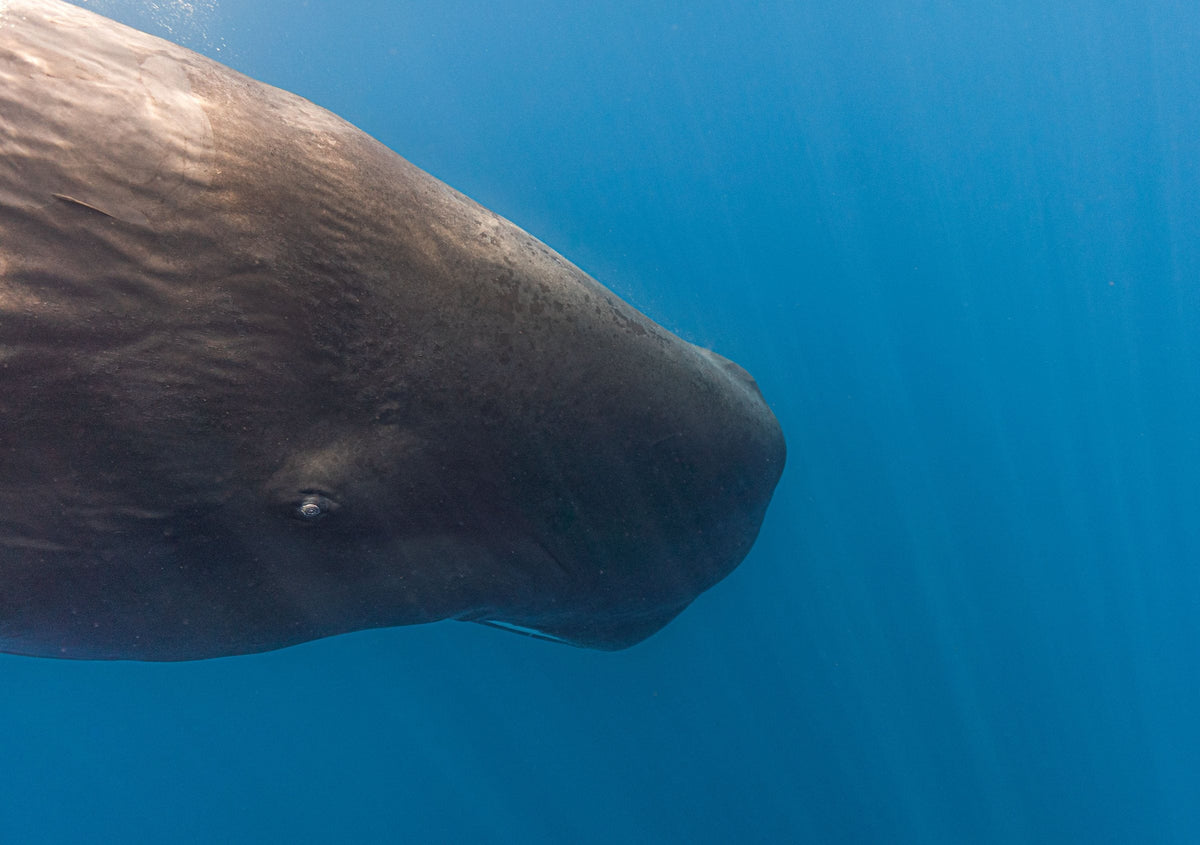
No. Marine mammals breathe air and carry it down in their lungs rather than in a sealed swim bladder, so their pressure problems are different. Our guide to how whales hold their breath for over an hour covers how they manage depth.
Can freshwater fish get barotrauma?
Yes. The 2026 Scientific Reports study used European freshwater species, including roach, grayling and perch, and found ruptured swim bladders after simulated turbine decompression. River fish below dams also face gas bubble trauma from gas-saturated spill water, which the USGS monitors on the Columbia and Snake rivers.
Reviewed September 2026. Devon Ford runs Scuba Evolution, a PADI 5 Star Dive Centre in Glenvista, Johannesburg.
Header photo: David Baker on Unsplash, used under the Unsplash License. View the original photo