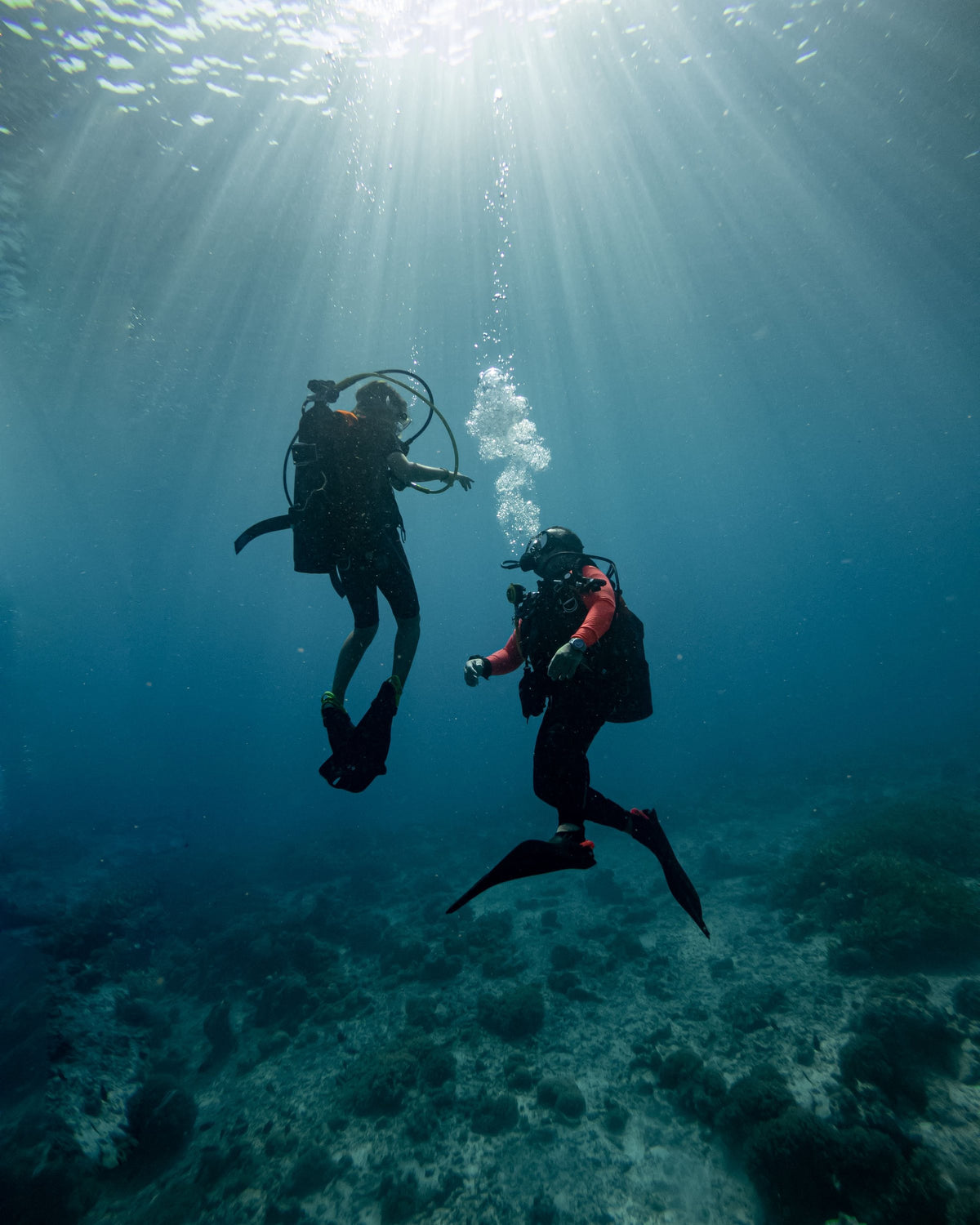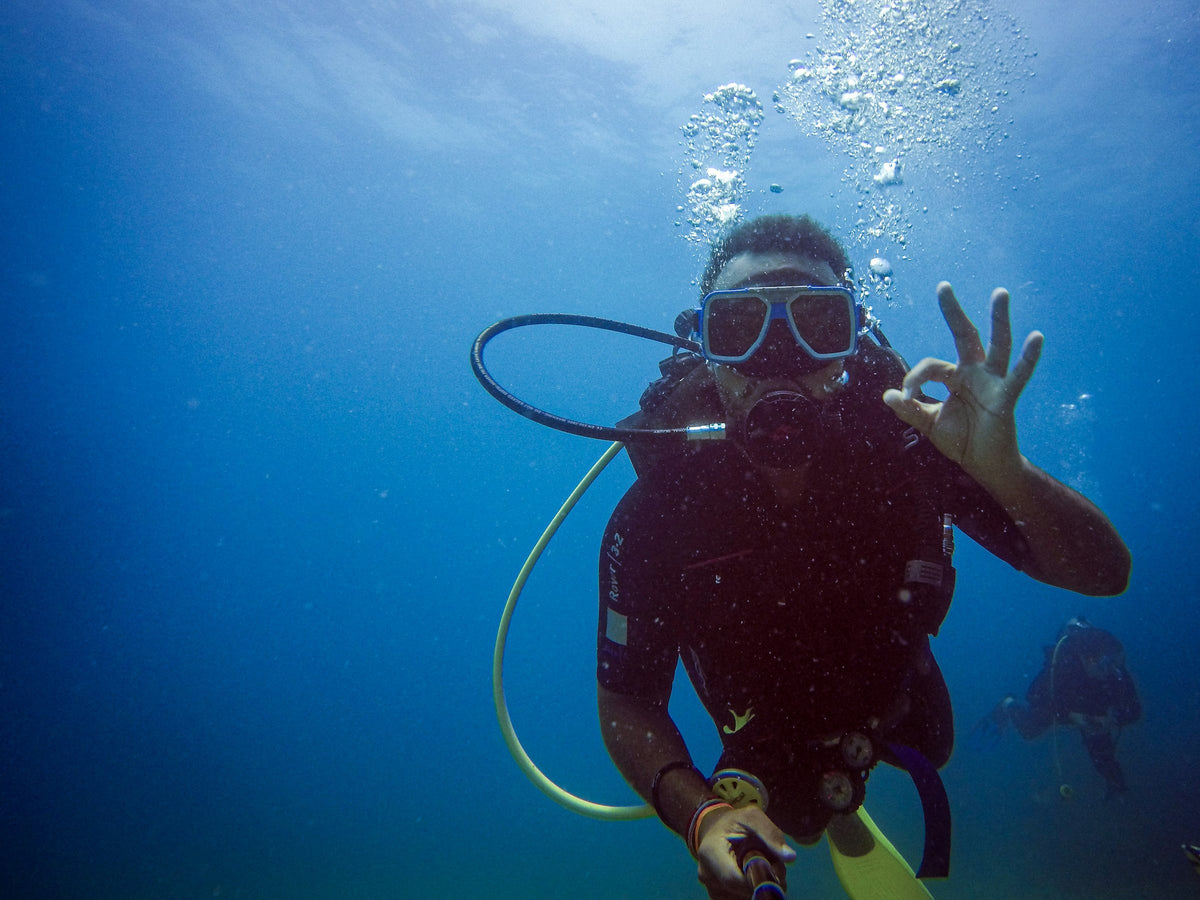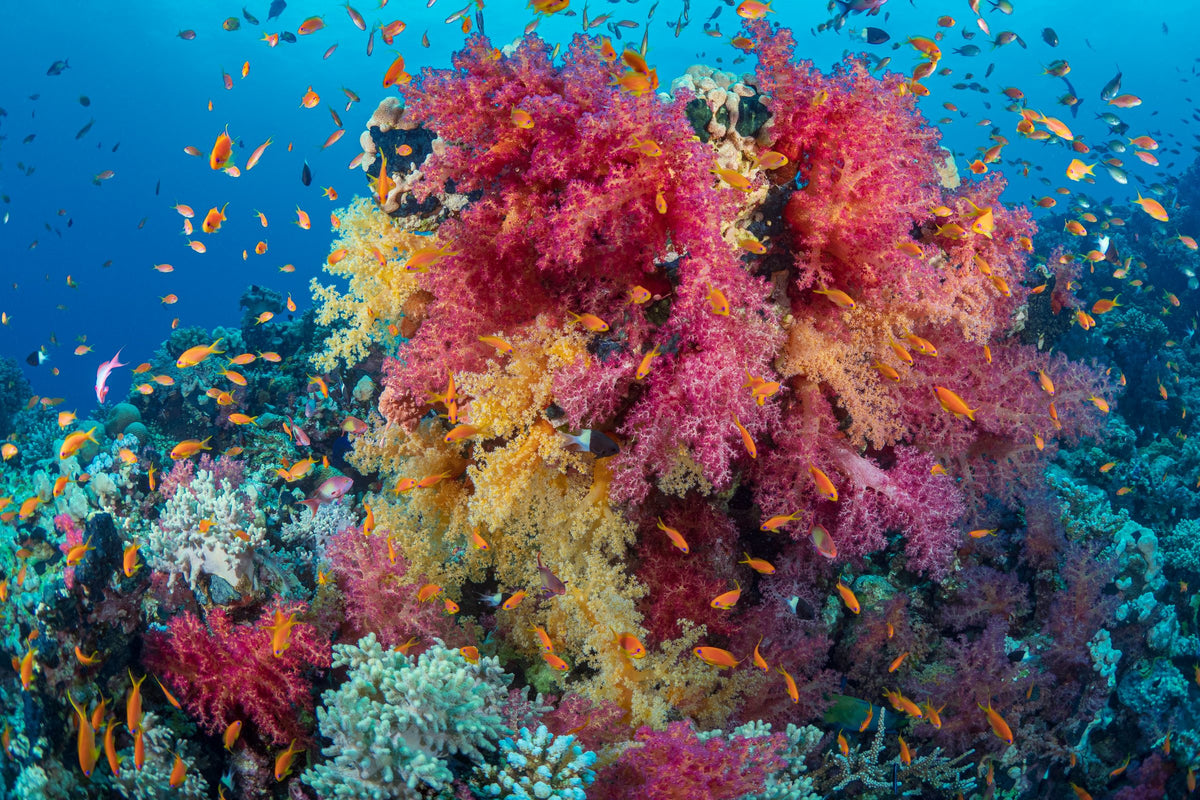
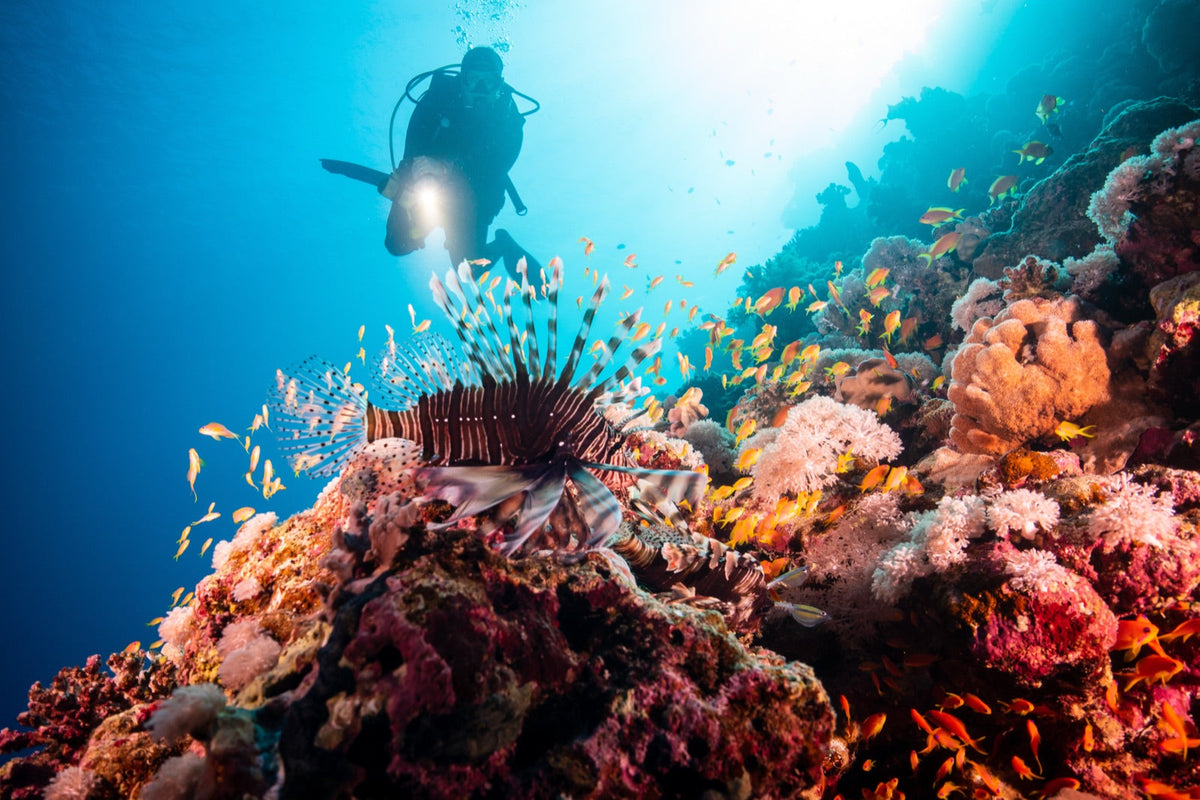
A diver protects a reef with three habits. Control your buoyancy so you do not touch the bottom. Leave everything where you found it. Take rubbish out when it is safe to carry. The rest, from the courses to the data, builds on those three. PADI AWARE Foundation, the ocean conservation arm of PADI, turns the third one into numbers that policy makers can read.
Many divers have hauled something off a reef at some point. A carrier bag, a length of line, a bottle. It feels good, and then it is over. This guide covers what PADI AWARE is, what any diver can do on any dive, and how Dive Against Debris works. It then explains PADI's Blueprint for Ocean Action and the AWARE courses we teach. It finishes with the reef rules at Sodwana and Aliwal Shoal, and a note on sunscreen.
What is PADI AWARE Foundation?
PADI describes AWARE as the ocean conservation arm of PADI, a "Voice for the Ocean" that has worked for over 30 years. It brings divers, scientists and ocean advocates together to protect marine life and ecosystems. PADI says AWARE has helped secure protection for more than 100 species of sharks and rays. Its Adopt the Blue programme describes itself as the world's largest network of underwater sites for conservation action.
What can any diver do to protect a reef?
You don't need a course to start. PADI AWARE's tips for divers begin with being a buoyancy expert and a role model. They go on to choosing not to touch, feed, handle, chase or ride anything underwater. They ask you to leave souvenirs such as corals and shells where they are, and to obey local laws and regulations.
- Fix your buoyancy first. Weight yourself correctly and trim flat, so no fin reaches the reef. Our guide to improving your buoyancy shows how.
- Don't touch, stand on, feed or collect anything. Follow your operator's briefing on reef rules, because they differ between sites.
- Streamline your kit. Clip gauges and your octopus so nothing drags across the bottom.
- Take rubbish home. Take line, bags and packaging back with you, off the boat and off the beach.
What is Dive Against Debris?
Dive Against Debris is PADI AWARE's survey programme. One survey is one dive, and only debris removed from the seabed on scuba counts. The team records the type and amount of what it finds, with the depth, weight, location and duration. It then submits the survey through the PADI AWARE app or the Conservation Action Portal. PADI's Dive Against Debris page reported more than 2.5 million pieces of debris, as read on 4 November 2026.
The point of the survey is the count. It records what is on the bottom, so the numbers can sit alongside other dives' data.
What is PADI's Blueprint for Ocean Action?
It is a shared conservation framework from PADI and PADI AWARE Foundation, built on five programmes. Marine Debris runs through Dive Against Debris. Marine Protected Areas runs through Adopt the Blue. Vulnerable Marine Species covers the Global Shark & Ray Census, responsible encounters and advocacy. Marine Habitat Restoration also runs through Adopt the Blue. The AWARE Community Grant Program funds local projects led by dive centres, non-profits and community groups. PADI says it has more than 6,600 dive centres and 128,000 professionals worldwide, and aims to create one billion Ocean Torchbearers.
You can join in three ways. Sign up as an Ocean Torchbearer for news on conservation actions. Log in to the AWARE Conservation Action Portal to take action and track your contributions. Use PADI AWARE's Conservation Impact Map to see what dive centres are doing in their local waters. PADI notes that not every conservation project needs a dive certification.
Which PADI AWARE courses do we teach?
We teach four, at our current prices.
- AWARE Dive Against Debris (R2,500): knowledge development and one survey dive. It needs a PADI (Junior) Open Water certification, a PADI Freediver or Advanced Mermaid, and the minimum age is 10.
- AWARE Coral Reef Conservation (R2,600): a non-diving course with no prerequisites and no age limit, so a non-diving partner or a child can take it with you.
- AWARE Shark Conservation (from R1,200): a diver route, or a theory-only route with no diving.
- AWARE Fish Identification (R3,500): a course in identifying the major fish families.
What are the reef rules at Sodwana and Aliwal Shoal?
Aliwal Shoal is a marine protected area, and its regulations include these. Littering and leaving waste, including fishing gear, are not allowed. A vessel that has deployed divers must display an alpha flag. A permit is required to run a scuba diving business in the area, and you may not carry both scuba gear and a speargun. Marine aquarium collecting of invertebrates and live rock is prohibited.
Sodwana is in the iSimangaliso Wetland Park area, and the park has its own rules and activity permits, so check them with your operator. Rules on gloves and touching vary by site and operator, so ask for the briefing before you get in. Our guide to Sodwana, Aliwal and Ponta covers the rest of the trip.
Which sunscreen is better near reefs?
No label guarantees a sunscreen is safe for reefs. NOAA's National Ocean Service lists oxybenzone and octinoxate among the chemicals in some sunscreens that can harm marine life. It cites a 2022 National Academy of Sciences review finding that some chemical UV filters can harm aquatic life, including corals. NOAA says mineral sunscreens are preferred. It also suggests shade between 10am and 2pm and UPF clothing. The research is still developing, and "reef safe" on a label is not a guarantee, so read the ingredients.
Sources
- PADI AWARE Foundation: Mission, 30 years, and shark and ray protection.
- PADI Blog, Getting Involved in Ocean Conservation and PADI's Blueprint for Ocean Action: The five programmes and ways to take part (last updated 30 May 2025).
- PADI AWARE, Dive Against Debris: How a survey works, how data is submitted, and the specialty requirements.
- PADI Pros blog, 10 Tips for Divers to Protect the Ocean Planet: Buoyancy, not touching or feeding, not collecting souvenirs.
- NOAA National Ocean Service, Skincare Chemicals and Coral Reefs: Oxybenzone, octinoxate and mineral sunscreen.
- Aliwal Shoal MPA regulations, Notice R.781 of 2019: Scuba permit, alpha flag, littering, speargun and collecting rules.
- iSimangaliso Wetland Park Authority, gate tariffs and activity permits: Permit categories at the park.
- PADI, Coral Reef Conservation: A non-diving course, no prerequisites or age restrictions.
- PADI, Dive Against Debris specialty: Prerequisites and minimum age.
Frequently Asked Questions
What is PADI's Blueprint for Ocean Action?
It is a conservation framework from PADI and PADI AWARE Foundation with five programmes: marine debris, marine protected areas, vulnerable marine species, habitat restoration and community grants. Divers can join through the Ocean Torchbearer sign-up and the AWARE Conservation Action Portal.
What is PADI AWARE Foundation?
It is PADI's ocean conservation arm, a Voice for the Ocean that has worked for over 30 years with divers, scientists and ocean advocates to protect marine life and ecosystems.
What is Dive Against Debris?
It is a survey programme where divers remove debris from the seabed on scuba and record its type, amount, weight and location, then submit the data through the PADI AWARE app or Conservation Action Portal.
Can you do Dive Against Debris without a course?
Any diver can pick up rubbish when it is safe to carry. The AWARE Dive Against Debris course teaches you to run and report a proper survey, and it needs an Open Water certification and a minimum age of 10.
Can non-divers take a PADI AWARE course?
Yes. AWARE Coral Reef Conservation is a non-diving course with no prerequisites or age restrictions, and AWARE Shark Conservation has a theory-only route.
Is reef safe sunscreen real?
NOAA says some chemical UV filters can harm corals and that mineral sunscreens are preferred, but research continues and a label claim is not a guarantee. Read the ingredients, and cover up where you can.
Do you need a permit to dive Aliwal Shoal?
The regulations require a permit to run a scuba business in the marine protected area. Ask your operator what applies to you as a diver.
Reviewed November 2026. Devon Ford runs Scuba Evolution, a PADI 5-Star Dive Centre in Glenvista, Johannesburg.