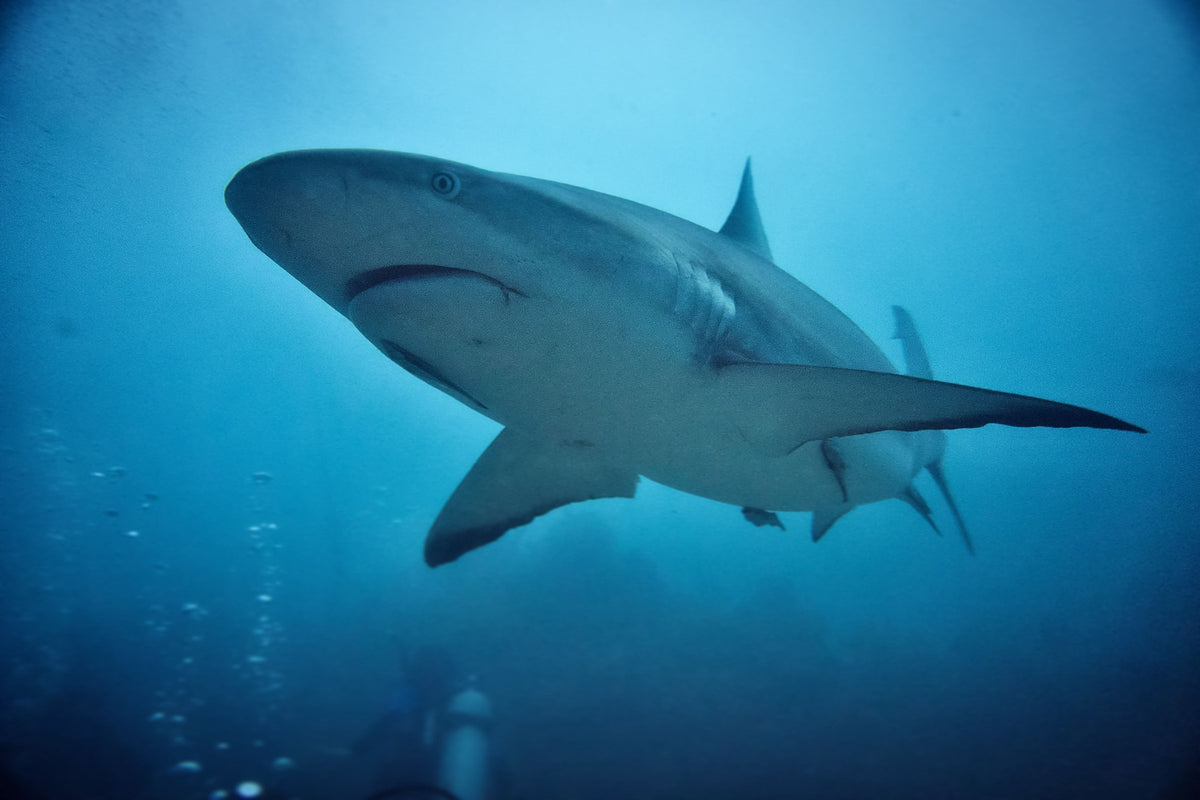

Eight scuba divers were killed by sharks in Australian waters between 1960 and 2017. The figure comes from a 2018 study built on the DAN Asia-Pacific diving fatality database, and it sits alongside 13 snorkellers and seven surface-supplied divers over the same period. So sharks do bite divers, and occasionally kill them. Across those decades, though, shark attacks made up only 3% of diving-related deaths in Australia, and most of the divers killed had one thing in common: they were collecting seafood.
The global picture points the same way. The Florida Museum's International Shark Attack File (ISAF) confirmed 65 unprovoked shark bites worldwide in 2025, and swimmers and surfers accounted for 78% of them. Nine of those bites were fatal, against a recent average of eight a year. Alarming headlines followed, and DAN Europe's Alert Diver put them to shark behaviour researchers this month.
How often do sharks bite scuba divers?
Rarely enough that the global file doesn't give scuba its own slice of the chart. In ISAF's 2025 breakdown, swimming and wading made up 46% of unprovoked bites, surfing and board sports 32%, and snorkelling and freediving 15%. Scuba isn't listed separately, so it falls inside the remaining 6% labelled other. Over a longer run, ISAF counted 238 unprovoked bites worldwide on snorkellers, scuba divers and surface-supplied divers combined between 1960 and 2015. That's roughly four a year, for divers of all kinds worldwide. Australia's records break the diver numbers down further.
| Diving mode (Australia, 1960 to 2017) | Recorded attacks | Deaths |
|---|---|---|
| Snorkelling | 112 | 13 |
| Scuba | 62 | 8 |
| Surface-supplied air | 13 | 7 |
| All divers | 187 | 28 |
Those 187 attacks were a third of the 562 recorded in Australia over the period. The deadliest mode per attack wasn't scuba. Seven of the 13 surface-supplied divers died. Six of those seven were collecting abalone or scallops, and five had no buddy.
Why do sharks bite swimmers and surfers more than divers?
Far more people swim and surf than dive, which explains part of it. What a shark sees from below may explain more. In a 2021 study, researchers filmed seals, swimmers and people paddling surfboards from underneath, then processed the footage to match how a white shark's retina handles shape and motion. Neither cue reliably separated seals from people. A paddler or swimmer looked more like a seal with its flippers spread than that seal looked with its flippers tucked in.
That supports mistaken identity as the cause of some surface bites. It doesn't cover a diver hanging mid-water at the shark's own level, because the study didn't test divers. ISAF's own guidance for divers is plainer: most sharks a diver sees are curious and leave of their own accord. Judge the distance carefully, too. Through a mask, a shark looks bigger and closer than it is, for reasons set out in our guide to why everything looks bigger and closer underwater.
What makes a shark bite on a diver more likely?
Carrying food. Of the 28 Australian divers killed, 21 were collecting seafood when the shark struck: nine were spearfishing, five were taking abalone and four were gathering scallops. Six attacks happened near seal colonies, and at least three near fishing activity. White sharks were identified or strongly suspected in 21 of the 28 deaths, and every fatal attack happened in daylight.
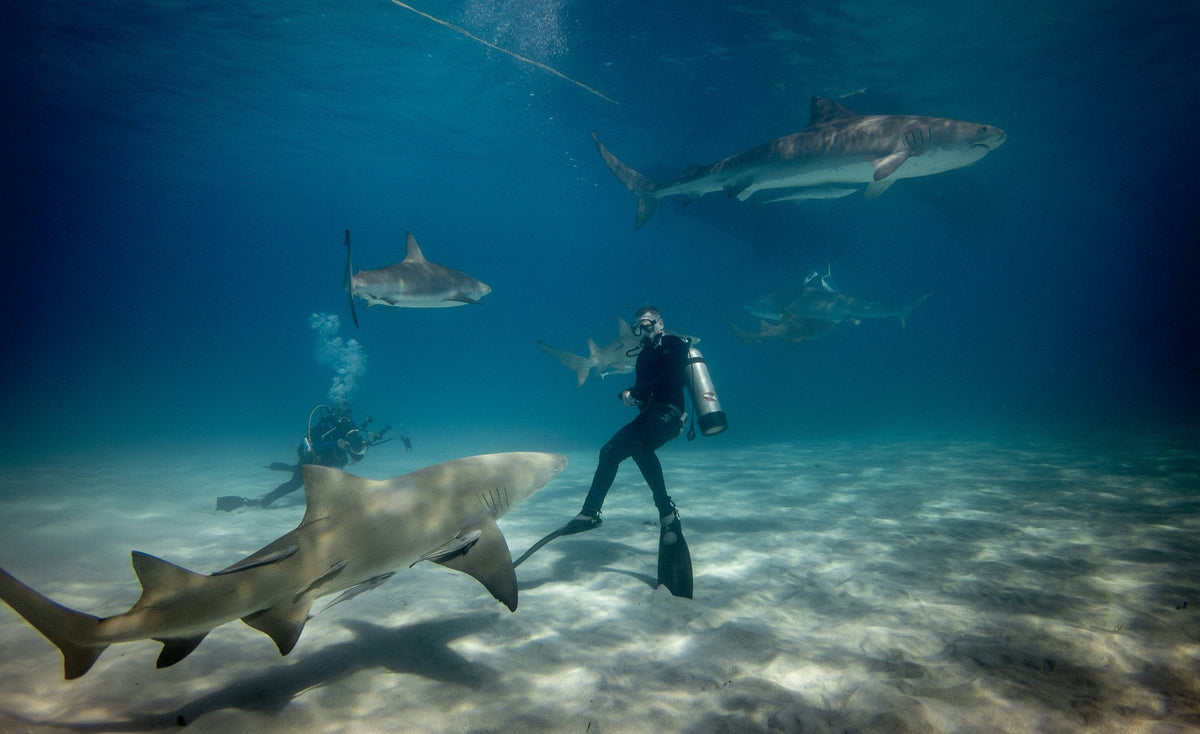
ISAF files many incidents like these as provoked. That category covers bites on spearfishers, divers who touch or harass sharks, people feeding sharks and anyone unhooking one from a line or net. A scuba diver sightseeing with empty hands removes most of the triggers on that list. On a baited shark dive, the operator's briefing sets the rules around the bait, and it deserves the same attention as the gas plan.
What should you do if a shark comes close on a dive?
The Florida Museum and DAN give closely matching advice for divers. Most of it comes down to staying composed and removing whatever drew the shark in. On an organised shark dive, the site briefing comes first.
- Stay calm and keep your position. Most approaches are curiosity, and the shark tends to move on.
- Face it. DAN notes most sharks are stealth predators, so keeping the animal in sight helps.
- Drop the catch. If you've been spearfishing or collecting shellfish, ISAF's advice is to release it and leave the area, since the shark is most likely interested in the fish.
- Read the warning signs. Rushes at you, a hunched back, lowered pectoral fins and a fast zigzag or up-and-down swimming pattern all signal an agitated shark. ISAF advises backing up against a reef or rock, or going back-to-back with your buddy in open water.
- Don't bolt for the surface. DAN advises staying submerged and leaving with controlled movements. A panicked ascent carries its own injuries, covered in our guide to breath-holding on scuba.
- If it bites, hit back. Blunt blows to the nose, eyes or head are the defence both organisations describe.
Do KwaZulu-Natal's shark nets protect divers?
No, and they aren't designed to. The KwaZulu-Natal Sharks Board's gear protects bathing beaches. Most of its nets are 214 m long and 6 m deep, laid in two rows about 400 m offshore in 10 to 14 m of water. They don't form a wall: sharks can swim over, under and around them, and about a third of the catch is taken on the shoreward side. The nets work as fishing gear, reducing shark numbers near the beaches they cover.
Durban's record shows why the programme exists. Seven fatal attacks happened there between 1943 and the first nets in 1952, and the Board reports no fatalities or serious injuries at Durban's beaches since. The cost falls on bycatch such as dolphins, turtles and whales. In 2007, drumlines replaced about half the nets along the Hibiscus Coast, and the Board says that cut the catch of non-target species by 47.5%. The gear sits off swimming beaches, so a diver on an offshore KwaZulu-Natal reef is in unnetted water, like most divers anywhere.
What's the bigger risk on a dive with sharks?
Nearly everything else. In the United States, ISAF puts the lifetime risk of dying in a shark incident at 1 in 4,332,817. Lightning comes in at 1 in 79,746 and drowning at 1 in 1,134. Those are general population figures, not diver figures, yet the Australian study lands in the same place. The other 97% of diving deaths it counted had nothing to do with sharks. The shark in the headline is rarely the thing that ends a dive badly.
If a bite does happen, bleeding control comes first. DAN's guidance is firm direct pressure on the wound for at least 10 minutes without lifting to check, with fresh dressings added on top if blood soaks through. The casualty then needs urgent transport to emergency care, and DAN warns that tourniquets carry real risk and call for training. Managing serious bleeding and shock is core content in First Aid Primary & Secondary Care, PADI's Emergency First Response course.
Sources
- Diving and Hyperbaric Medicine (Lippmann et al., 2018): Fatal shark attacks on divers in Australia, 1960 to 2017
- Florida Museum, International Shark Attack File: Yearly worldwide shark attack summary 2025
- Florida Museum, International Shark Attack File: Risk of death
- Florida Museum, International Shark Attack File: Advice to divers
- Journal of the Royal Society Interface (Ryan et al., 2021): Testing the mistaken identity theory behind shark bites
- DAN, Alert Diver: Bites and attacks
- DAN Europe, Alert Diver: Are shark attacks becoming more frequent?
- KwaZulu-Natal Sharks Board: Shark nets and drumlines
Frequently Asked Questions
Which sharks are most dangerous to divers?
In Australia's diver fatality records, white sharks were identified or strongly suspected in 21 of 28 deaths, with tiger sharks in two and a bull shark in one. ISAF attributed four of 2025's shark-related deaths worldwide to white sharks. The most relevant species depends heavily on where you dive.
What's the difference between a provoked and an unprovoked shark bite?
ISAF classes a bite as unprovoked when it happens in the shark's natural habitat with no human provocation. A bite is provoked when a person starts the interaction, for example by touching, feeding or spearing near a shark. Spearfishing bites count as provoked, which is why diver numbers look smaller in unprovoked-only statistics.
Are shark bites increasing?
Not in the global count. ISAF's 65 confirmed unprovoked bites in 2025 were in line with the 2020 to 2024 average of 61 a year. Fatalities were higher, and researchers interviewed by Alert Diver pointed to more people using the sea and to social media amplifying each case.
Is it safer to dive with a buddy around sharks?
The guidance says so. DAN advises swimmers and divers to stay in groups because isolated people may face higher risk. ISAF notes that sharks are less likely to attack a group of divers than a solitary individual.
Do shark nets kill other animals?
Yes. Nets are fishing gear, and the KwaZulu-Natal Sharks Board's own material names whales, dolphins and turtles among the harmless animals caught. Replacing some nets with baited drumlines is the Board's main way of reducing that bycatch.
How many shark bites happen in South Africa each year?
It varies from year to year. ISAF confirmed one unprovoked shark bite in South Africa in 2025, and it was fatal. The United States recorded 25 and Australia 21 in the same year.
This is general information, not medical advice or a substitute for first aid training. In a diving emergency, contact DAN Southern Africa and local emergency services.
Reviewed September 2026. Devon Ford runs Scuba Evolution, a PADI 5 Star Dive Centre in Glenvista, Johannesburg.
Header photo: Gerald Schömbs on Unsplash, used under the Unsplash License. View the original photo