
A Cuvier's beaked whale tagged off Cape Hatteras, North Carolina, stayed underwater for 222 minutes on one breath. That's 3 hours 42 minutes, published in 2020 and longer than any mammal dive recorded before it. Whales manage it by storing oxygen in muscle rather than lungs, slowing the heart to a few beats a minute and running a low metabolism. Their lungs collapse at depth, which limits how much nitrogen reaches the blood. They also cope with the acid that builds up once oxygen runs short.
The record needs one qualification. The 222-minute dive, and a 173-minute dive by the same whale, were logged 17 and 24 days after it was exposed to an hour of Navy sonar. The researchers kept both out of their main analysis, while noting they may show the species' true limits. The routine numbers are extraordinary enough: across 23 tagged whales, the median foraging dive lasted 59 minutes.
How long can whales hold their breath?
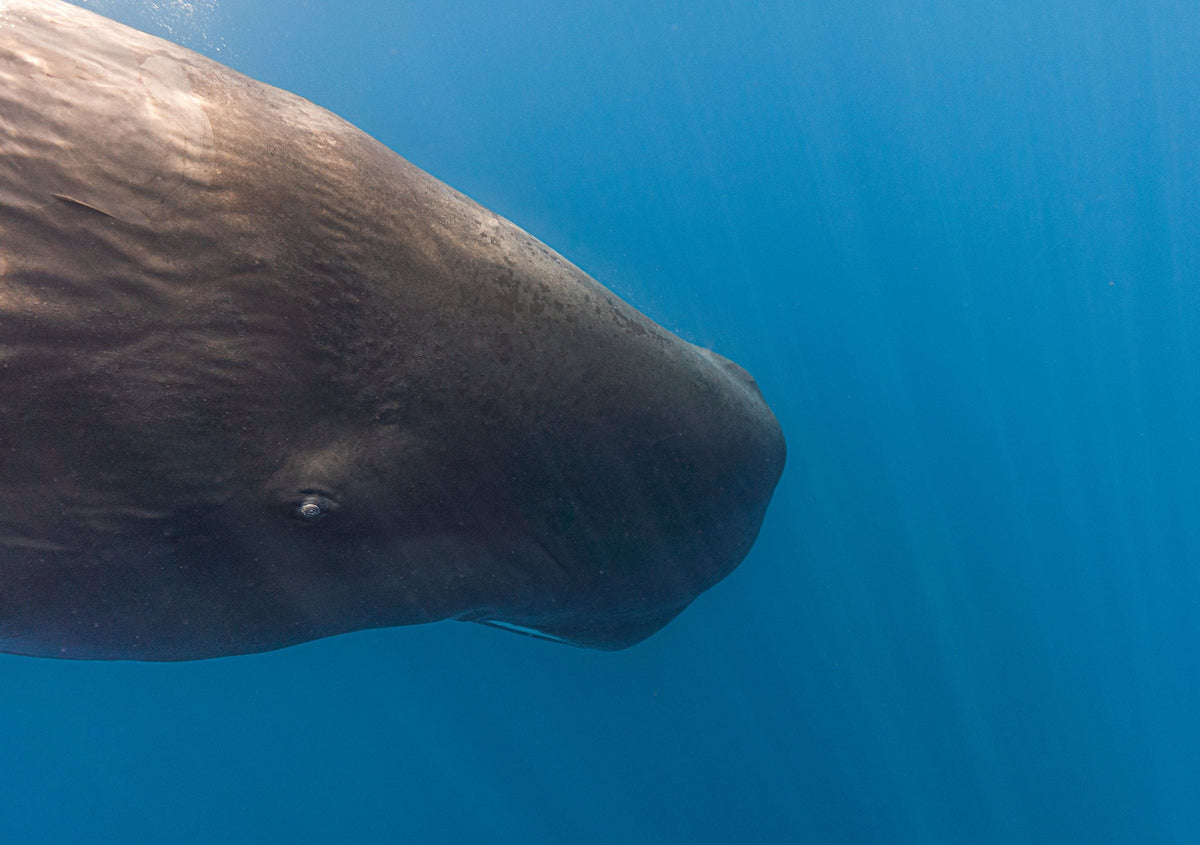
It depends heavily on the species, and beaked whales sit at the far end. A 2014 study off Southern California tracked eight Cuvier's beaked whales for up to three months. Their deep dives averaged 1,401 m and 67.4 minutes, and one reached 2,992 m. Sperm whale dives last about an hour and can run to two, according to the Woods Hole Oceanographic Institution. Size isn't the deciding factor. Blue whales, the largest animals alive, made dives of up to 16.5 minutes in one heart-rate study.
| Breath-hold diver | Duration | What was measured |
|---|---|---|
| Cuvier's beaked whale | 222 min | Longest recorded dive (2020 study) |
| Cuvier's beaked whale | 137.5 min | Previous record (2014 study) |
| Cuvier's beaked whale | 59 min | Median foraging dive, 23 whales |
| Human freediver | 11 min 35 s | AIDA static apnea world record (2009) |
The human figure is Stéphane Mifsud's static apnea record, a breath-hold done motionless at the surface. A beaked whale descends well over a kilometre, hunts and swims back up on one breath. The table flatters the human.
Where do whales store oxygen for a long dive?
In their muscles, to a degree no land mammal matches. Diving mammals pack their muscle cells with myoglobin, an oxygen-binding protein, at concentrations far higher than land animals manage. The hard part is chemistry, since proteins crammed that densely tend to clump and fall out of solution. Diving species carry myoglobin with a more positive surface charge, and those charges are expected to make the molecules repel each other.
A 2018 study went further back. Japanese researchers rebuilt ancestral whale myoglobins in the lab, including one from Pakicetus, a four-legged ancestor shared with hippos about 50 million years ago. Whale myoglobin first became more tolerant of crowding, then later more stable in its folded shape. That's roughly 50 million years of refinement behind every long dive. No training programme closes that gap.
Whales also breathe differently at the surface. Cetacean vital capacity can reach 80 to 90% of total lung capacity. A bottlenose dolphin can exhale at up to about 160 litres a second, roughly 10 times the flow measured in humans. Resting breaths in small and medium cetaceans are smaller than often claimed, though, at around 30 to 40% of lung capacity.
How does a whale's heart slow down on a dive?
Hard and fast. In a 2019 study, researchers attached a suction-cup ECG tag to a single blue whale in Monterey Bay, California. During dives, heart rates were typically 4 to 8 beats a minute and fell as low as 2. After surfacing, they jumped to 25 to 37 beats a minute, close to the estimated maximum for an animal that size. A large, elastic aortic arch keeps blood moving through the long pauses between beats.
Slowing the heart cuts oxygen use. Cutting blood flow to the muscles also forces them to draw on their own myoglobin, which saves the oxygen in the blood for the brain and heart. The physiologist Per Scholander called this dive response the master switch of life. It isn't purely automatic either, since several studies suggest it starts in anticipation of a dive and can be conditioned. The heart rate becomes part of the gas plan, set before the whale leaves the surface.
Humans have the same reflex in weaker form. Holding your breath with a wet face triggers a slower heart, a pause in breathing and constricted peripheral blood vessels. It was first described in 1786. Doctors still use cold applied to the face to slow some abnormally fast heart rhythms.
What happens when a whale runs out of oxygen?
It keeps going, at least for a while. Cuvier's beaked whales routinely dive beyond their calculated aerobic dive limit, the point where oxygen stores alone should run out. Earlier estimates put that limit at about 33 minutes. The 2020 study found 5% of foraging dives lasted longer than 77.7 minutes, more than double.
The authors estimate a diving metabolic rate about 25% below the predicted resting rate for an animal that size. They also point to a high capacity to buffer acid from anaerobic metabolism, the chemistry that kicks in when oxygen runs short. Surprisingly, the longest dives weren't followed by longer gaps before the next foraging dive. That's a margin no human physiology offers.
Do whales get decompression sickness?
Occasionally, it seems, though their lungs do a lot to prevent it. Whales and dolphins generally dive after breathing in, not out. As they descend, pressure squeezes the lungs until the alveoli, the tiny gas-exchange sacs, collapse. Once they've collapsed, little gas crosses into the blood, so nitrogen uptake drops. A smaller lung collapses at a shallower depth, which reduces the risk further.
Researchers also propose a selective gas exchange mechanism. Blood flow may be matched to the parts of the lung that still contain gas, letting oxygen and carbon dioxide cross while nitrogen largely doesn't. Stress may break that system down, which could explain diving-related gas bubbles. The evidence that it can fail comes from bones. In 2004, Woods Hole biologists found patches of bone death consistent with a bends-like syndrome in 16 sperm whale skeletons. The damage worsened with size and showed up in animals that died up to 111 years ago.
Why can't a scuba diver copy a whale?
Because the regulator changes the problem. A scuba diver breathes compressed gas at the surrounding pressure throughout the dive, so the lungs stay full and nitrogen keeps dissolving into tissue. That nitrogen load is what dive computers track, and it's covered in our guide to decompression sickness and how nitrogen causes the bends. Fish face their own version of the problem, explained in whether fish get decompression sickness.
A whale's breath-hold is also the opposite of what training teaches on scuba. Holding a breath of compressed gas while ascending lets it expand inside the lungs, the injury explained in our article on breath-holding on scuba. Any diver with symptoms after a dive, whether scuba or breath-hold, should call DAN Southern Africa's 24-hour emergency hotline on +27 82 810 6010.
Sources
- Journal of Experimental Biology (Quick et al., 2020): Extreme diving in mammals, aerobic dive limits in Cuvier's beaked whales
- PLOS ONE (Schorr et al., 2014): Long-term behavioural records from Cuvier's beaked whales reveal record-breaking dives
- Scientific Reports (Isogai et al., 2018): Tracing whale myoglobin evolution by resurrecting ancient proteins
- PNAS (Goldbogen et al., 2019): Extreme bradycardia and tachycardia in the world's largest animal
- Experimental Physiology (Fahlman, 2024): Cardiorespiratory adaptations in small cetaceans and marine mammals
- Woods Hole Oceanographic Institution: Cumulative sperm whale bone damage and the bends
- StatPearls, NCBI Bookshelf: Physiology, diving reflex
- AIDA International: World records history
Frequently Asked Questions
Which whale dives the deepest?
The Cuvier's beaked whale has the published record, with a tagged dive to 2,992 m off Southern California reported in 2014. The same study recorded deep dives averaging 1,401 m. It's also the species most often found stranded in connection with naval sonar use.
Do whales breathe out before they dive?
Generally not. Whales, dolphins and sea lions tend to dive after breathing in. Their lungs are then compressed at depth until the gas-exchange surfaces collapse, which limits how much nitrogen enters the blood.
How long can a human hold their breath underwater?
The AIDA static apnea world record is 11 minutes 35 seconds, set by Stéphane Mifsud in 2009. Static apnea is a specialist freediving discipline done motionless. On scuba, holding your breath is the wrong instinct entirely.
Why does sonar harm beaked whales?
Researchers suspect loud sonar can drive deep-diving whales to change how they surface, disrupting the behaviour that normally manages gas bubbles. Woods Hole biologists linked their sperm whale findings to nitrogen emboli reported in beaked whales exposed to mid-frequency sonar. Beaked whales are the species most often stranded in association with sonar exercises.
Can whales control their heart rate?
To a degree. Studies in marine mammals suggest the heart starts slowing in anticipation of a dive and that the response can be conditioned. That lets an animal vary the strength of its dive response to suit the dive it's about to make.
What is myoglobin?
Myoglobin is the oxygen-binding protein inside muscle cells. Diving mammals carry it at far higher concentrations than land animals, and a stronger positive surface charge on the molecule helps it stay dissolved at those levels. During a dive, reduced blood flow lets the muscle draw down this private store.
This is general information, not a substitute for a dive medical or advice from a doctor trained in dive medicine. In an emergency, contact DAN Southern Africa.
Reviewed September 2026. Devon Ford runs Scuba Evolution, a PADI 5 Star Dive Centre in Glenvista, Johannesburg.
Header photo: Emma Li on Pexels, used under the Pexels License. View the original photo