
Scubapro's Galileo 2 has a menu called Workload. Switch it on, strap on the heart rate belt, and the computer adds decompression time when your heart rate says you're working hard. It's the clearest case of biometric data changing a dive computer's decompression. It isn't new, either: the manual cites a 2012 booklet on heart rate and workload. Other computers that read your pulse underwater, such as the Garmin Descent Mk3 and Suunto Ocean, display and log it. Their Bühlmann algorithms still run on depth, time and gas.
Heart rate variability on those watches comes from overnight readings, not the dive. Skin temperature, on the Scubapro system, comes from the chest belt. The research on using any of this to personalise decompression is still early, and the biggest obstacle turns out to be the diver.
Which dive computers measure heart rate underwater?
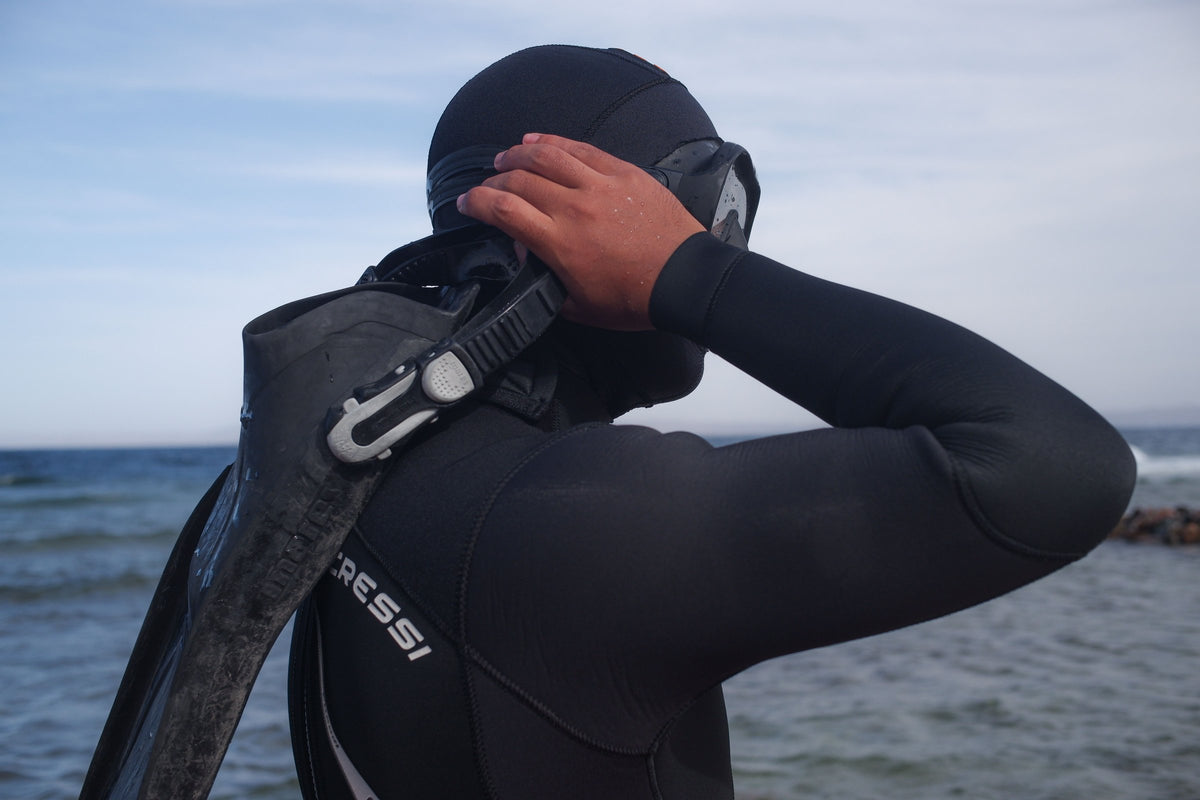
Several do, but they measure it in different ways and use it for different things. Wrist-based optical sensors read blood flow through the skin, so they need bare skin under the watch. Suunto's Ocean guide says no clothing, however thin, can sit between sensor and skin. It also warns the optical sensor may not be accurate for diving. Garmin's Mk3 manual suggests switching wrist heart rate off to save battery when you wear the watch over a thick exposure suit. Chest belts avoid the sleeve problem but need their own contact with skin under the suit.
| Computer | Heart rate source in a dive | Does it change decompression? |
|---|---|---|
| Scubapro Galileo 2 | Chest belt, live, plus skin temperature | Yes, through its workload setting |
| Garmin Descent Mk3 | Wrist sensor live, or chest strap data added after the dive | No heart rate input described; Bühlmann ZHL-16C |
| Suunto Ocean | Wrist sensor or chest belt | No heart rate input described; Bühlmann 16 GF |
How does a dive computer use heart rate in decompression?
The logic is about blood flow, which Scubapro's manual calls the single most important parameter in a decompression calculation. Heavy exercise, it notes, can push total blood flow to four times the resting rate. Working muscles can get up to ten times more. The G2 estimates workload from heart rate, or from changes in breathing measured by its cylinder transmitter. If the dive goes as planned, the schedule doesn't change. If workload runs high, the adaptive ZH-L16 ADT model asks for more decompression time.
The physiology behind it is sound. DAN's medical reference says hard work on the bottom increases nitrogen uptake. Exertion near the end of a dive can encourage bubbles. What's missing is outcome evidence. A 2024 Johns Hopkins review lists heart rate, HRV, respiration, temperature and oxygen saturation as promising diver biomarkers. It also states that considerable research is still needed to verify their use underwater. Heart rate is a sensible proxy for effort. It isn't a proven dial for decompression risk.
What does heart rate variability tell a diver?
Less than the marketing around it suggests, at least for diving. On the Garmin Descent Mk3 and the Suunto Ocean, HRV is measured while you sleep and reported as a recovery figure. Garmin builds its status from a seven-day average of overnight readings. Suunto says you need to track sleep at least three times a week, over a longer period, to establish your HRV range. Neither manual describes HRV being measured during a dive or used in decompression.
The research is at the case-series stage. A 2026 study recorded HRV in eight divers with neurological decompression sickness before chamber treatment. It found no uniform pattern: some showed raised variability, others reduced or normal values. The author called for larger prospective studies before HRV can help monitor decompression illness. A low overnight score can still tell you something useful: you slept badly, you're run down or you're coming down with something. Turning up to a dive like that is the diver's problem, and the watch only puts a number on it.
Can skin temperature change your decompression?
Temperature has a real effect on decompression risk, which is why it attracts sensor designers. A 2024 review describes US Navy experiments on exactly this. Being warm at depth and cooler on the ascent carried at least ten times the DCS risk of the reverse. Scubapro's Digital Heart Rate Monitor sends skin temperature to the G2 in real time. The adaptive algorithm can use it in place of water temperature. That's a genuine input, and an unusual one.
DAN's reference is cautious about how far it gets you. A water temperature reading tells a computer nothing about thermal stress, since the diver could be in a thin wetsuit or a drysuit. DAN adds that even a computer measuring core and skin temperature couldn't yet calculate the effect. DAN puts quantifying it for dive planning years away. How fast you lose heat in the first place is covered in why water drains heat so much faster than air.
Why can't a dive computer personalise decompression yet?
Because the same body doesn't respond the same way twice. In 2023, US Navy researchers analysed 834 controlled dives, including 151 divers who repeated an identical profile between two and nine times. Two-thirds of the variation in post-dive bubble grades came from within the same diver, not between divers. DCS cases lined up with each diver's highest bubble grades. The authors concluded that post-dive bubble grades aren't useful for judging an individual diver's decompression practice.
That's a hard problem for any personal baseline. A 2024 review found only one device aimed at personalising decompression for everyday divers: a post-dive ultrasound monitor. Its bubble grades agreed only fairly with standard echocardiography. No consumer algorithm yet adjusts decompression to a diver's personal bubble response. For now, the margin on your wrist still comes from the algorithm and the conservatism setting you choose.
What's biometric data useful for right now?
The debrief. A heart rate trace that climbs when you fight a current or hang out of trim shows where the dive cost effort. Effort costs gas and adds nitrogen. That turns a vague "tough dive" into a specific moment you can fix, whether that's weighting, finning or a slower pace. Use the data to add margin yourself on dives that were cold or hard. A longer safety stop or a more conservative setting on the next dive is the practical response. If symptoms appear, the log helps the doctor but doesn't replace the first aid steps for suspected decompression sickness.
Sources
- Scubapro: Galileo 2 (G2) User Manual
- Garmin: Descent Mk3 Series Owner's Manual
- Suunto: Ocean User Guide
- DAN: Decompression Sickness (Health & Diving Reference Series)
- Frontiers in Physiology: Physiological Monitoring to Prevent Diving Disorders (Beatty et al., 2024)
- Frontiers in Physiology: Heart Rate Variability Findings in Neurological Decompression Sickness (Schmitz, 2026)
- Diving and Hyperbaric Medicine: Within-Diver Variability in Venous Gas Emboli Following Repeated Dives (Doolette and Murphy, 2023)
- Diving and Hyperbaric Medicine: Decompression Illness, a Comprehensive Overview (Mitchell, 2024)
Frequently Asked Questions
Does a wetsuit sleeve stop a wrist heart rate sensor working?
Yes. Optical sensors need direct skin contact, and Suunto's guide says no clothing of any thickness can sit between the sensor and your skin. Wear the computer on bare skin under the sleeve, or use a chest belt worn against the skin.
Is a chest strap more accurate than wrist heart rate underwater?
Suunto recommends a chest sensor for higher accuracy and quicker response. The Garmin Descent Mk3 uses chest strap data when both sources are available. On the Mk3, chest strap data is stored with the dive and viewed in the Garmin Dive app afterwards.
Can a heart rate reading warn you about decompression sickness?
No current dive computer is validated to do that. In recreational diving, DCS symptoms typically arise after surfacing, when the computer is no longer tracking a dive. Watch for symptoms and call DAN Southern Africa on +27 82 810 6010 if they appear.
Does a high heart rate mean you should dive more conservatively?
Hard work at depth increases nitrogen uptake, so a dive that pushed your heart rate up is a reasonable case for extra margin. A standard Bühlmann computer won't add it for you. A longer safety stop, a more conservative setting or a shallower next dive are the usual ways to build it in.
Is biometric tracking a new development in 2026?
Not for dive computers. Scubapro's G2 manual cites a 2012 booklet on heart rate and workload assessment. The 2026 work is mostly research, such as a small case series on HRV in divers with decompression sickness, rather than new consumer algorithms.
Do Garmin or Suunto use HRV in their dive algorithms?
Their manuals don't describe it. Both measure HRV overnight for recovery and stress tracking. For decompression, the Descent Mk3 lists Bühlmann ZHL-16C and the Ocean runs Bühlmann 16 GF.
This is general information, not a substitute for a dive medical or advice from a doctor trained in dive medicine. In an emergency, contact your local emergency services and DAN Southern Africa on +27 82 810 6010.
Reviewed September 2026. Devon Ford runs Scuba Evolution, a PADI 5 Star Dive Centre in Glenvista, Johannesburg.
Header photo: Marc Wieland on Unsplash, used under the Unsplash License. View the original photo