 Pay Later


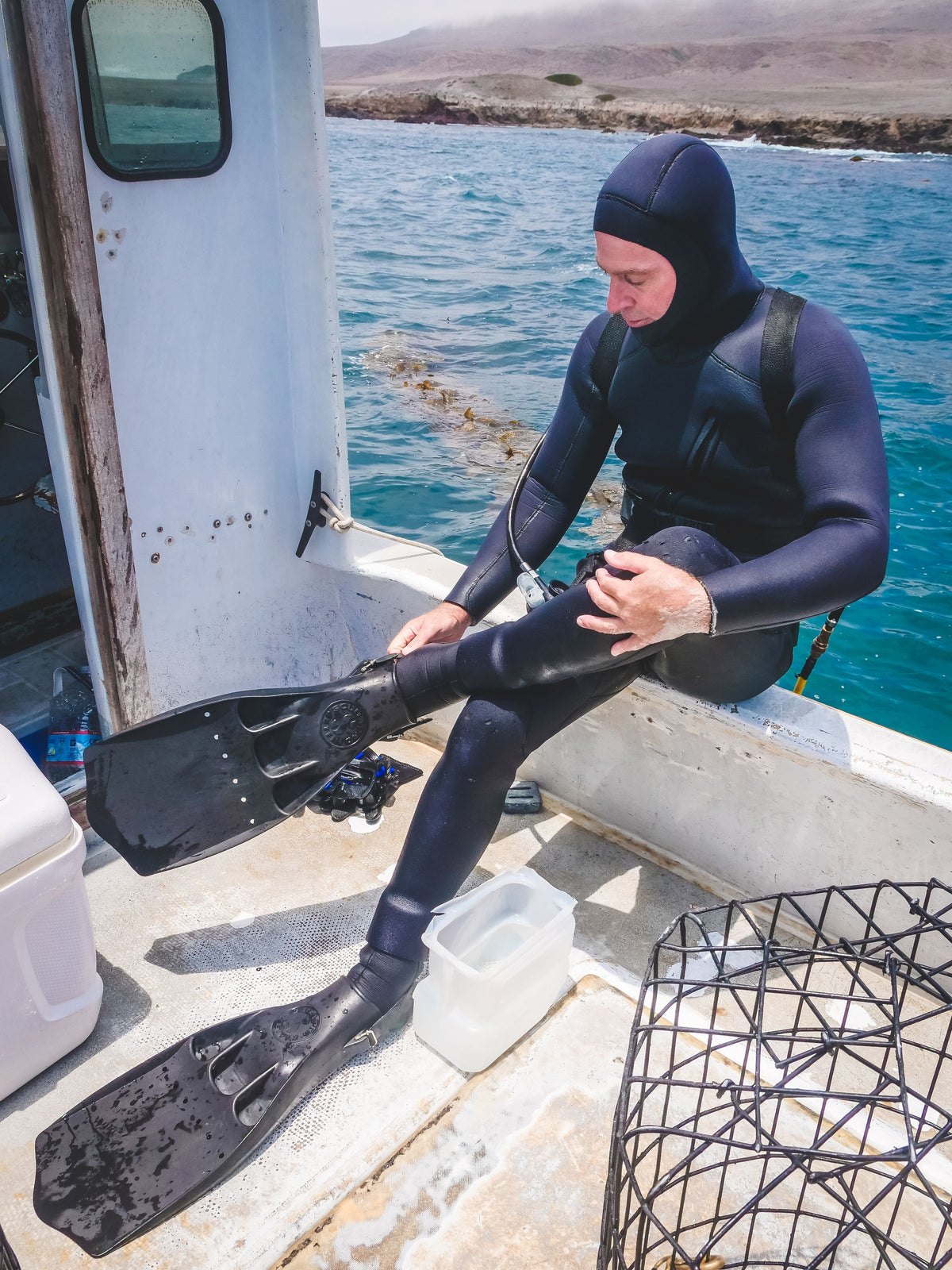
Open-heel fins need a dive boot, and full-foot fins do not. Choose a boot thickness that roughly matches your wetsuit, pick a thicker sole if you walk over rocks to get in, and try the boot on with the fin you plan to wear. This guide covers thickness, soles, zips, sizing and care, with a short note on hoods and gloves at the end.
Why wear dive boots at all?
Boots do three jobs. They keep your feet warmer, they protect your soles on the way to the water, and they fill the foot pocket of an open-heel fin so it sits comfortably.
- Warmth: The PADI Blog says boots bring comfort in colder water. DAN says most divers benefit from thermal protection below 27°C, and boots are part of that kit.
- Protection: The PADI Blog says full-foot fins give little foot protection. One retailer's buyer's guide recommends a thick sole for shore diving, to protect against rocks and hot sand.
- Fit with open-heel fins: The PADI Blog says open-heel fins need neoprene or drysuit boots.
Do you need boots with full-foot fins?
No. The PADI Blog describes full-foot fins as ones that do not require boots, which is why they suit warm water and travel. It describes open-heel fins as more powerful, especially with heavier gear, and says they need neoprene or drysuit boots. If you are comparing the two styles, our guide to how to choose scuba fins goes through the options, and you can browse scuba fins and scuba booties and water shoes.
How thick should dive boots be?
There is no official chart for boots. One retailer's buyer's guide says boots typically run from 2 mm to 7 mm, suggests 2 to 5 mm for warm water and 5 mm or more for cold, and offers a simple rule of thumb: match the boot to your wetsuit thickness. Treat that as a first guess. Your own tolerance and the length of the dive change the answer, and thicker boots take up more room in the fin, which brings us to sizing. For the suit side of the choice, see our guide to drysuit or wetsuit for winter diving. Ask the operator for the day's reading before you pack.
Soft sole or hard sole?
Sole thickness is about where you will be walking. The same guide says a thick, protective sole suits shore diving over rocks and hot sand, while a thinner sole is enough for boat diving. If your dives start with a scramble down a rocky bank or a walk across a hot deck, choose the sturdier sole. If you step off a platform or a boat, a thinner, more flexible sole is enough.
Makers and shops describe soles in different ways, and the same model can be called soft by one seller and firm by another. Check the product description and, if you can, flex the sole in your hands before you buy.
Zip or no zip?
The guide says higher-cut boots usually have a zip, which makes them easier to put on and take off. Thinner boots are often slipper-style with no zip, and you pull them on. A zip is handy for a thick, snug 5 or 7 mm boot. A slipper style keeps things simple in warm water.
How should dive boots fit?
The guide says a boot should fit like a shoe: a little snug, neither tight nor loose. If your toes curl at the end, go up a size. Sizing is often in whole sizes only, so round up if you are between sizes.
The PADI Blog adds the key point for fins: try open-heel fins on with your boots, because the extra thickness may mean you need a bigger fin size. Buy or try the boots first, then the fins. Our guide to how a wetsuit should fit covers the same idea for the suit: a good fit stops water flushing through.
How do you look after dive boots?
DAN advises rinsing all dive gear in clean fresh water after each dive, or at least after each day of diving, and letting it dry completely in a cool, shady, well-ventilated place before you put it away. The guide adds that you should check for rips or tears before storing, and avoid crumpling the boots into a drawer.
What about hoods and gloves?
These are the rest of the cold-water kit. DAN says that in colder water, hoods and gloves may become necessities. They come in a range of thicknesses, so try a few. Divernet's guide also lists wetsuit boots, gloves and a hood as the extras for the coldest water. See our hoods and gloves. If you are new to diving, the PADI Open Water Diver course at our PADI 5 Star Dive Centre is a good time to ask us to talk you through kit.
Sources
- PADI Blog: Fins Up, Choosing Your Scuba Footwear. Supports: full-foot fins need no boots and give little protection; open-heel fins need boots, are more powerful, and should be tried on with boots because you may need a bigger size.
- Divernet: Wetsuit thickness and temperature guide. Supports: boots, gloves and a hood as the extras for the coldest water.
- DAN Europe, Alert Diver: Hypothermia. Supports: most divers benefit from thermal protection below 27°C.
- DAN: Avoid the Chill. Supports: hoods and gloves may become necessities in colder water, and come in a range of thicknesses.
- DAN Alert Diver: Maintain Your Gear. Supports: rinse dive gear in fresh water after each dive or day of diving and dry it in a cool, shady, ventilated place.
Frequently Asked Questions
Do I need boots with full-foot fins?
No. Full-foot fins are worn bare-foot and do not need boots, according to the PADI Blog, though they give little foot protection.
Do open-heel fins need dive boots?
Yes. The PADI Blog says open-heel fins need neoprene or drysuit boots, and that you should try them on with the boots.
What thickness of dive boot should I buy?
One buyer's guide suggests matching the boot to your wetsuit thickness, with 2 to 5 mm for warm water and 5 mm or more for cold. Treat that as a starting point.
Should I choose a thick sole or a thin sole?
A thick sole suits shore dives over rocks and hot sand. A thinner sole is enough for boat diving, according to one buyer's guide.
Do I need a zip on my dive boots?
Higher-cut boots usually have a zip, which makes them easier to get on and off. Thinner boots are often slipper-style with no zip.
How do I look after my dive boots?
Rinse them in fresh water after diving, then dry them completely in a cool, shady, ventilated place, as DAN advises.
This is general information, not a substitute for dive training or medical advice. Follow your boot and fin manufacturers' instructions.
Reviewed November 2026. Devon Ford, PADI IDC Staff Instructor, runs Scuba Evolution, a PADI 5 Star Dive Centre in Glenvista, Johannesburg.