


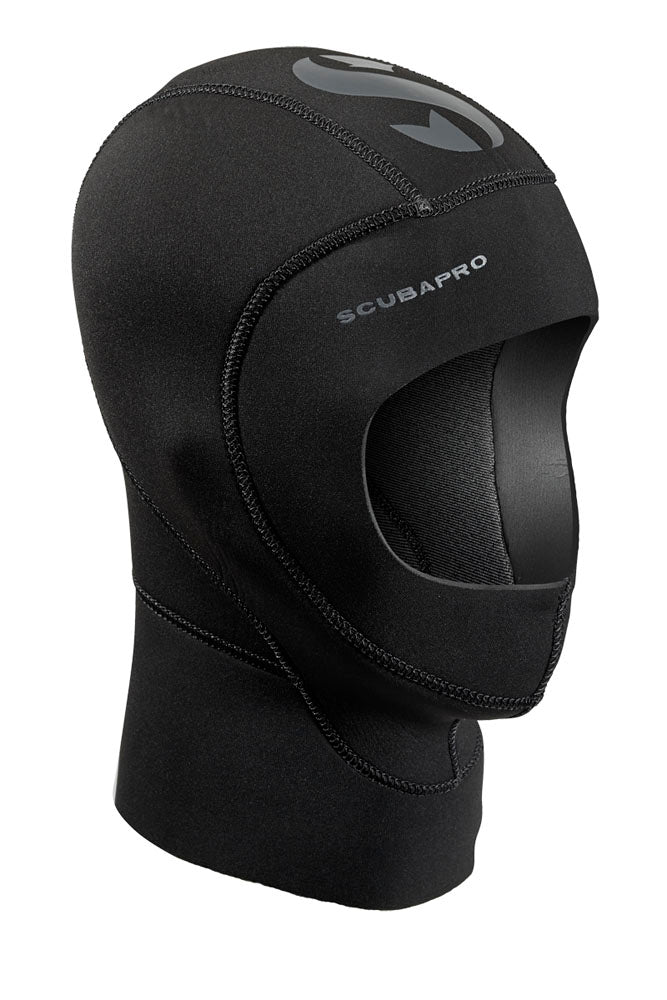
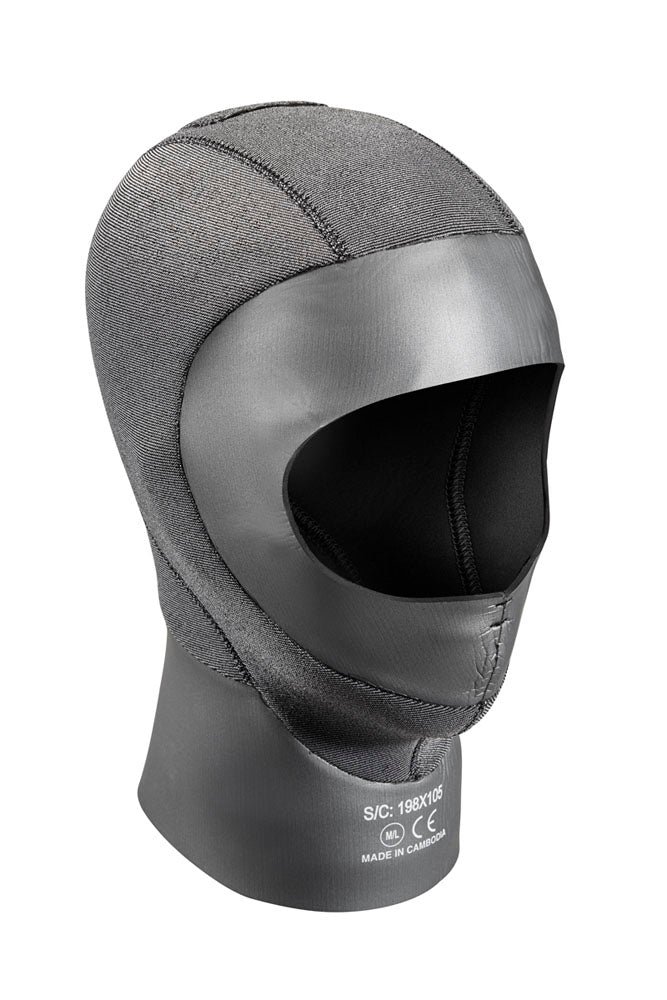
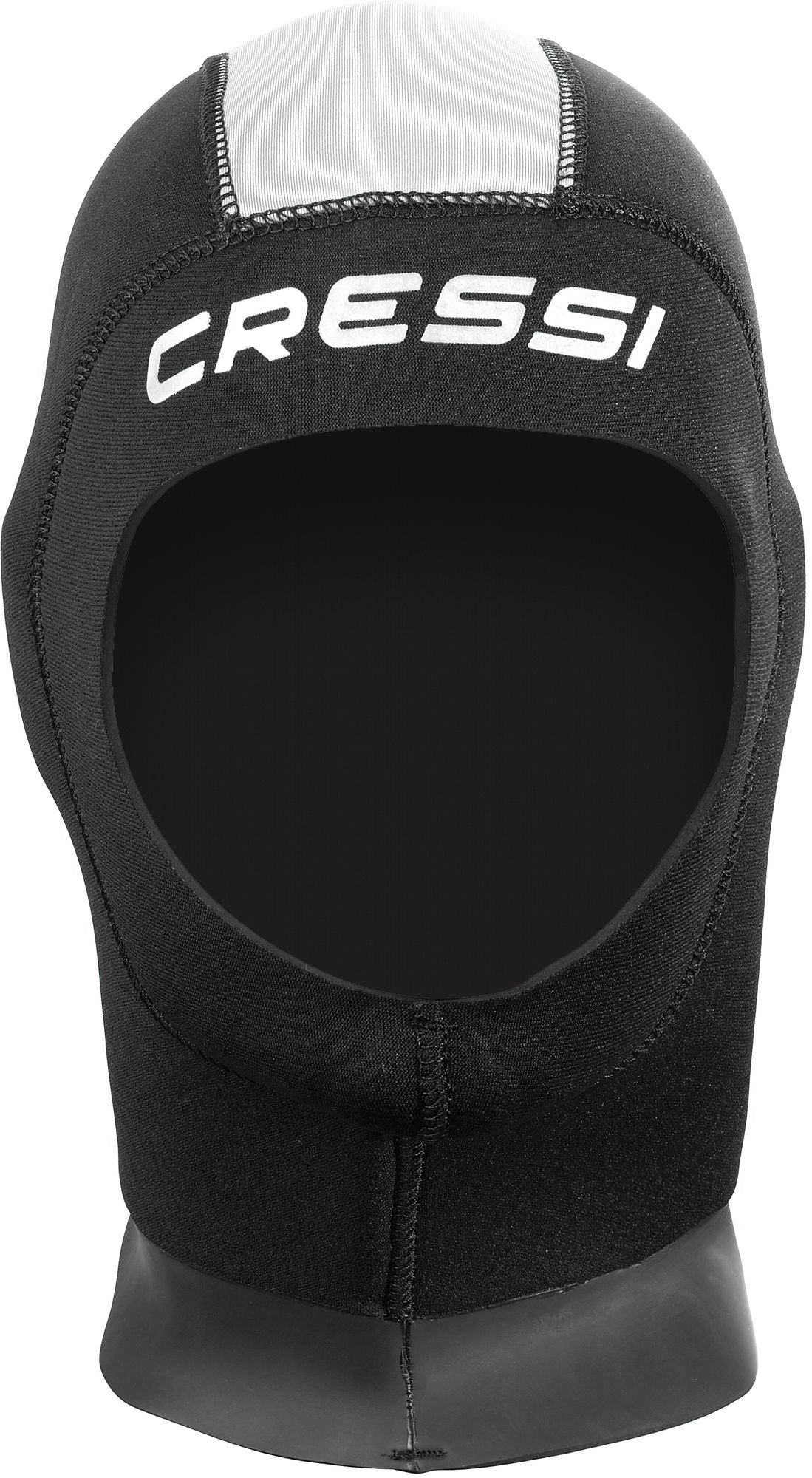
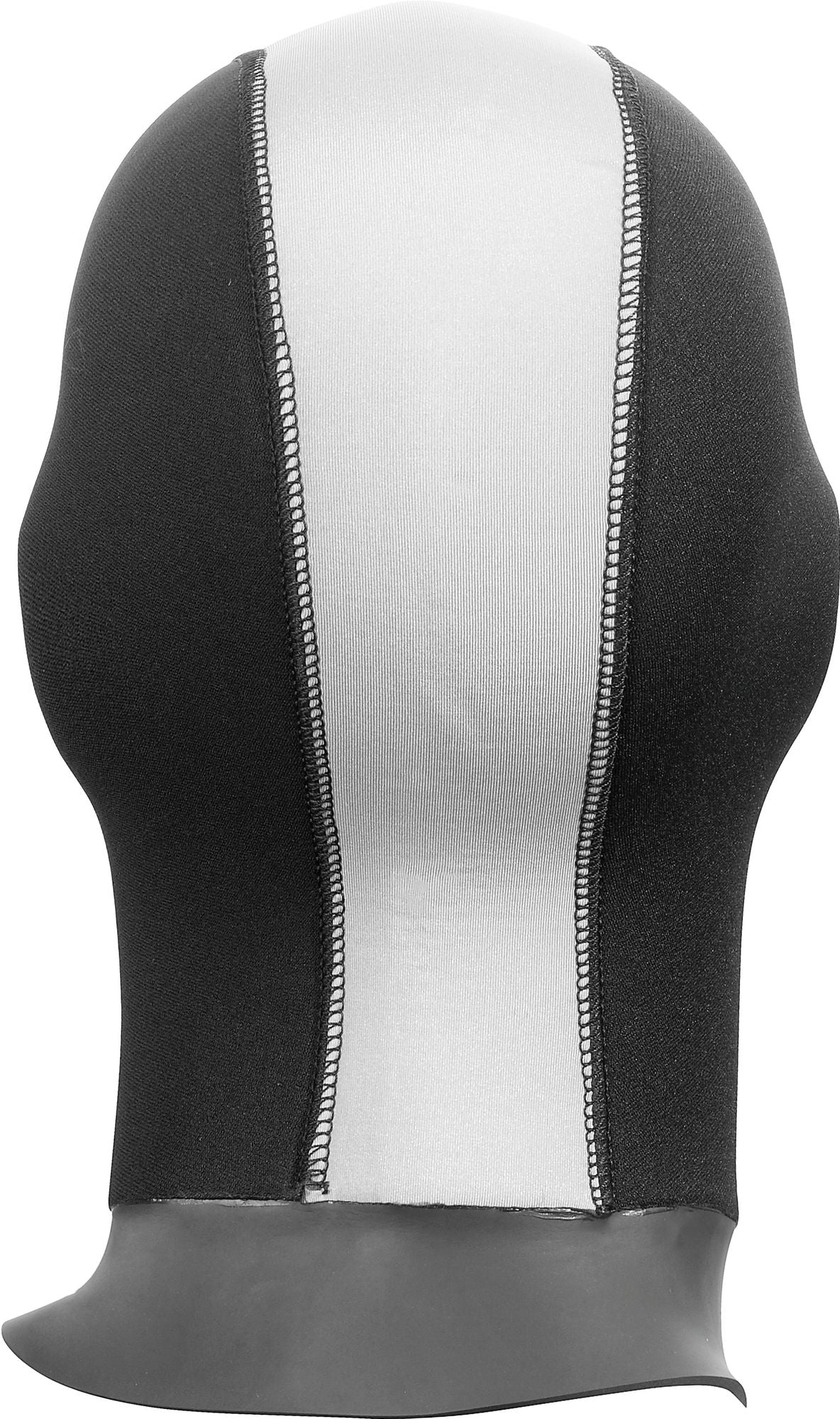
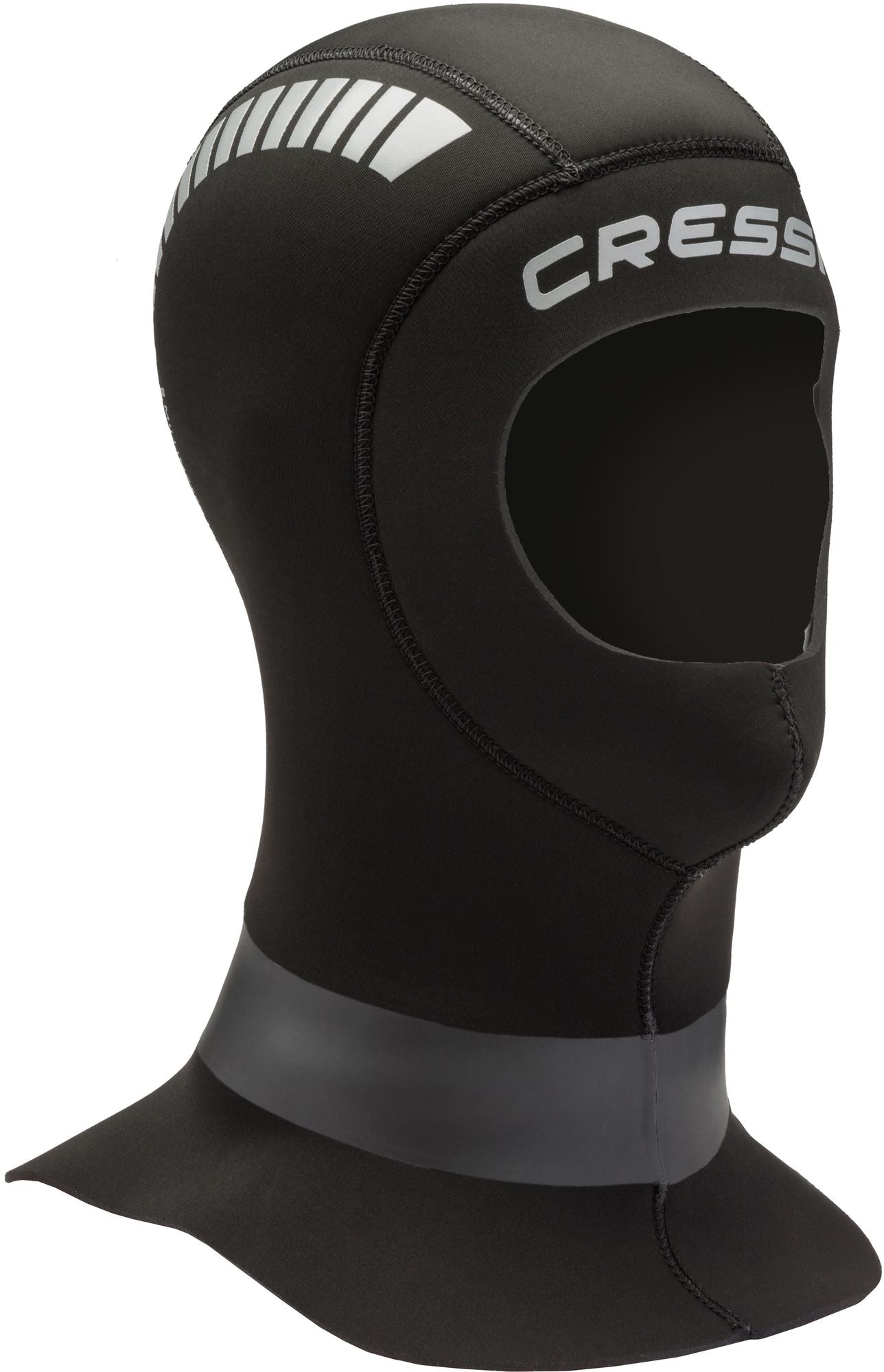
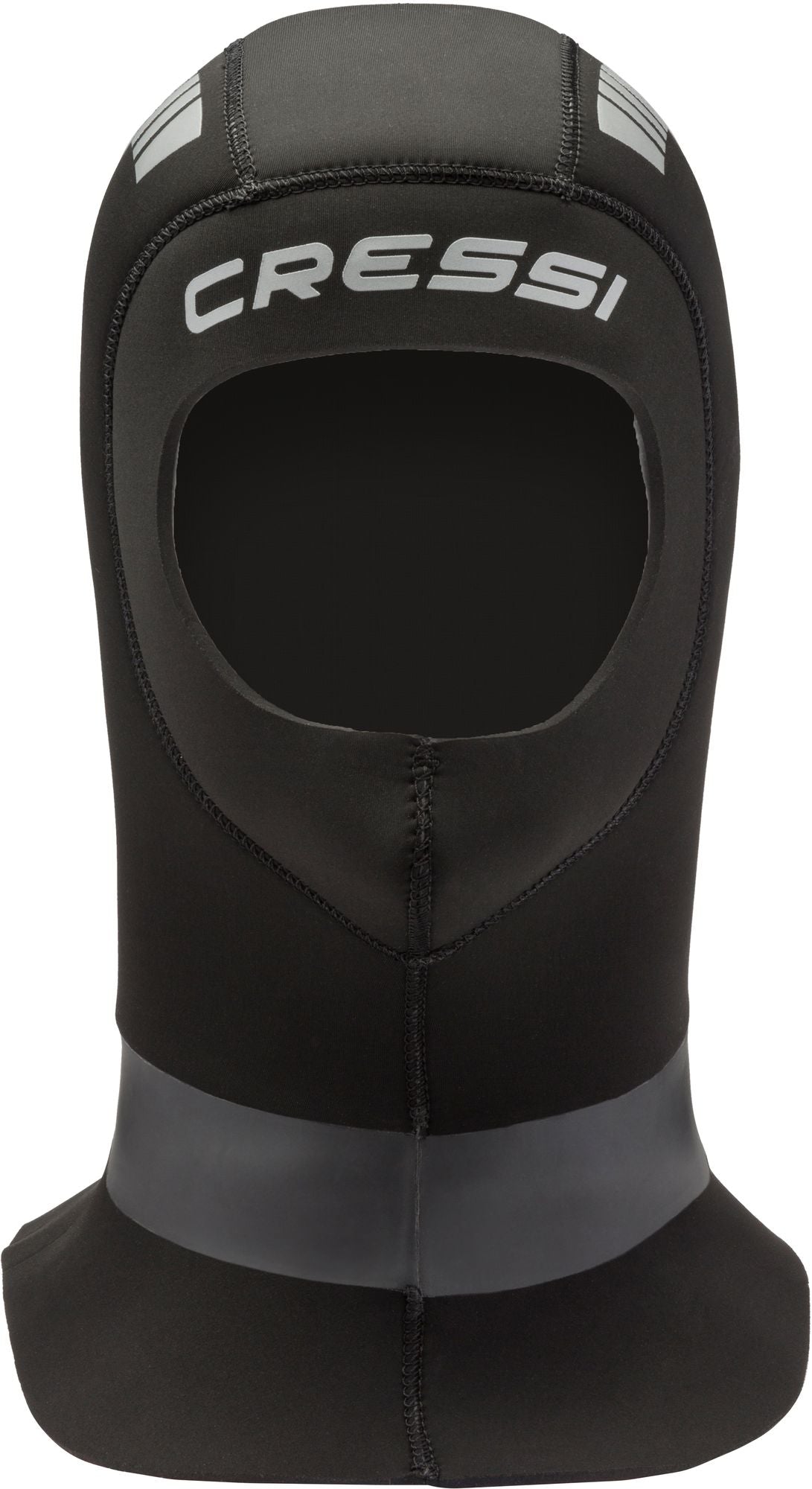
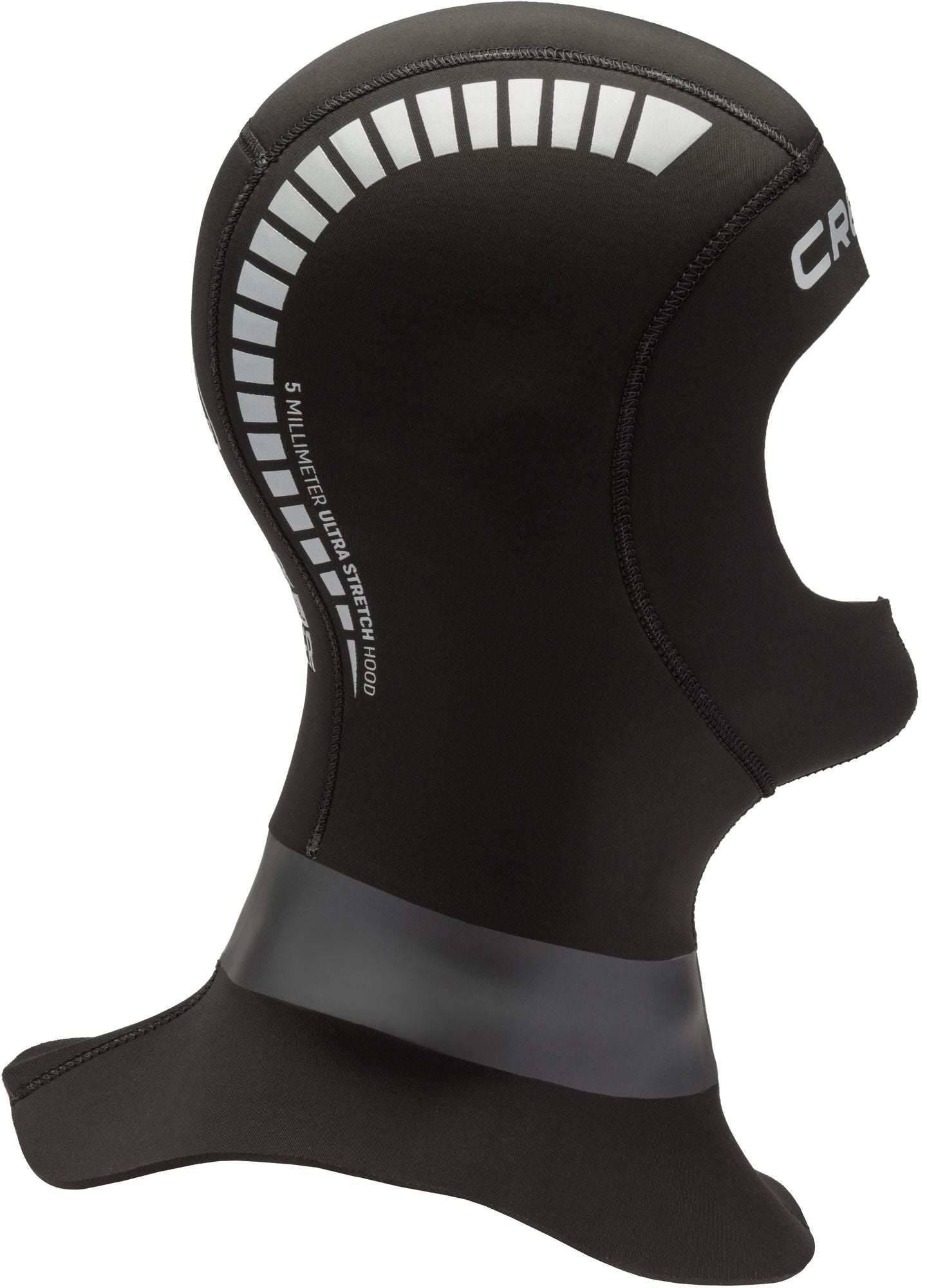
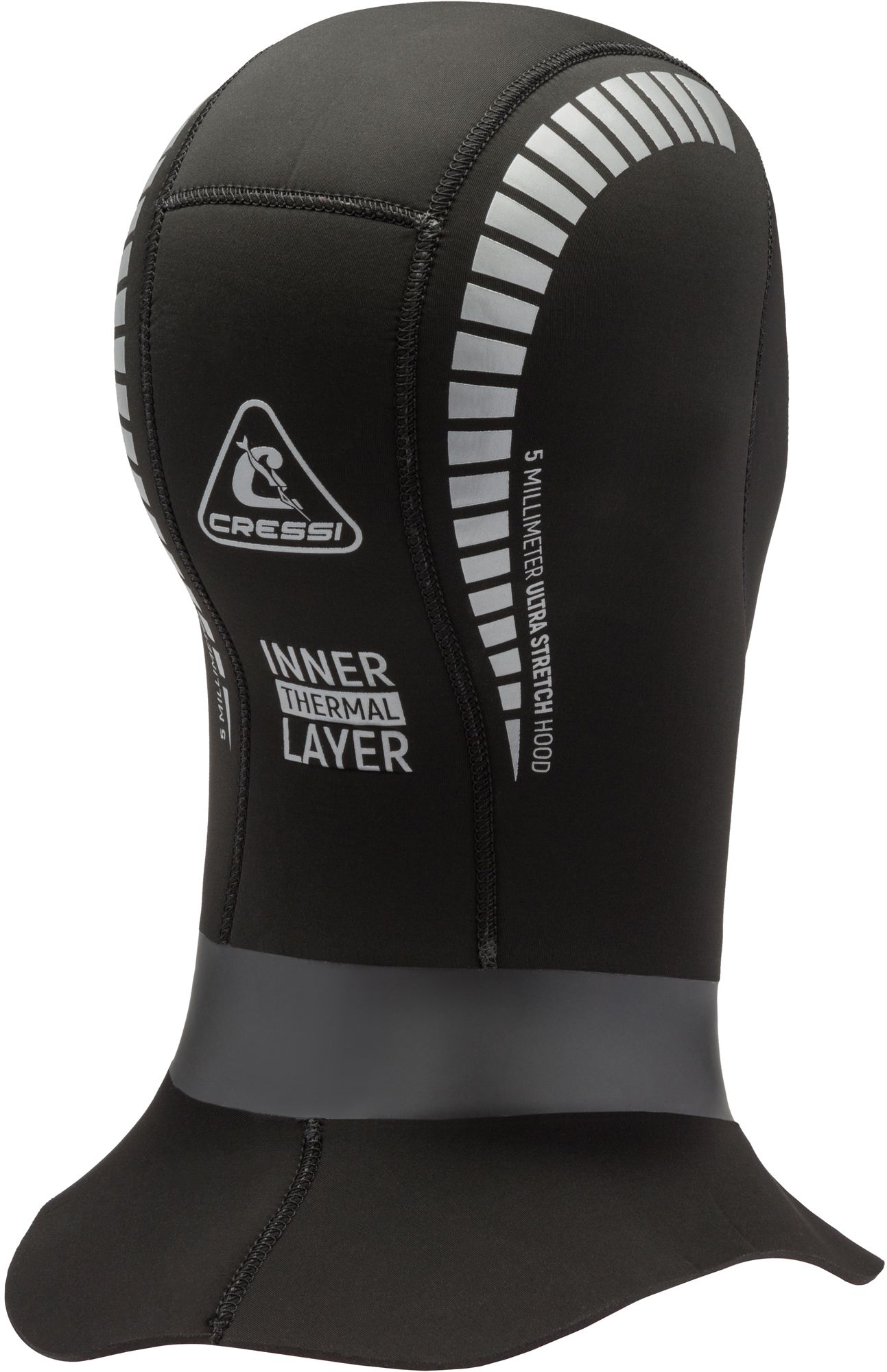
Everflex Seal Diving Hood 5/3mm







About Scuba Hoods
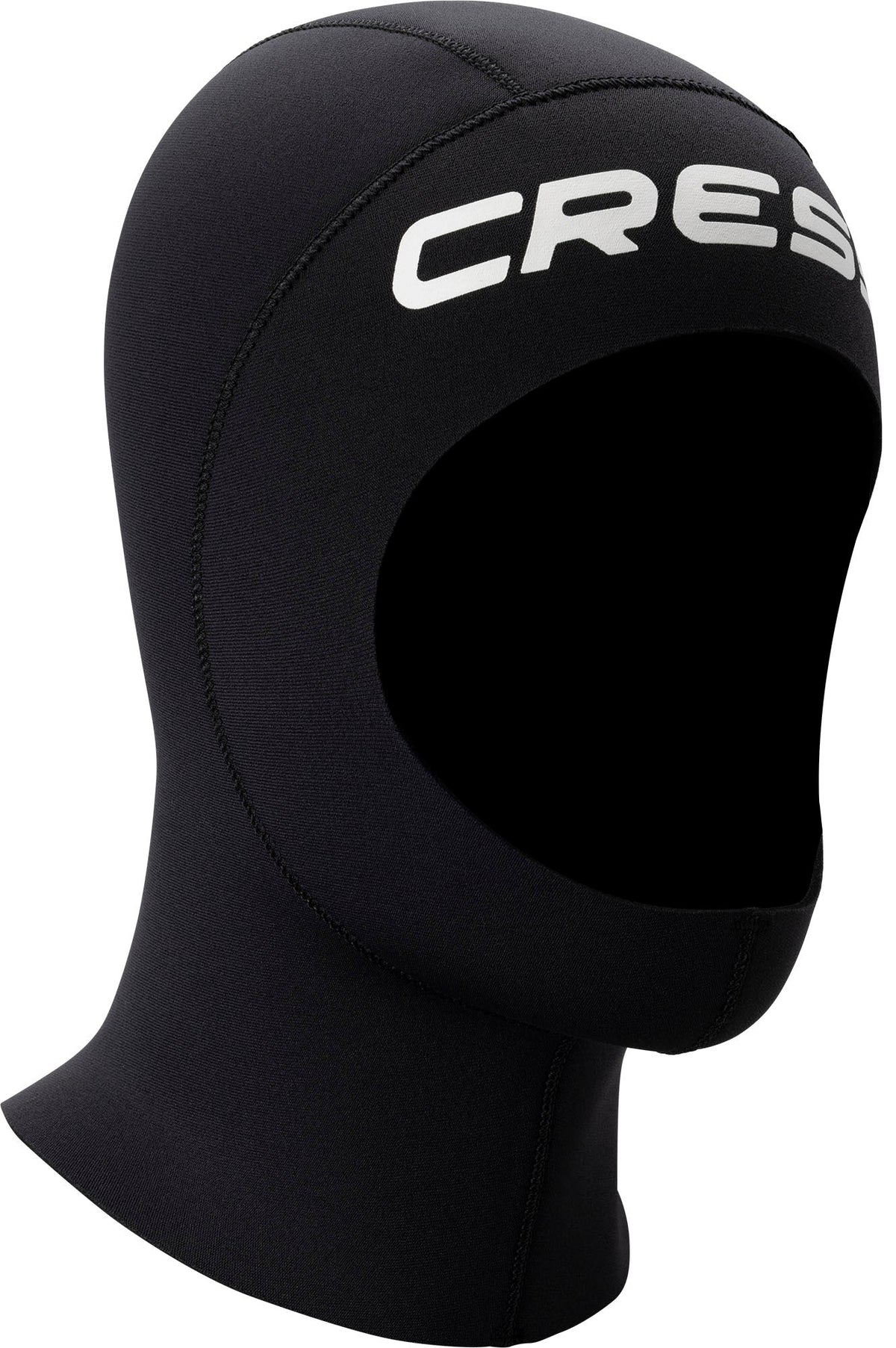
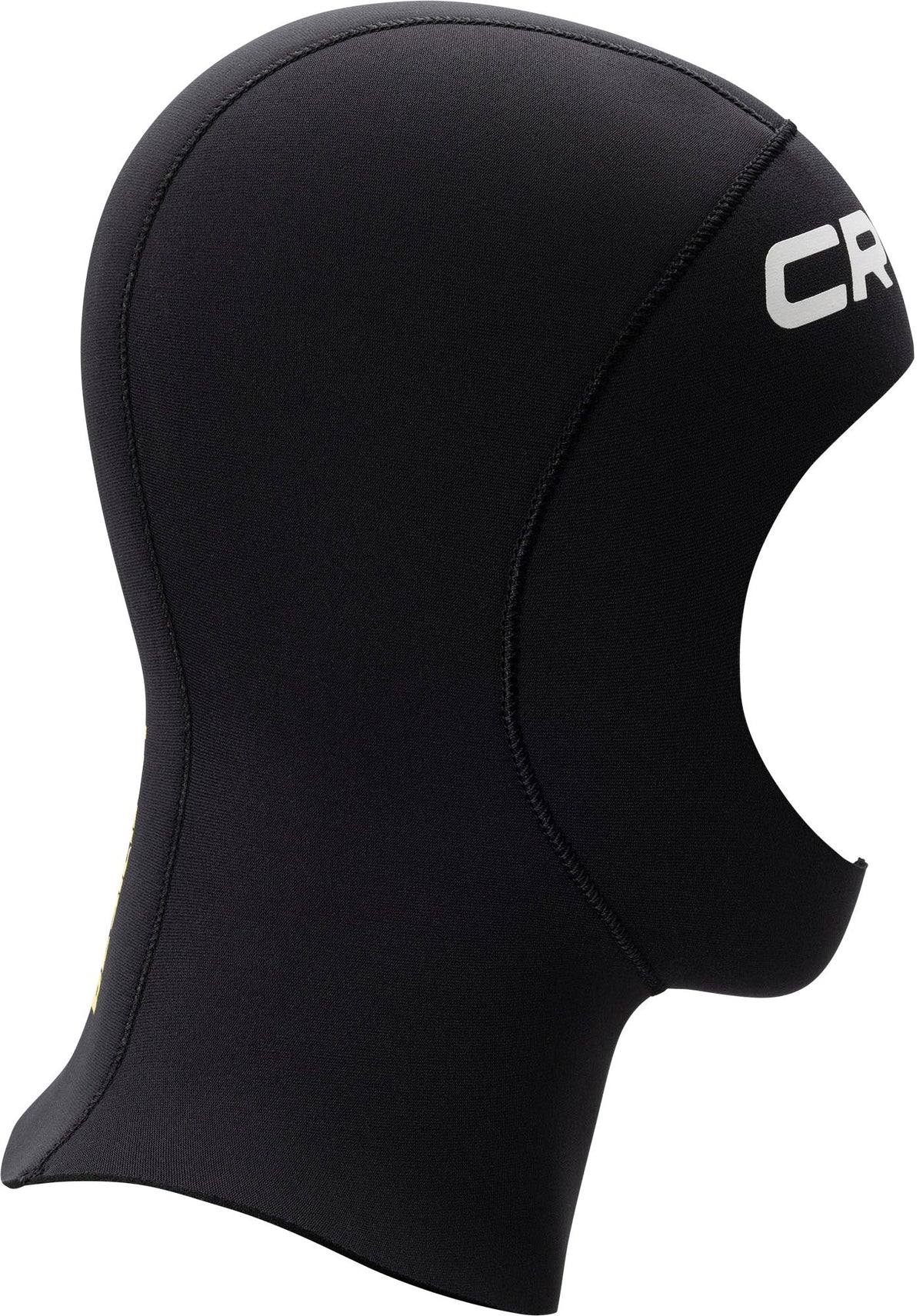
Diving hoods from Fourth Element, Cressi, Aqualung, Scubapro and Apeks, from the 3mm Surface Hood and a zippered hood to 7mm cold-water models. A hood with a skirt tucks under the suit collar and cuts the cold water that runs down your back on each descent. Add dive gloves for the same water.
How to choose a dive hood
A hood keeps your head and neck warm, and in cold water it makes the difference between a comfortable dive and a short one. Hoods here cost about R600 to R2,450, and most about R1,500 to R1,900. Pick the thickness for your water and make sure it fits snugly.
Thickness and style
- 3 mm hoods give light warmth for moderate water.
- 5 mm hoods suit most cooler South African diving, and 7 mm hoods suit Cape water and winter quarries.
- A vented hood has a small valve at the crown that lets trapped air escape and is useful with a drysuit.
- Hood and vest combinations add warmth over the chest and neck.
Fit
A hood should be snug around the face and neck without pressing on your jaw, giving you a neat fit with a mask and regulator in place. A hood that is too tight causes headaches and jaw ache, and one that is too loose floods. A hood works with full wetsuits, gloves and boots, and many divers add a thermal vest. Brands here include Fourth Element, Cressi, Scubapro and Aqualung.
Questions we get asked
What thickness of hood do I need?
5 mm suits most South African diving, 3 mm suits mild water and 7 mm suits cold Cape water.
Do I need a vented hood?
A vent helps release trapped air and is most useful with a drysuit. With a wetsuit, a plain hood is fine.
How should a hood fit?
Snug around the face and neck, without pressing on your jaw or forehead, so it stays in place with your mask and regulator on.