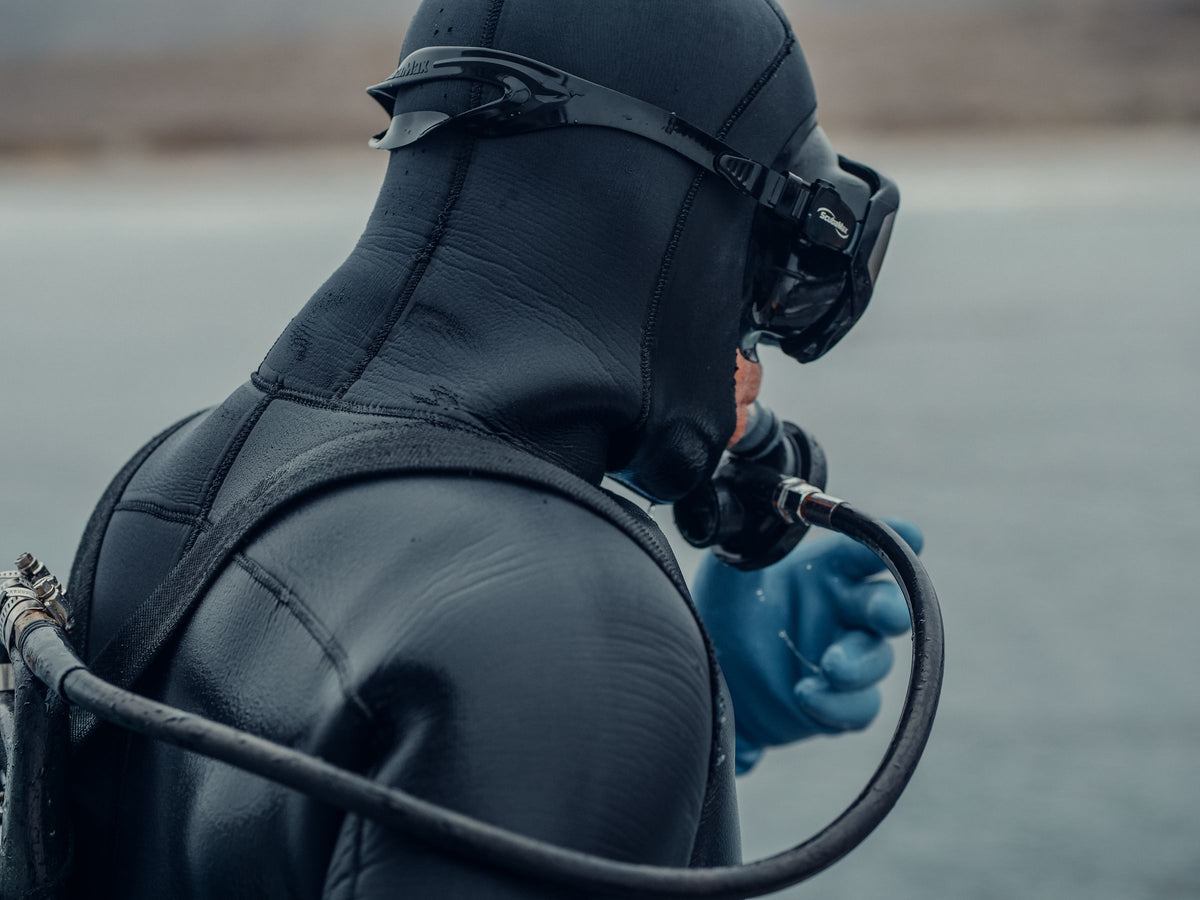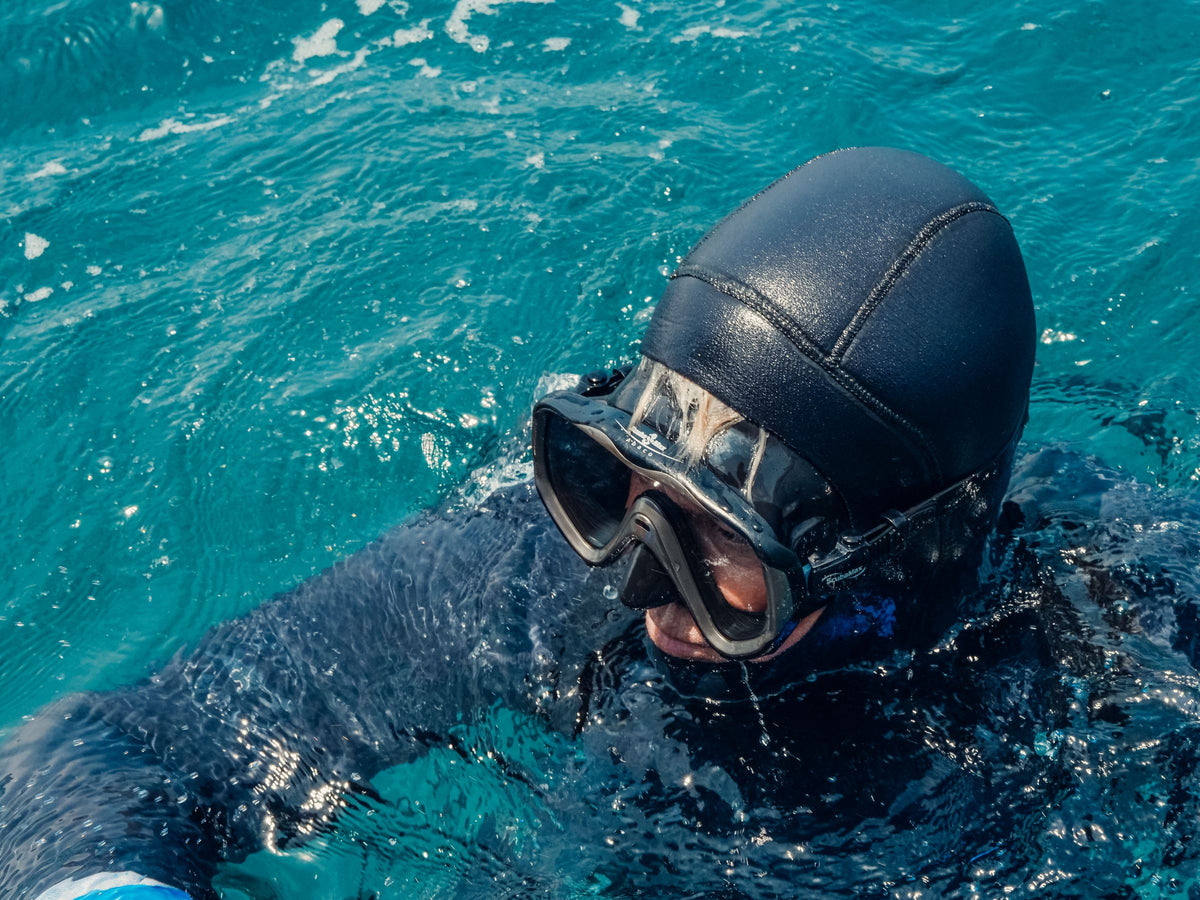
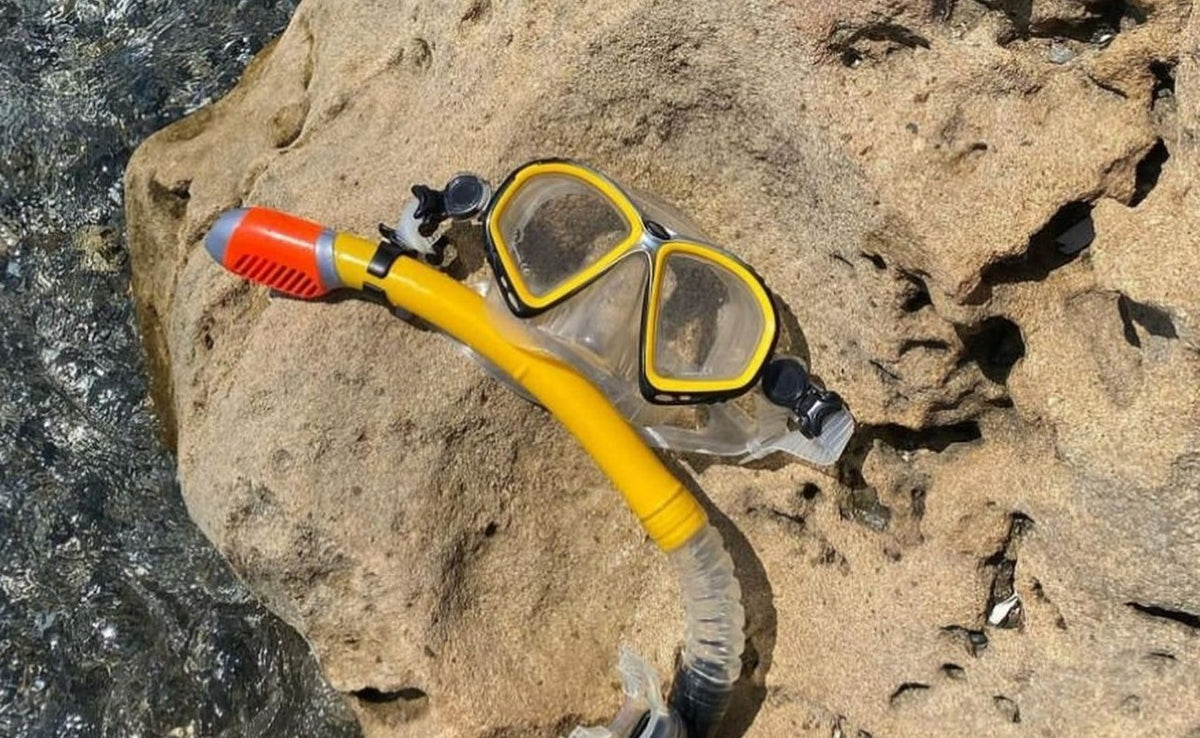
A scuba mask has tempered glass and a silicone skirt that encloses your nose, so you can add air to the mask as you descend. A snorkel mask is built for the surface and may have neither, so check both before you take one underwater with a cylinder.
Here's how the two differ, and where freediving masks and full-face snorkel masks fit in. The counts and prices come from our shelves in Glenvista, Johannesburg, on 14 November 2026.
What is the difference between a scuba mask and a snorkel mask?
PADI sets two requirements for a mask to suit diving. It needs strong tempered glass that can withstand the pressures of diving. It also needs a silicone skirt that encloses the nose, because the air space in a diver's mask has to equalise on descent. A snorkel mask is only asked to keep water out at the surface, so some skip both features.
| Feature | Scuba mask | Snorkel mask | Freediving mask |
|---|---|---|---|
| Lens | Tempered glass | Tempered glass or plastic, so read the label | Read the label |
| Nose pocket | Yes, shaped to let you pinch your nose and equalise | Varies by model | Yes, easy to reach |
| Air volume | Low to high, by preference | Often higher, with a wider window | Low, close to the face |
| Made for | Breathing from a regulator at depth | Floating at the surface | Short dives on one breath |
The same maker can sell both kinds, and a snorkel mask can pass all four checks below. The label and the product page tell you which one you're holding.
Can you use a snorkel mask for scuba diving?
Only if it passes the same checks as a scuba mask. Many snorkel masks do, which is why some masks appear in both of our collections. A cheap toy-style mask with plastic lenses or no nose pocket is a poor choice at depth.
Run four checks before you buy or borrow one:
- Glass: the packaging or product page should say tempered glass.
- Nose pocket: pinch your nose through the skirt. Your fingers should seal the nostrils without pressing on the lens.
- Seal: PADI's test is to press the mask against your face with the strap out of the way and breathe in gently through your nose. It should stay put without you pulling air in continuously.
- Use: the maker should list scuba diving as a use, as well as snorkelling.
If you're doing the Open Water course, wear the mask you'll buy in the pool before the first open-water dive. Our PADI Open Water Diver course is R5,650 on 14 November. Try the mask on in the shop first.
Why does a scuba mask need a nose pocket?
Air in the mask is squeezed as the water pressure rises. At 10 m the pressure is double what it is at the surface, so the air space is half its size. Left alone, the mask pulls onto your face and eyes. You add air by breathing out gently through your nose into the mask.
That's only possible when your nose sits inside the air space and you can reach it. It's the same idea as the ear-clearing habits in our guide to equalising your ears, applied to the mask. At the surface, a snorkeller seldom needs this, which is why a snorkel mask can leave the pocket out.
Is a low-volume mask better for scuba?
Low volume is a preference, not a rule. PADI explains that high-volume masks feel open and widen your peripheral vision, but take a little more effort to clear of water. Low-volume masks sit closer to your face and clear quickly. The same logic is behind freediving masks, which contain little air, so they take little breath to equalise.
A low-volume freediving mask can suit scuba if it has tempered glass and a reachable nose pocket. Our freediving masks collection lists 30 masks, and some makers rate them for scuba as well, such as the SEAC Pura for scuba, freediving and snorkelling. Try one on. A low-volume mask sits closer to your eyebrows and cheeks, so a face it doesn't fit leaks sooner than a roomier mask would.
Single or twin lens is another choice. A single lens gives one wide window. Twin lenses keep the mask close to your face and can take optical lenses, which our scuba prescription masks collection lists from R899. Our guide to diving with glasses or contact lenses covers the options.
Are full-face snorkel masks safe for scuba or freediving?
No. A full-face snorkel mask is for floating at the surface, and it isn't a scuba or freediving mask. Most cover your nose and mouth in one chamber, with no nose pocket you can pinch, so you can't equalise it as you go down. The air inside is also a large volume to compress.
Full-face masks have drawn safety warnings too. In March 2026 the US Consumer Product Safety Commission told owners of about 84,000 OUSPT masks to stop using them. It cited reports of breathing difficulty and a lawsuit alleging a drowning. A 2023 study in Diving & Hyperbaric Medicine found that some full-face designs allowed rebreathing of exhaled air during simulated use. Our full face snorkelling masks collection lists six for surface use. Keep them there.
Which mask should you buy?
Buy for the diving you'll do. PADI's advice is that fit comes before colour, so find the mask that suits your face first.
- Learning to scuba dive, or planning to: a mask made for scuba. Our scuba masks collection lists 147, split into 65 single-lens and 77 twin-lens masks.
- Holiday snorkelling only: a snorkelling mask. The collection has 145. Mask and snorkel sets start from R440.
- Both: pick a mask that lists scuba and snorkelling as uses, then test the seal. One good mask covers both.
- Children: a junior mask sized for the face. Our family snorkel set guide has the checks.
Whichever you pick, clean the lens before the first dive. Five steps for a new mask shows how, and why your mask keeps fogging covers what to do if it still does.
Sources
- PADI, Beginners Guide to Buying a Mask. Tempered glass, nose-enclosing skirt, fit first, high and low volume.
- Divernet, 6 March 2026. The US CPSC warning on OUSPT full-face snorkel masks and the 2023 Diving & Hyperbaric Medicine study.
- Scuba Evolution collection and product pages, read 14 November 2026.
Frequently Asked Questions
What is the difference between a scuba mask and a snorkel mask?
A scuba mask has tempered glass and a silicone skirt that encloses your nose so you can equalise the air space on descent. A snorkel mask is made for the surface and may have plastic lenses or no nose pocket. Check the label and the product page.
Can I use a snorkel mask for scuba diving?
Only if it has tempered glass, a nose pocket you can pinch and a maker's listing that includes scuba diving. Many snorkel masks meet this. Toy-style masks with plastic lenses don't.
Can I use a scuba mask for snorkelling?
Yes. A scuba mask has everything a snorkeller needs and can be used at the surface. Fit and seal are what to test.
Is a freediving mask the same as a scuba mask?
No, but they share features. A freediving mask has a low internal volume so it takes little breath to equalise. If it has tempered glass and a reachable nose pocket it can suit scuba too, and some makers list both uses.
Can you scuba dive or freedive in a full-face snorkel mask?
No. Full-face snorkel masks are for surface snorkelling. Most have no nose pocket to pinch, so you can't equalise them, and safety regulators have warned about some designs.
How do I know if a mask fits?
Press it against your face with the strap out of the way and breathe in gently through your nose. If it stays on without you pulling air in continuously, it should seal. If it drops away or leaks at the edge, try a different shape.
Reviewed November 2026 by Devon Ford, PADI IDC Staff Instructor. General information, not a substitute for a fitting or an instructor's advice. Devon Ford, PADI IDC Staff Instructor, runs Scuba Evolution, a PADI 5 Star Dive Centre in Glenvista, Johannesburg.