 Pay Later
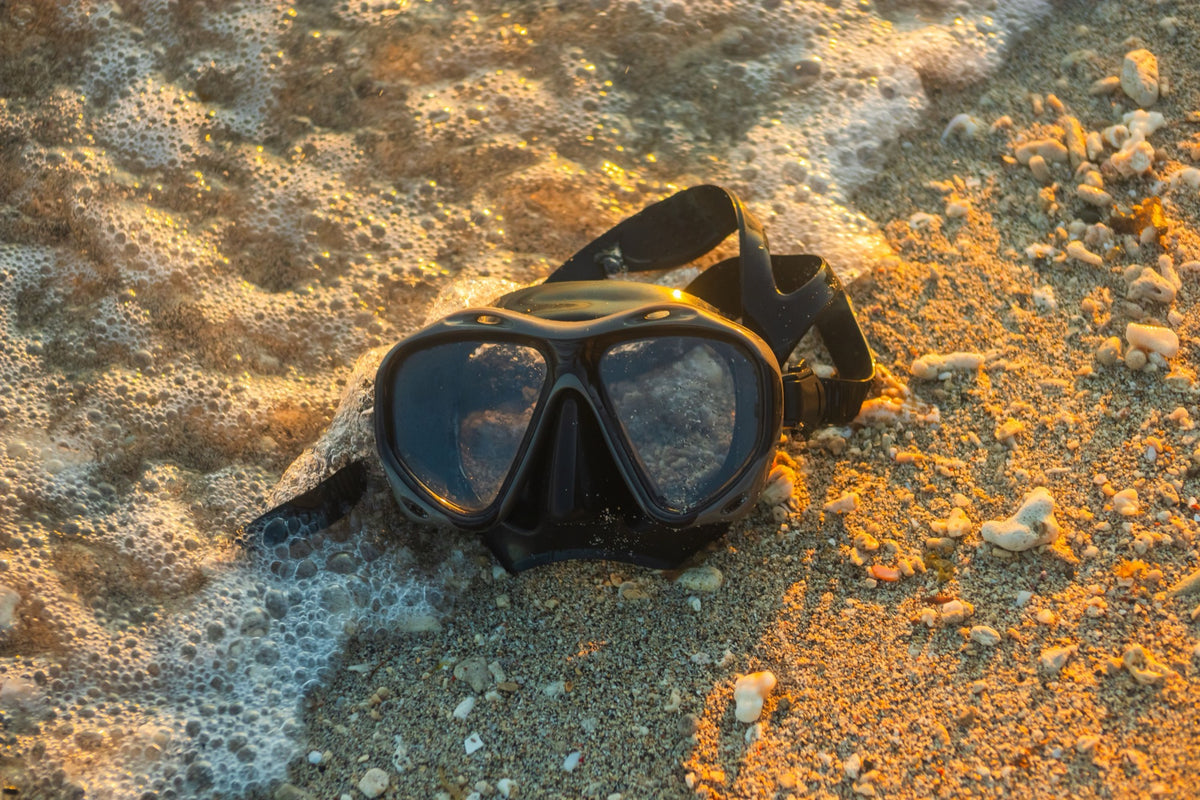
A new dive mask comes out of its box with lenses that look spotless and still carry a film of silicone from the factory. Toothpaste goes on because its mild abrasive scrubs that film away, which lets breath spread into a clear sheet instead of beading into fog. Use a plain paste toothpaste, not a gel and not a whitening one, on clear glass. Rub it in with a clean fingertip, rinse thoroughly and repeat if the lens still beads.
That is the short answer, and the detail shifts with the lens and the maker. Our checklist, how to prepare a new dive mask, covers the whole day-one routine, and why a new mask keeps fogging covers the physics. This page sticks to the toothpaste: why it works, which kind, how long, and when to leave the tube alone.
Why put toothpaste on a scuba mask?
PADI says the lenses of a mask are coated in a fine layer of silicone during manufacture. Silicone repels water, so condensation on a filmed lens gathers into separate droplets instead of spreading out. DAN Southern Africa describes the same factory protection as a greasy silicone spray on the glass and the rubber, and calls removing it the main goal of preparation.
Toothpaste does the job mechanically. TUSA's support page says a toothpaste or a mild abrasive liquid can gently scrub the inside of a glass lens to remove the silicone layer left by production. It is a one-off clean. PADI calls it a one-time deal, so a defog still goes on before every dive.
What toothpaste should you use on a dive mask?
A plain paste, not a gel and not a whitening one. That is PADI's method, and the one in our other two mask guides. Skip gels, whitening pastes and anything gritty or textured. PADI warns that whitening crystals may scratch the lens, and scratches stay.
| What you scrub with | On a mask? |
|---|---|
| Plain paste, not gel and not whitening | Yes. PADI's method. |
| Whitening or crystal toothpaste | No. PADI says the crystals may scratch the lens. |
| Any paste you can feel grit in | No. Same scratch risk. |
| Textured sponge, steel wool or a scourer | No. PADI says these will scratch the glass. |
Tubes vary, so rub a dab between finger and thumb first. If you can feel grit, the lens will too. Plain paste is our house method, following PADI.
How do you put toothpaste on a dive mask?
Six steps, with a clean fingertip doing all the work.
- Wash and dry your hands. PADI's fog guide notes that finger oils stop the lens coming clean.
- Check the lens type. The table below decides whether toothpaste goes on at all.
- Put a bead of plain paste on each lens. PADI works both faces of the glass. TUSA scrubs the inside, and its coated lenses keep the coating on the outside.
- Scrub in small circles. PADI says vigorously, DAN Southern Africa says a little force. Firm but not heavy sits between them.
- Rinse thoroughly in fresh water. Keep the paste off the silicone skirt.
- Test it wet. Clean glass wets in an even sheet, and leftover film pulls the water into beads. Repeat the scrub once or twice if it beads, as DAN Southern Africa suggests.
How long should toothpaste stay on a dive mask?
Neither PADI nor DAN Southern Africa gives a minimum time. PADI says the paste can stay on overnight if you aren't in a rush. DAN Southern Africa lets it dry overnight, or for a few hours if pressed, then polishes it off with a wet finger. A thorough scrub and a rinse is the quick route, and the overnight rest is for when there's time. If the lens still beads when wet, scrub again before blaming the paste.
Which lenses should skip toothpaste?
The toothpaste advice is written for clear tempered glass. Other lenses change the answer.
| Lens | Toothpaste? | Why, and what to do instead |
|---|---|---|
| Plain tempered glass | Yes | Plain paste, not gel and not whitening, with a fingertip, unless the leaflet says otherwise. |
| Tinted lens | No | Our house rule: no toothpaste and no flame. Follow the leaflet's care routine and use an anti-fog. |
| Anti-reflective or UV-coated glass | Not on the coated face | TUSA says the coating on its CrystalView AR/UV lenses is on the outside and could be scratched or removed. Its inside can be cleaned. |
| Mirrored or colour-correcting lens | Check the care sheet | These are coated too, so the maker's sheet is the authority. |
| Plastic lens | No | The maker guides here cover glass only, and some snorkel masks use plastic. Use an anti-fog. |
| Bonded prescription lens | Ask the lab | The lab that fitted it knows the bond and any coating. See our guide to diving in glasses or contact lenses. |
Read the leaflet before the tube. SCUBAPRO's manual gives an anti-fog routine for a new mask: apply it to the inner surface and rinse thoroughly, three times over. Mares's English text says to treat the inside of the lenses with an anti-fogging solution and rinse with water, and rules out surfactants, solvents and soaps. Its Dutch text also lists toothpaste among the things not to use on the mask. When the leaflet says no, that settles it.
Is toothpaste safe on a dive mask?
On clear glass, used gently, yes, and PADI and TUSA both describe it. The two risks are scratches and residue. Toothpaste is an abrasive by design, so use a fingertip only, keep it off the silicone skirt and frame, and give a coated or tinted lens a miss.
Rinse until no paste, foam or minty smell is left. Residue in a mask ends up beside your eyes at the start of the dive. DAN Southern Africa warns that soap residue can irritate the eyes, and paste residue could too. PADI's instruction is to rinse thoroughly with fresh water. If a mask stings once it is on, take it off and rinse it again at the surface.
What goes on the lens after the toothpaste?
Toothpaste clears the factory film once. Condensation still forms on cold glass on later dives, and PADI says to use a defog every dive. We stock anti-fog products in our gifts for divers range. Prices on 9 November 2026: Scubaclear Antifog R195, Anti-Fog Gel 30ml R240 and Sea Gold Anti-Fog Gel 37ml R275. After it goes on, keep your fingers off the inside of the lens, because PADI notes that touching it transfers oils and cancels the defog.
Shopping for the mask itself? Try a few from our scuba masks at the shop in Glenvista. Bought it from us, and it has plain tempered glass? We'll flame-prep it in store where the maker allows, and the toothpaste method stays the one for home. Scuba Evolution's PADI Equipment Specialist course, R2,600 on 9 November 2026, covers routine kit care in a hands-on session.
Sources
- PADI, How to Prepare a New Mask for Scuba Diving. The silicone film from manufacture, whitening crystals, fingertip scrubbing, no sponge or steel wool, the overnight option, rinsing and the one-time clean.
- PADI, Tips for Preventing Mask Fog. Washing hands first, a defog every dive and not touching the lens after it.
- DAN Southern Africa, This Fogging Mask (8 July 2023). The factory silicone spray, repeating the scrub, drying and polishing, and soap residue in the eyes.
- TUSA, Customer Support. Toothpaste or a mild abrasive on glass lenses, and the outer coating on CrystalView AR/UV lenses.
- Mares, Mask, Snorkel and Fins User's Manual. Anti-fog solution and a rinse, no surfactants, solvents or soaps, and the toothpaste restriction in the Dutch text.
- SCUBAPRO, Mask Owner's Manual. Anti-fog on the inner surface, rinsed three times on a new mask.
Frequently Asked Questions
Why do you put toothpaste on a scuba mask?
New lenses carry a thin silicone film from manufacture, and it makes breath bead into fog. PADI and TUSA both describe scrubbing it off with toothpaste, which works as a mild abrasive. Do it once, on plain glass, then use a defog before each dive.
What kind of toothpaste is safe for a dive mask?
Use a plain paste, not a gel and not a whitening one. That is PADI's method, and PADI warns that whitening crystals may scratch the lens. Avoid anything gritty too, and rub with a fingertip only.
How long do you leave toothpaste on a dive mask?
No source gives a minimum. PADI says it can stay on overnight if you aren't rushed, and DAN Southern Africa lets it dry overnight, or for a few hours if pressed. A thorough scrub and rinse also works. Repeat if the wet lens still beads.
Can you use toothpaste on a tinted or coated mask lens?
Not on a tinted lens, which is our house rule. On coated glass, TUSA says its coating sits on the outside and could be scratched or removed, so keep paste off that face. Mirrored lenses follow their care sheet.
Does toothpaste stop a mask fogging for good?
It removes the factory film once. Condensation still forms on later dives, and PADI says to use a defog every dive. A mask that fogs from new needs another scrub, because a defog doesn't remove the film.
Is toothpaste on a dive mask bad for your eyes?
Residue can irritate. DAN Southern Africa warns that soap residue stings the eyes, and paste residue could too. Rinse the lens in fresh water until no paste, foam or minty smell remains, as PADI instructs.
Reviewed November 2026 by Devon Ford, PADI IDC Staff Instructor. Prices checked 9 November 2026. Scuba Evolution is a PADI 5 Star Dive Centre in Glenvista, Johannesburg.